


Gospel in Art: When Jesus drew near and saw the city of Jerusalem, he wept
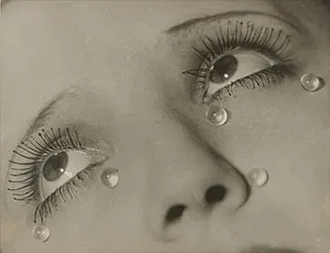
Larmes (Tears), by Man Ray (American,1932. Gelatin silver print © Getty Museum, Los Angeles
Source: Christian Art
Gospel of 19 November 2026
Luke 19:41-44
At that time: When Jesus drew near and saw the city of Jerusalem, he wept over it, saying, 'Would that you, even you, had known on this day the things that make for peace! But now they are hidden from your eyes. For the days will come upon you, when your enemies will set up a barricade round you, and surround you and hem you in on every side, and tear you down to the ground, you and your children within you. And they will not leave one stone upon another in you, because you did not know the time of your visitation.'
Reflection on the photograph
As Jesus draws near to Jerusalem, he stops and weeps. It is worth staying with that image for a moment: the Son of God, looking upon a city he loves, with tears running down his face. He sees the suffering that lies ahead and longs for its people to recognise the peace he brings. His tears reveal how deeply he cares about us. He has come to save us, yet he will not force our hearts to open. The love he offers asks for a response freely given.
A priest friend of mine told me recently that "the holiest of holy water is the tears we shed". It is a beautiful thought. Tears often carry what we cannot put into words: grief for someone we have lost, sorrow for the hurt we have caused, concern for a child we cannot protect. Sometimes we can manage no prayer beyond sitting before God and crying. Jesus' tears assure us that he understands that language. We need never be ashamed to bring him our sorrow as he has wept himself.
With these thoughts about tears in mind, we turn to Man Ray's striking photograph Larmes, or Glass Tears, made around 1932. It is one of the most iconic photographs of the 20th century. An American artist closely associated with Dada and Surrealism, Man Ray explored photography's ability to make familiar things appear strange. Here, the tightly cropped face, upward-looking eyes and heavily darkened eyelashes recall the dramatic close-ups of silent cinema. We cannot see what has prompted this expression; we are left to imagine a story beyond the frame. Yet the most arresting detail is the tears themselves: perfectly rounded glass beads, catching the light like tiny jewels. This is a carefully constructed image of weeping.
The photograph's power lies partly in that tension. We recognise the language of sorrow, yet these droplets remain suspended on the cheeks, unable to fall. Against the soft greys of the skin, the tears have an almost sculptural quality. The glass makes each tear exceptionally visible, inviting us to study something we would normally hurry to wipe away.
Man Ray was not illustrating the Gospel, but his photograph can lead us back to the face of Jesus overlooking Jerusalem. The tears of Christ flow from his love for the people before him, his longing for their peace and his sorrow at the suffering to come. In his tears, God gives human grief a face. Perhaps that is an invitation to look more gently at the tears of others, resisting the urge to explain them away or bring them quickly to an end. Sometimes the most loving thing we can offer is our presence: to remain beside someone, as Christ remains beside us, while their tears fall.
LINKS
Christian Art: www.christian.art
Today's reading: https://christian.art/daily-gospel-reading/luke-19-41-44-2026/
Christian Art Conference 2026: www.indcatholicnews.com/news/56313
 Facebook
 Twitter
 LinkedIn
 Print
 Email
















 Facebook
 Twitter
 YouTube
 LinkedIn
 Pinterest