


Ireland: 'Three day wait' prevents abortions
Bishop Kevin Doran, Bishop of Achonry and of Elphin, and Chairman of the Council for Life of the Irish Catholic Bishops' Conference has appealed for the 'three day wait' for abortions to be kept, and welcomed the call of the Healthcare Professionals for Life for 'a comprehensive national discussion on Ireland's declining birth rate, abortion figures, and the long-term implications for families, healthcare services and the sustainability of the welfare state.'"
Bishop Doran has issued the following statement:
'The Health (Regulation Of Termination Of Pregnancy) Act 2018 includes a provision which requires that there must be a gap of three days between the mother's initial consultation with a medical practitioner, and the carrying out of an abortion. The so called 'three-day wait' does not change the essential reality of abortion, which is the taking of an innocent human life. It does, however, ensure that any woman seeking an abortion has at least a short window of time to reflect carefully on what they were doing, and on its implications for herself and for her unborn child.
The evidence to date indicates that, since the 2018 Act became law, more than ten thousand women who had registered with a doctor for an abortion did not return for a second appointment after the three-day period had elapsed. This can only mean that they found a way forward which they felt was preferable to abortion.
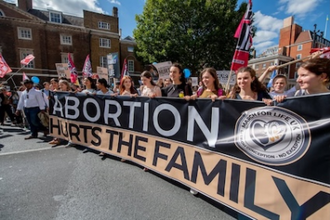
Over the past two years there have been many attempts to do away with the "three-day wait", including three separate attempts to change the law. The "three-day wait" has been presented as a threat to women's health and an imposition on their freedom. A great myth has been perpetrated that abortion is a type of healthcare. It isn't. Abortion is a physical and emotional assault on the mother's health, but nobody is saying it. The "three-day wait" by contrast sends a positive, humanitarian message.
The law does not require any reason to be given when a woman seeks an abortion in early pregnancy. There is, therefore, no medical evidence to suggest that any woman's life or health has been put at risk by the "three-day wait". Rather, as a society, we need to ask why a minority of public representatives are so anxious to see babies aborted that they cannot even wait three days.
Equally, if Ireland today is truly a pluralist society, why has there been such resistance in the mainstream media in covering the truth about the benefits for women of these precious three days? I respectfully appeal to young journalists to consider this counter-cultural viewpoint when reporting news that truly serves the public good.
The story of abortion in Ireland is not just about the babies whose lives are taken from them. It is not just about the parents who lose a child. It is also about a society that is undermining its own future. On a number of occasions, recently, I have been in company with people who have expressed their concern about the decreasing birth-rate and the consequential closure of rural schools. They recognised it as a real-time challenge for local communities, but they were not making the obvious connection. Ireland is operating a system that has resulted in the killing of 60,000 babies over the past seven years with no official 'Plan B' to arrest and reverse this trend. Why?
Thank God for the many parents, doctors and public representatives who have refused to support the removal of the "three-day wait". Your courageous action has saved many young lives so that the gifts of those children can bear fruit in the Ireland of tomorrow.
I welcome and support the statement of 4 November 2026 (see below) of Healthcare Professionals for Life, calling for "a comprehensive national discussion on Ireland's declining birth rate, abortion figures, and the long-term implications for families, healthcare services and the sustainability of the welfare state." As Pope Francis often said, "everything is connected". Yes, the Church has a very clear position on abortion, but that is because it impacts to significantly on the dignity of the person and the future of humanity.'
Statement of 4 November 2026 from the Healthcare Professionals for Life:
Healthcare Professionals for Life is calling for a comprehensive national discussion on Ireland's declining birth rate, abortion figures, and the long-term implications for families, healthcare services, and the sustainability of the welfare state.
According to data from the Central Statistics Office (CSO), Ireland's fertility rate stood at approximately 1.5 children per woman in 2025, substantially below the replacement level of 2.1. As healthcare professionals, we believe this trend warrants serious consideration from demographic, healthcare, social, and economic perspectives.
Figures from Irish abortion reporting sources indicate that approximately 60,302 abortions were recorded between 2019 and 2025. In 2025, approximately 10,600 abortions were notified in Ireland, while 54,125 live births were registered. These figures form part of a broader picture of demographic change and raise important questions about the experiences of women, the supports available during pregnancy, and the factors influencing family formation and reproductive decisions.
Ireland is not alone in facing these challenges. Many European countries are experiencing sustained below-replacement fertility, contributing to population ageing and increasing pressures on healthcare systems, social protection programmes, and public finances. International organisations have highlighted the need for long-term planning in response to changing demographic patterns. Ireland has witnessed increasing outward migration with 90,000 Australian visas issued to Irish citizens since 2021. Many of these young people would like to live, work and have families in Ireland.
From a healthcare perspective, demographic trends have significant implications for future demand on health and social care services, including acute care, community services, disability supports, long-term care, and the healthcare workforce itself.
Healthcare Professionals for Life believes that women, children, and families should be at the centre of any policy response. Housing supply, affordability, childcare costs, financial security, access to healthcare, and workplace pressures all influence decisions about having children and should be considered as part of a coordinated national strategy.
We therefore call on policymakers, healthcare professionals, researchers, and the wider public to engage in a respectful, evidence-based discussion on Ireland's demographic future. Such a discussion should consider fertility trends, abortion figures, family support, and the measures required to ensure the long-term sustainability and wellbeing of Irish society.
 Facebook
 Twitter
 LinkedIn
 Print
 Email









 Facebook
 Twitter
 YouTube
 LinkedIn
 Pinterest