

When Mother-of-Pearl tells the story of Bethlehem
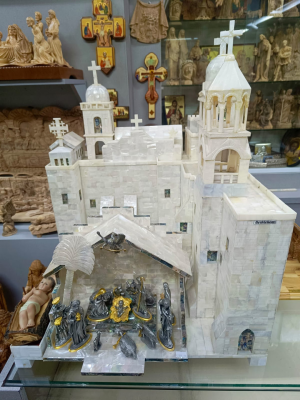
Mother -of pearl Nativity Scene
Source: Bethlehem Updates
Usama Nicola writes in Bethlehem Updates: A few days ago, I participated in a discussion session about the mother-of-pearl craft in Bethlehem. I left with a completely different appreciation for this tradition, which I had often seen displayed in souvenir shops and on household shelves without fully understanding the history, skill, and identity hidden within each piece. The gathering was far more than a conversation about a traditional profession. It was a journey through the memory of an entire city and a window into one of the industries that helped shape Bethlehem's economic, social, and cultural history for centuries.
One of the most fascinating things I learned was that mother-of-pearl is not simply a decorative material. It originates from living marine shells that grow in the sea and exist in many varieties, each with its own colours and characteristics. The shimmering surface that catches our attention in artistic works is the inner layer of these shells, formed over many years beneath the water. There is something remarkable about the journey itself: a shell begins its life in the sea and eventually finds its way into the hands of a Bethlehem artisan, who transforms it into a work of art.
I learned that some of the finest shells historically used in Bethlehem came from the Red Sea, particularly from the area around Jeddah in present-day Saudi Arabia, which was known for its pearls and marine shell trade. The shells were transported along ancient trade routes, often on camel caravans, until they reached Bethlehem, where they began a new journey of cutting, polishing, carving, and inlay work.
Although the use of mother-of-pearl in Palestine dates back many centuries, with references to its appearance in decorative work within the Church of the Nativity as early as the twelfth century, organized workshops in Bethlehem began to flourish during the fifteenth century. At that time, economic conditions under Mamluk rule were difficult, and the Franciscan friars, guardians of the Holy Land, sought ways to support local families. According to historical accounts, artisans and techniques from Italy contributed to the development of the craft, helping transform it from a simple trade into a highly respected artistic tradition.
The profession experienced remarkable growth during the second half of the eighteenth century. As trade expanded under Ottoman rule and the number of Christian pilgrims visiting the Holy Land increased, demand for religious objects and souvenirs grew significantly. Mother-of-pearl became one of Bethlehem's most important industries, providing employment and income for a large portion of the city's population.
What impressed me most was that, unlike many other crafts that spread throughout the region, mother-of-pearl carving remained closely associated with Bethlehem. The city gradually became internationally recognized for this art form. Bethlehem families established commercial networks abroad, and locally crafted pieces found their way to Europe, the Americas, and other parts of the world. Through these artworks, Bethlehem itself became known far beyond its borders.
One of the most memorable stories shared during the discussion was that mother-of-pearl artworks were often presented to visiting dignitaries, religious leaders, and heads of state. These gifts were more than decorative objects. They represented Bethlehem and Palestine, carrying a message about the creativity, skill, and perseverance of the people who produced them.
Like many traditional crafts, however, the mother-of-pearl industry faced serious challenges. Large waves of emigration from Bethlehem, especially around the time of the First World War, led to the loss of many skilled artisans. Additional economic pressures emerged during the British Mandate period, including taxes and import restrictions that affected the supply of raw materials. Over time, these challenges weakened an industry that had once been a cornerstone of the local economy.
The events of 1948 marked another difficult turning point. Many workshops closed, production declined, and only a limited number of artisans continued practicing the craft. By the middle of the twentieth century, much of the traditional industry had disappeared, bringing to an end a golden era that had lasted for generations.
Yet the legacy of this craft remains visible. Bethlehem-made mother-of-pearl artworks can still be found in museums, private collections, churches, and cultural institutions around the world. They stand as lasting testimony to the artistic excellence that Bethlehem achieved through this unique tradition.
Today, only a small number of artisans continue this work in Bethlehem. While raw materials can still be imported from countries such as China and Australia, the greater challenge is preserving the human knowledge behind the craft. The real danger is not the shortage of shells but the disappearance of the skills passed down from one generation to the next. Without new artisans willing to learn, a significant part of Bethlehem's cultural heritage risks being lost.
I left the discussion realizing that mother-of-pearl is about much more than souvenirs or decorative objects. It tells the story of an entire city, a story of creativity, resilience, and cultural exchange that stretches from the sea to Bethlehem and from Bethlehem to the wider world. Every piece of mother-of-pearl carries within it the memory of generations of artisans who transformed a gift from the sea into art, art into identity, and identity into a heritage that deserves to be preserved for future generations.
Postscript:
Through his Patreon page, Usama Nicola offers regular reflections, updates from Bethlehem, and spiritual insights, creating a worldwide community of solidarity and shared understanding. His hope is to touch hearts, gently challenge complacency, and remind people everywhere that even in places marked by sorrow, life continues to grow.
You can support Usama's writing ministry by subscribing to Bethlehem Updates as a generous supporter.
Bethlehem Updates: www.patreon.com/bethlehemupdates
 Facebook
 Twitter
 LinkedIn
 Print
Print Email
Email












 Facebook
 Twitter
 YouTube
 LinkedIn
 Pinterest