

Eve of the Feast of St George… A Living Tradition in Bethlehem
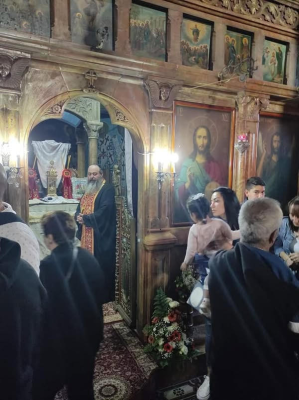
Pilgrims at Monastery of St George
Source: Palestine Updates
Today marks the eve of the feast of Saint George, a moment that carries a special rhythm here in Bethlehem. Every year on May 6, something beautiful unfolds, something that feels both ancient and deeply alive.
In our region, the feast is not only a Christian celebration, it is a shared cultural and spiritual gathering. People come from across the area, Muslims and Christians alike, drawn to the Monastery of St George in Al-Khader. It is one of those rare moments where the lines that often divide fade quietly into the background, and what remains is a collective memory, a shared reverence.
For Christians from Bethlehem, Beit Jala, and Beit Sahour, the day begins with a procession. People walk together, sometimes in prayer, sometimes in quiet conversation, moving toward the church as generations have done before them. There is something powerful in this act of walking, it connects the present to the past in a very tangible way.
The story of Saint George reaches back to the turning point between the 3rd and 4th centuries, during the rule of Diocletian. It was a time when Christians faced severe persecution, and George himself became one of its most enduring witnesses. According to local tradition, he was imprisoned here, in Al-Khader, where the monastery now stands.
What remains most vivid in local memory is not only his martyrdom, but the stories that grew around it. The chains said to have bound him became relics of healing. People believed they carried the power to restore both body and spirit. Over time, Saint George became known not only as a martyr, but as a protector, a healer, and even one who could intercede for rain in a land where every drop matters.
This is perhaps why his presence crosses religious boundaries. To Christians, he is Mar Jiryes. To Muslims, he is Al-Khader, a figure associated with blessing, protection, and divine mystery. Different names, different traditions, yet a shared sense of holiness.
The monastery itself reflects this layered history. A Greek Orthodox monastery was first built here in the 16th century, standing as a testament to centuries of devotion. The present church, constructed in 1912 over those earlier foundations, carries within its stones the echoes of countless prayers, footsteps, and hopes.
But beyond the history and the architecture, what truly defines this feast is the atmosphere. The scent of candles, the murmur of prayers, the gathering of families, the quiet hope people bring with them. Some come seeking healing, others offering thanks, others simply to be part of something that feels larger than themselves.
On this eve of the feast, you can almost sense it already, the anticipation, the movement, the memory awakening once again.
In a land often marked by division, the Feast of St George remains a quiet reminder of another possibility, one where faith, tradition, and shared humanity meet.
 Facebook
 Twitter
 LinkedIn
 Print
Print Email
Email














 Facebook
 Twitter
 YouTube
 LinkedIn
 Pinterest