


The silent massacre of humanitarian workers
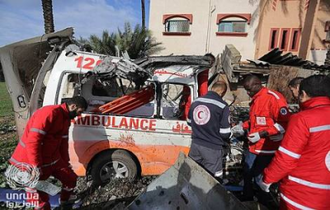
Bombed ambulance - Image UNRWA
Source: Fides
A silent massacre of humanitarian workers is taking place around the world.
Once considered the pride of international agencies, in a system that saw aid workers as the spearhead of collaboration between nations to combat hunger, drought, and war, today they are forced to pay a very high price in human lives.
In 2025, at least 326 humanitarian workers were killed in 21 countries, bringing the number of victims of this war against those who deliver aid to the civilian population to 1,010 in just three years.
According to estimates, more than half have lost their lives in Gaza and the West Bank (560, to be exact), 130 in Sudan's forgotten war, 60 in South Sudan, 25 in Ukraine, and a similar number in the Democratic Republic of Congo.
The death toll is only the most tragic aspect of a widespread violence that registers at least 600 incidents a year, including kidnappings, serious injuries, arrests, and detentions, perpetrated by both irregular forces present in the crisis areas and by regular forces.
Often, death comes from the sky: airstrikes, especially in Gaza, Lebanon, and Ukraine, are the leading cause of fatalities. In Africa, however, the primary cause is small arms in the hands of military or paramilitary forces composed of poorly trained but highly determined personnel.
Kidnappings have increased in South Sudan, Burkina Faso, Cameroon, the Central African Republic, Chad, Nigeria, and Sudan; But, in general, the number of arrests and detentions of humanitarian workers by state and local authorities has also increased, as a means of exerting pressure and control over organisations operating on the ground. The data shows 14 cases of kidnapping, 145 arrests and police detentions, and 441 cases of intimidation and harassment. These figures also demonstrate the erosion of the authority of the international agency system and the multilateral system as a whole.
If national forums are no longer perceived as a stop on violence, but rather as mere assemblies that hinder the freedom of states, everyone feels authorised to resort to harsh methods against those acting under their protection. The developed world is abandoning them, and the consequences are also financial.
The humanitarian aid sector continues to suffer greatly from the freeze, decided last year by Donald Trump, on almost all funds destined for development and aid in crisis areas. Many programs have been forced to close, and many have been forced to drastically cut everything, including staff security. Furthermore, Washington's decision has reinforced the narrative that portrays the UN and international agencies as essentially ineffective (and even corrupt), fuelling criticism and propaganda against them.
Unfortunately, the United Nations, largely deprived of the support of some of its most influential members, starting with those holding permanent seats on the Security Council, can only demonstrate once again its impotence in the face of the blatant use of brute force.
Security Council Resolution 2730 of May 2024 (proposed by Switzerland, adopted with 14 votes in favor and one abstention, that of Russia) urged member states to uphold international law to protect humanitarian workers, to conduct independent, swift, and effective investigations into violations against humanitarian and UN personnel, and to bring those responsible to justice.
In 2025, 62 attacks were recorded against UN facilities and 84 against vehicles operating under its flag.
"They consider us an easy and legitimate target," declared Tom Fletcher, a senior UN official responsible for reporting the situation to the Security Council.
 Facebook
 Twitter
 LinkedIn
 Print
Print Email
Email















 Facebook
 Twitter
 YouTube
 LinkedIn
 Pinterest