

Cardinal Parolin: We need more voices calling for peace
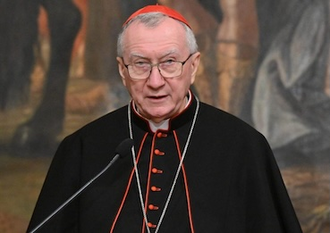
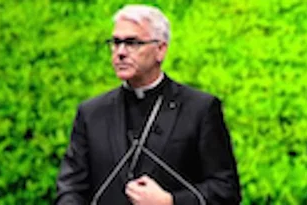
Cardinal Parolin. Image: Archdiocese of Malta
Source: Vatican Media
In a recent interview with Italian Catholic Action's publication 'Dialoghi,' Cardinal Pietro Parolin, Vatican Secretary of State, discussed the fragility of diplomacy, the rise of the logic of the strongest, the importance of the United Nations, and the need to empty nuclear arsenals.
"It is a utopia to think that peace is guaranteed by weapons and by balances imposed by the strongest, rather than by international agreements." Cardinal Parolin said.
"We firmly believe that arsenals must be emptied, starting with nuclear ones," he said.
The Cardinal also noted the failure to renew agreements for the progressive reduction of atomic weapons, which, the he said, has "given even freer rein to the construction of deadly instruments capable of annihilating life on earth."
"There is a need for more voices for peace, more voices against the madness of the arms race, more voices raised in favour of our poorest brothers and sisters, more voices and more proposals - I am thinking, for example, of the world of Catholic universities - for new economic models inspired by justice and care for the weakest, rather than by the idolatry of money."
"There is a need for a surge of humanity and responsibility on the part of everyone. Instead, it is painful to note that in many cases the only response is rearmament."
Recalling the hope of Saint Pope John Paul II, who dreamed of a united Europe, Cardinal Parolin. said history "has gone in another direction, and instead of a freer and more united world, we have seen a more unstable one emerge, without effective remedies being put in place for the terrible injustices that cause millions of people to suffer from hunger, thirst, lack of even minimal healthcare, and undignified working conditions."
Turning to Ukraine, where there is a war at the heart of Christian Europe, the Crdinal said this is "a wound, that calls out to us... I have the impression that the devastation this war has caused in Ukraine is not sufficiently perceived: the enormous human toll, the destruction of cities and infrastructure."
But he said, "many governments, have expressed outrage over attacks on Ukrainian civilians by Russian missiles and drones, imposing sanctions on the aggressors." The Cardinal noted: "It does not seem that the same has happened with the tragedy of the destruction of Gaza."
He points to the "use of double standards," linked to a "primacy of power," the dominance of one's own country over others, justified by international law and invoked "only when convenient," but ignored in many other cases.
At the root of this problem, the Secretary of State argued, is the crisis of diplomacy, which appears "mute, incapable of activating alternative instruments," replaced by the logic of the strongest. "There seems to be a loss of awareness of the value of peace, the tragedy of war, and the importance of shared rules - and of respecting them."
He said: "Diplomacy is the art of the possible and can never operate according to pre-established schemes imposed from above or based on abstract doctrines."
Cardinal Parolin said it must start from reality, "even if, at times, it is frightening," and requires patience and attention to achievable results.
Regarding Europe, which is unable to speak with one voice, there is a need to "revive in peoples a sense of European belonging and, among leaders, an awareness of the need for common action, without ever abandoning the principles that underpin the European Union."
As for the United Nations, the Cardinal reiterated that "the Holy See continues to believe in its importance," considering international organizations essential "to restrain the logic of the strongest." Certainly, vetoes have limited its impact, but, he adds, it is necessary not to "move from the force of law to the law of force."
Although the Holy See has not joined the Board of Peace, the Cardinal said, it is "keeps dialogue open with the countries involved," as it is willing to do everything possible to promote peace and reconstruction, in close collaboration with the Catholic Church in the Holy Land.
"I consider it necessary that international bodies and the Palestinians themselves take part, because it is not possible to decide the future of the Strip while ignoring its legitimate inhabitants, who are citizens of the State of Palestine - an entity that must be safeguarded against any attempt at annexation, which is contrary to United Nations resolutions and to the basic principles of justice."
Reflecting on the voice of the Popes in times of crisis, Cardinal Parolin said that it was a "voice in the desert" if it is not supported.
Regarding the Trump administration's appeal to religious values, he points out certain inconsistencies: "The Christian faith is not a display counter of various products from which the buyer may choose. We cannot claim to love and defend life while caring only about the unborn, and not recognizing that the lives of migrants who die at sea are also lives."
On Venezuela, he reaffirmed the Holy See's past efforts to find a solution that would avoid bloodshed, adding that "regardless of what has happened and how it happened, we continue to support a peaceful solution, asking that the country's self-determination and the good of the Venezuelan people be respected."
Regarding Greenland, after President Trump's threat to annex it, Cardinal Parolin notes that, while appreciating the joint effort of the Danish government and Greenland's autonomous government to reach an understanding with the United States, what happened "has led the Greenlandic people to a renewed awareness of their own identity."
On Iran, he reiterates the need to respect human rights and the demands of the population, "patiently cultivating dialogue and peace."
Asked about China, Cardinal Parolin said that "dialogue continues, despite the difficulties." He emphasized once again that "the provisional agreement signed in September 2018 is neither a concordat nor a political-diplomatic agreement, but concerns solely the procedure for appointing bishops."
"The fact that today in China all bishops are in communion with the Pope, is fundamental," he said.
Regarding Hong Kong, "the Church continues to engage in dialogue with the authorities and to ensure religious freedom."
Finally, reflecting on the enormous advances in technology and the need to respect limits. "We must defend humanity and fight against dehumanization."
The Cardinal denounced "the use of hateful, contemptuous language that shows no respect for others," on soclal media "which generates fear and leads to the identification of supposed enemies."
"As Christians, we must oppose this drift through our daily witness. Hatred, war, and violence begin when we forget the face of the other."
 Facebook
 Twitter
 LinkedIn
 Print
Print Email
Email










 Facebook
 Twitter
 YouTube
 LinkedIn
 Pinterest