


Viewpoint: Is morality dead on arrival?
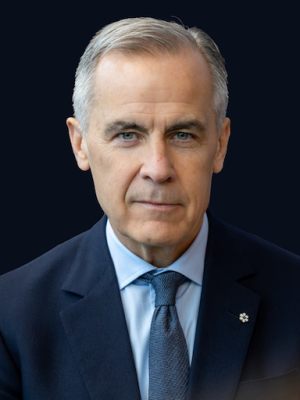
Prime Minister Mark Carney
Until recently, nations gave lip service to international laws that classified certain actions during conflict - attacking hospitals and essential civilian infrastructure like power generation and desalination plants - as illegal. Such attacks might only be lawful if the military advantage gained outweighed the loss of civilian life.
The problem arose - vexing politicians, military leaders and human rights lawyers - in the case of "dual use" targets such as bridges essential for the transfer of enemy military equipment or hospitals and schools which belligerents treated as human shields.
Now, medical facilities and personnel are deliberately targeted in Sudan and Gaza in defiance of the Geneva Conventions. Leaders threaten to destroy entire civilisations, in breach of the 1948 Genocide Convention (a gift to China's President Xi and Russia's Putin). Medical staff and ambulances are singled out with impunity.
Can the international community return to at least the pretence that perpetrators of crimes under international law will be held accountable? Or was the promise of ethical policy always "partially false", as Canada's leader recently conceded at the Davos conference?
Following the Second World War, most members of the United Nations ratified the Genocide Convention, the Geneva Conventions, and other humanitarian laws. In theory, the International Criminal Court and the International Court of Justice would hold abusers to account. Many assumed these were signs the human race was evolving from savagery to civilisation.
Yet, in the largely ignored war in Sudan, MSF reports: "Hospitals have been looted, bombed, or occupied. Medical staff have been threatened, detained, or forced to flee, and ambulances have been blocked…. with Sudan accounting for 82% of global deaths from attacks on healthcare in 2025."
Commenting on the March 22nd attack on Ed-Daein Hospital in Darfur, the Coalition for the Responsibility to Protect notes, "it is not an isolated incident but part of a clear pattern of attacks on protected persons and objects, with devastating consequences for civilians. According to the WHO, 2,036 people have been killed in 213 attacks on health care since the outbreak of the conflict in 2023."
Recent attacks include an April 2nd strike on Al Jabalain Hospital that killed 10 people, including seven medical staff. Soldiers beat medical staff and destroyed equipment. The same day, a drone destroyed the operating complex of a hospital in White Nile state, killing the director, Dr Hamed Suleiman, who was performing surgery at the time. Ten other medics were killed.
The targeting of Gaza's medical facilities has drawn more attention. As of May 2025, the World Health Organisation reports 697 attacks since October 2023, with 94% of hospitals damaged or destroyed. In an updated report, WHO logged 735 attacks on health care in Gaza from 7 October 2023 to 11 June 2025, killing 917 persons and injured 1411, affected 125 health facilities, and damaged 34 hospitals: 1151 healthcare workers have been killed, and 165 doctors are dead.
"Deliberate attacks on health and care workers, and health facilities, which are gross violations of international humanitarian law, must stop now," according to the UN's expert panel.
When Canada's Prime Minister Carney spoke at Davos, he admitted there is a yawning gap between humanitarian law and reality. "Stop invoking the rules-based international order as though it still functions as advertised," he warned. "We knew…. the strongest would exempt themselves when convenient. That trade rules were enforced asymmetrically. And we knew that international law applied with varying rigour depending on the identity of the accused or the victim."
The problem is that international laws and institutions have few enforcement mechanisms and no battalions, to paraphrase Stalin's comment about the Pope. In 2005, the UN adopted the Responsibility to Protect Doctrine which charged all nations with intervening to stop crimes again humanity, war crimes and genocide. Yet, at the same moment, a genocide was raging in Darfur; no country responded. This failure to challenge impunity guaranteed the current slaughter in Sudan, with at least 150,000 killed in the past three years.
Yet, surely the pretence that international law exists and acknowledges ethics, morals, or values - choose your word - is preferable to the current brute force. Finland's President Alexander Stubb describes this as "value-based realism."
Prime Minister Carney calls for coalitions of "middle powers" (the EU, the UK, Australia, Japan, Canada) "that work, issue by issue, with partners who share enough common ground to work together…..and honest foreign policy, because countries earn the right to principled stands by reducing their vulnerability to retaliation."
We must hope that Mark Carney's vision of an ad hoc coalition of concerned countries upholding international norms, albeit imperfectly, succeeds.
Rebecca Tinsley is the founder of www.WagingPeace.info
 Facebook
 Twitter
 LinkedIn
 Print
Print Email
Email

















 Facebook
 Twitter
 YouTube
 LinkedIn
 Pinterest