

Sudan: 1,000 days of failure
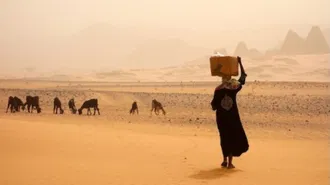
Image Pax Christi USA
As Sudan marks 1,000 days of war, the international community is failing to prevent mass atrocities and the targeting of minorities such as Christians and Black Africans by both sides.
The Sudan conflict is the world's largest humanitarian crisis, but according to British parliamentarian Lord Alton, there is "a lack of concerted diplomatic engagement, and no end to the suffering of Sudanese civilians in sight".
The main battlefield has shifted from Darfur in the west to the Kordofan region where a Christian majority is under drone attack.
On Christmas Day, 12 worshippers were killed and 19 wounded when their church in Julul was attacked. The United Nations International Organization for Migration believes 67,000 people in Kordofan have fled the violence in recent weeks. This adds to the estimated one million IDPs already in the area.
The main Kordofan towns of El Obeid, Dilling and Kadugli are the scene of intense fighting, subject to blockades preventing food and medicine entering. Analysts fear a repeat of the siege of El Fasher last year, which left untold thousands of unarmed civilians dead. In December, the UN's early warning committee highlighted the dangers facing the besieged area.
Background to the current conflict
Ethnic and religious minorities in the Kordofan states, which includes the Nuba Mountains, have been the subject of aerial attacks by the Islamist Sudanese regime in Khartoum since the 1980s. The military dictatorship (which self-identifies as Arab and Muslim, despite centuries of inter-marriage in Sudan) amended the penal code to include crucifixion in 1991. As recently as 2024, three men were crucified by the Sudanese Armed Forces (SAF) for allegedly collaborating with their enemies in the rebel Rapid Support Forces (RSF). Human rights groups say churches have been subject to harassment, closure and destruction by the Khartoum regime for decades.
Until recently, the SAF and RSF acted together in a campaign of ethnic persecution against the Black African population of Darfur, killing at least 300,000 during the first Darfur genocide of 2003-6. Following a popular civilian uprising in 2019, the SAF and RSF together overthrew a transitional non-sectarian civilian government in 2021.
However, in April 2023, the two militias turned on each other, fighting for control of Sudan's natural resources. The RSF has now forced the SAF out of most of Darfur, with a massive loss of civilian life, destruction, human rights abuses, targeted violence against women and girls, and displacement, including what the United States recognizes as a genocide.
A new report containing dozens of interviews with survivors of the recent conflict in Darfur has been compiled by Marcus and Tomas Ray. The survivors, now in refugee camps in neighbouring Chad, give accounts of sexual violence against women and boys, enslavement, mass killing, desecration of bodies and racial abuse. The Ray brothers' report is dedicated to the late Earl of Sandwich in recognition of his lifelong support for Sudan's civilians. Witness testimony about mass executions in Darfur has been validated by the Yale Humanitarian Research Lab, and satellite photos of blood-soaked land visible from space.
A new battlefield, but the same silence
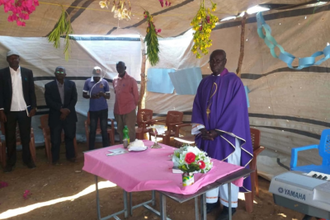
The battle between the SAF and the RSF has shifted east to the Kordofan region where much of the population is non-Arab and non-Muslim. According to a Catholic Nuba group posting on Facebook, parishes had prepared for violence, dividing worshippers into smaller groups: "Despite the fear and uncertainty, the spirit of Christmas remained unbroken… This solemn adaptation of the Christmas celebration stands as a testament to the resilience of the people who, even under threat of violence, chose unity, prayer, and hope over fear."
Why does the killing continue?
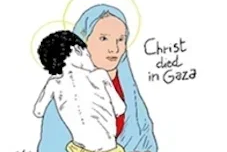
Human rights groups estimate that at least 150,000 have been killed since the war began 1,000 days ago. They cite several reasons for a lack of international pressure, including the focus on Ukraine and Gaza. There has also been a lack of coordinated diplomatic action to halt the fighting, with competing initiatives failing to bring about consensus.
Most consequential however are the geopolitical interests in play which threaten to spread anarchy across a much wider region of East Africa. The UN has compiled evidence that the United Arab Emirates continues to supply the RSF with weapons and assistance. Supporting the SAF are Egypt, Iran and Saudi Arabia, none of whom wish to see a democratic, civilian-run government succeed in a Muslim-majority country.
Analysts say Saudi Arabia and the UAE are engaged in a proxy war, similar to their engagement in Yemen, trying to extend their influence in Africa. Nations such as the UK and USA, with close business relationships with the Gulf powers, have declined to apply concerted diplomatic pressure on Gulf rulers to curb their support for the warring parties.
Meanwhile, civilian groups within Sudan provide humanitarian support to embattled communities. The Emergency Response Rooms (ERR), a network for soup kitchens and ad hoc medical facilities across the country, were nominated for the Nobel Peace Prize. Human rights groups say the ERR volunteers are deliberately targeted by both sides. They continue their work in the absence of services for civilians from the SAF, which nevertheless maintains that it is the government, or the RSF which occupies much of Darfur.
The SAF is increasingly regarded by the international community, including the African Union, as the government of Sudan, offering the guise of legitimacy to one of the forces responsible for overthrowing the transitional civilian government in 2021. Analysts point out that the SAF is made up of the same extremist Islamist ideologues who ran Sudan for decades during Field Marshall Bashir's dictatorship. Bashir was indicted for genocide by the International Criminal Court. Moreover, the SAF has had close ties to Iran and Russia, promising military bases on the Red Sea until last month.
 Facebook
 Twitter
 LinkedIn
 Print
Print Email
Email














 Facebook
 Twitter
 YouTube
 LinkedIn
 Pinterest