

Christian aid agencies in coalition urging UK Government to keep its commitment to Sudan + petition
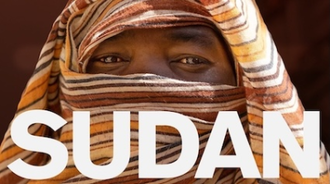
Today, 9 January, marks 1000 days of conflict in Sudan - one of the world's most severe humanitarian crises - where more than 33.7 million people are in urgent need of humanitarian assistance. That is nearly two in three people. 13 of the UK's leading aid agencies, including CAFOD, World Vision, Christian Aid and Tearfund, have united to call on the UK government to act now to prevent further catastrophe in Sudan.
"What we are witnessing is an absolute tragedy," said Inos Mugabe, Operations Director for World Vision Sudan. "Children and their families are urgently escaping conflict areas, and they need immediate support. They look weary and severely malnourished. Their bodies are failing, and without urgent, large-scale intervention-right now-we will lose them. We are receiving the most vulnerable people imaginable, but the existing resources are utterly non-existent to sustain them. The world must understand the gravity of this situation and act before it is too late."
1,000 days of conflict in Sudan has driven the collapse of livelihoods and services, with an estimated 70 to 80 per cent of hospitals and health facilities affected and non-operational, leaving roughly 65 per cent of the population without access to healthcare. Sudan is also in the midst of the world's largest food crisis, with close to 21.2 million people facing high levels of acute food insecurity. Displaced people are forced into more precarious conditions in unsafe settlements, experiencing overcrowding or living in makeshift shelters, hunger and disease outbreaks, requiring higher needs which are harder to meet with reduced funding.
Sharp cuts in foreign assistance have further weakened humanitarian operations, stripping funding from essential programmes, meaning people won't have enough to eat and feed their families, have access to basic healthcare, clean water and sanitation, or a safe place to live, with a heightened risk of gender based violence.
A mother, Aisha Mohammed, travelled with her children from El Fasher on a donkey until they reached Al Nakheel camp in East Darfur, supported by World Vision. The camp is already overcrowded, housing more than 22,500 internally displaced people, with severe shortages of shelter materials, food, clean water and healthcare, worsening the situation. "I left El Fasher on a donkey and couldn't leave my children behind. It was hard. We had to leave behind several of our relatives," said Aisha. "We need food and water so my children can survive."
Amidst sweeping hunger and displacement, the conflict has exacerbated gender-based violence (GBV). Demand for GBV services has increased by 288%, since December 2023, leaving survivors in dire need of medical care and trauma support, and yet the women-led initiatives that play a crucial role in GBV prevention and services have received less than 2% of the critically-underfunded Sudan Humanitarian Fund (SHF).
The UK Government has demonstrated that it can lead such as at the UN Security Council, through high-level diplomacy, and by co-hosting the April 2025 London Sudan Conference with Germany, France, the African Union and the EU. But its leadership has been inconsistent. Ministerial changes, funding cuts, departmental upheaval and shifting priorities have repeatedly knocked Sudan off the agenda. As the UN Security Council penholder, the UK has a rare platform to drive action.
Samy Guissebi, Country Director for Action Against Hunger in Sudan, said: "Sudan cannot be allowed to fade into another forgotten crisis, worse, a neglected one. The scale of suffering is immense, and we have witnessed the exhaustion and fear etched into the faces of people arriving in search of food, shelter and safety.
"All parties must respect humanitarian law and guarantee sustained access to those enduring this conflict. Those delivering lifesaving support are working under extreme conditions and we urge donors to provide sufficient funding to expand our work and back local responders. We cannot do this alone."
Mohamed Kamal, Country Director for global children's charity Plan International Sudan said: "The situation on the ground is unimaginable. Our staff are meeting families who have not been able to regularly access food for over a year. It's been hardest for women, children and people with disabilities, many of whom are suffering from severe hunger and exhaustion when they arrive at displacement camps.
"Despite severe constraints, Plan International is working tirelessly to provide life-saving humanitarian assistance, including in the hardest-to-reach areas of North Darfur, which has seen some of the very worst of the fighting. We are once again calling for a drastic upscaling in humanitarian funding from the international community - and unfettered access for aid to enter all parts of Sudan. The lives of thousands of children depend on it."
Shabnam Baloch, Oxfam's South Sudan Country Director, said: "This has now become a regional humanitarian crisis. Over a million people have crossed the border into South Sudan from Sudan, and the already scarce resources of food, water and sanitation put lives at risk if no new funding is secured. In South Sudan, millions of people were already grappling with extreme hunger and disease. South Sudan simply does not have the capacity to absorb this additional humanitarian burden."
1000 days on, #KeepEyesOnSudan, a coalition of 13 leading agencies including Action Against Hunger, Age International, CARE International UK, CAFOD, Christian Aid, Concern Worldwide, International Rescue Committee, Islamic Relief UK, Plan International, Save the Children UK, Tearfund, Oxfam, World Vision, are calling on the UK Government to take concrete action:
- Scale-up its diplomatic efforts, including through the UN Security Council, to push for an immediate, nationwide ceasefire as the first step towards lasting peace.
- Protect civilians, aid workers and local emergency responders by backing efforts to prevent further attacks, atrocities and international humanitarian law violations.
- Secure rapid, safe, sustained humanitarian access across Sudan, especially to conflict-affected and besieged areas, so aid can reach every community in need.
- Increase funding now, especially to local aid groups and women led organisations, to help stop catastrophic levels of hunger spreading further and provide life-saving assistance and services especially to women and children forced to flee their homes.
- Support a regional response to this crisis, working with neighbouring countries to increase humanitarian assistance to refugees, enable safe cross-border access for humanitarian aid, and prevent the conflict from spreading further.
Signed petitions will be collected across all organisations and jointly handed in to Downing Street on 15 April 2026, three years on from the start of the conflict, demonstrating a united call for action and the strength of public support.
To sign the petition please go to: www.change.org/Sudan-cannot-wait
 Facebook
 Twitter
 LinkedIn
 Print
Print Email
Email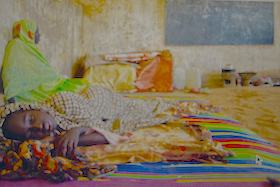













 Facebook
 Twitter
 YouTube
 LinkedIn
 Pinterest