


Ian Linden: Solidarity - Living the truth through political action
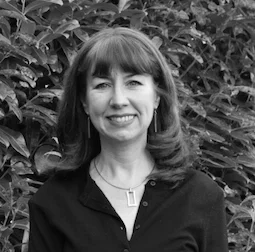
Professor Anna Rowlands runs sessions for MPs
There is a danger in this time of peril, general sense of helplessness, and fear of diversity, in seeking sanctuary in groups of comforting sameness. It may be in ethnic identities seeking recognition, small political movements, or finding solace in religious piety. Each of these options offer more rewards than generalised apathy. They may in their different ways counteract secular promotion of individualism. But none separately is able to bring about radical changes, resist fundamental injustices and domination by the powerful wealthy minorities contributing to Britain's decline.
Democracies are supposed to govern on behalf of the people. But real power lies in oligarchies of wealth who control economic life; the top ten richest in the UK are together worth at least £200 billion while 4.5 million children are living in poverty. Possibilities for redistribution are limited. The market closes off means for seeking the common good and progressive economic change by raising the cost of borrowing to punishing levels. Nobody seriously tackles the off-shore tax havens. Faith in the ability of governing political Parties to bring about change for the better is waning. And the superpowers deploying their vast military power have the last word.
It doesn't have to be like this. Achieving change requires diversity, strong structured networks, alliances of different active organisations. But potential change-makers plough separate furrows not understanding each other very well or working together effectively.
Respected Popes and the Catholic Church worldwide are able to draw public attention to the need for radical change beyond its membership. But, at least in theory, Popes 'don't do politics' and UK political Parties 'don't do God'. Or to be more precise those on the Left striving for social and economic change 'don't do God'.
Hubris is to think that describing, understanding, the life of the Catholic Church is easy. Ditto for the world of politics. People who go to Party Conferences, attend constituency meetings, knock on doors, distribute electoral leaflets, stay up all night as election results come through, to differing degrees know what political life and culture is like and have visions of changes it might achieve. But in our secular culture, most of those politically active or are politicians have negligible knowledge of Catholicism, or any other religious beliefs, and most who have leading roles in the Church have negligible experience of how politics works. When each address the world, and often when they speak to each other, they usually speak with two different purposes in mind, under different constraints, what can be said and done, what cannot, and what needs saying and doing.
Yet, they share a common purpose, the vast majority of those who are politically active seek to make a better world as do committed Catholics. Catholicism and the politics of the Left both share concern for the poor and the vulnerable as key moral motivations for action. If this isn't apparent, more and better work needs to be done to communicate Catholic Social Teaching; too many Catholics aren't aware of it nor understand the demands of a 'preferential option for the poor'. Some theology faculties do have outreach. Professor Anna Rowlands at Durham University for example runs sessions for Members of Parliament, and St. Mary's University, Twickenham, engages with those working for social justice.
A number of misconceptions and stereotypes need to be overcome. Catholics do not fall necessarily into neat binary categories such as left and right wing, traditional and progressive. You can be what is called socially conservative, but economically radical. Views on beginning and end of life, on some forms of identity politics, come as a surprise to those who might only have noticed a Catholic's Left economic positions.
Ash Sarkar's Minority Rule: Adventures in the Culture War, Bloomsbury, 2026, is a comprehensive exposition of the cluster of political positions she considers represent today's Left concerns - with a whole worried chapter, for example, on feminist caveats about trans-identity access campaigns. The book's central theme is how social media, Press, Radio and Television promote an identity and culture based politics, "steering resentment towards culture and identity", playing on victimhood and "subjective experience", diverting politics from society-wide action to counter poverty and from effective resistance to injustice. She highlights the widespread, interracial, and violent civil unrest in Britain 2011, how after it the White Working Class came to be viewed as the latest symbol of social decline, from "salt of the earth to scum of the earth" as Sarkar puts it. What was once a hope for peaceful 'mass action', opposing government policies that leave poverty a permanent fixture, turns into a compulsion for monitoring "what people say", policing "the boundaries of our own moral purity" - conducted increasingly and powerfully on-line.
Sarkar's thoughts on escaping the "digital mouse-trap" chime with Christian thinking and particularly Pope Leo's concerns. "Nobody was made a better person by spending time on-line", she writes, but by "relationships built through purpose, trust and experiences…community with other people as the highest source of good".
Listening last month to former Archbishop of Canterbury, Rowan Williams, launch his latest book: Solidarity: the Work of Recognition Bloomsbury, 2026, was a 'lightbulb' moment in the midst of his famous intellectual obscurity. He spoke of recognizing difference, "shared vulnerability", of the need for "rebalancing as collective beings", and "reciprocal engagement" in which "each acquires a history in which the other is constitutive". He and Sarkar were advocating much the same thing: solidarity as shared, structured, political activity for justice, peace and the common good - political with however small a "p". Though within Rowan Williams' theological framework, (I hope this is what he meant) , solidarity is our God-given natural mode of being in society, presumably disrupted by sin, so meaning restoring relationships to which we need to return to discover true communion.
This raises the question of what is to be done to combat different forms of injustice, what resistance looks like in a world permeated by distraction, inadvertent misinformation, as well as calculated disinformation. The Czech author Vaclav Havel in a 1978 essay The Power of the Powerless memorably spoke of "living in truth". He saw Communist States were held together by lies. "If the main pillar of the system is living a lie", he wrote from prison to his wife, " then it is not surprising that the fundamental threat to it is living the truth". He believed small acts of truth-telling mattered. So, of course, does Pope Leo.
In November 1989, after 41 years in power, the Communist Government in Czechoslovakia collapsed in 11 days after a popular uprising. Vaclav Havel became President. Things can change in unforeseen ways.
Sarkar's message to the political Left is also unexpected: we must not "make sameness the condition of solidarity." Anyone who supported the struggle against apartheid would endorse that. Resistance to the regime brought together many diverse religious and political groupings. Catholics might also ponder her other not-so-small truth: "We can't achieve anything while minoritising ourselves". With 1.43 billion believers globally, this comes as sensible advice for the Church in this country as well as for the Left.
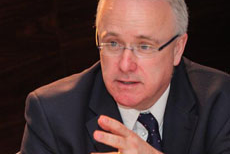
Professor Ian Linden is Visiting Professor at St Mary's University, Strawberry Hill, London. A past director of the Catholic Institute for International Relations, he was awarded a CMG for his work for human rights in 2000. He has also been an adviser on Europe and Justice and Peace issues to the Department of International Affairs of the Catholic Bishops Conference of England and Wales. Ian chairs a new charity for After-school schooling in Beirut for Syrian refugees and Lebanese kids in danger of dropping out partnering with CARITAS Lebanon and work on board of Las Casas Institute in Oxford with Richard Finn OP. His latest book was Global Catholicism published by Hurst in 2009.
To read Dr Linden's blog see: www.ianlinden.com/latest-blogs/
 Facebook
 Twitter
 LinkedIn
 Print
Print Email
Email






 Facebook
 Twitter
 YouTube
 LinkedIn
 Pinterest