


Ian Linden: Noise and silence in football & religion
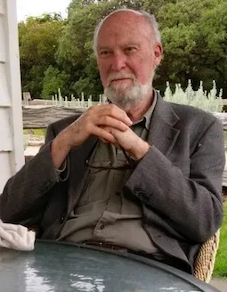
Dr Ian Linden
Football clubs and religion have features in common; there is belonging to a beloved community, high levels of commitment - capable of generating violence - knowledgeable commentators, rules, regulations and an informed debate about them. But the relative importance of noise and silence is not one of them.
True, singing, hymns or chants and acclamation is part of celebration in both. But there is something distinctive about the roar of the crowd when the ball goes into the net that is different even from a Catholic gathering greeting a Pope. Today listeners get routinely shouted at early in the morning in the sports report by football commentators replaying their reaction to a key goal scored in a critical match. Thought for the Day is measured and gently spoken - like cricket commentary of old, in the words of the late, great sports journalist Frank Keating, in the "confiding countryman burr" of John Arlott.
Silence has an entirely different quality in both too. There is the silence of the home crowd as the opposition take a penalty. And the silence of the Tottenham supporter in the pub amongst friends who are Arsenal supporters. There is the silence of vast Cathedrals, the resonant silence of young people in prayer in a crypt permeated by prayer over the centuries. More daunting must be the overwhelming extraterrestrial silence experienced by astronauts.
Silence is today predominantly counter-cultural. Digital silence, the loss of recourse to instant chatter when a mobile is lost or stolen, is positively threatening. It is not just the embarrassment of the hiatus when a normal conversation peters out.
Noise creates conflict in daily life between those making the noise and those having to put up with it; but that does not mean either side would be comfortable with silence. Modern technology and the market for instantly available music have changed perceptions of the normal. If you stop a passer-by to ask the way, ear-plugs come out and they will usually consult their mobile to reply. Find a hotel without background music or indeed a restaurant. You will have found an unusual venue.
I recently asked a senior member of hotel staff on a roof-balcony overlooking a pleasant city, a picture of serenity, why we had to have an accompaniment of wallpaper-music disturbing the natural beauty of the view. "Could it be turned off please"? Other hotel guests on the balcony concurred with the request. Well, no, it couldn't or rather no he wouldn't, though he was able to do so. His "other people like it" argument didn't work. The "ambiance" explanation didn't work either. The music was irritating and diminished the ambiance of quiet, calm and tranquility. The balcony manager struggled to find a convincing argument to justify his response and began to sound mildly authoritarian. I pointed out that we simply wanted to enjoy the delightful facilities of the hotel. We both got annoyed. He retreated. Five minutes later the music came off. Public support helps.
It was the first time I'd got further than the volume of the music in a "hospitality" venue being turned down after I'd complained we couldn't hear ourselves speak above the noise from animated conversations all around. Maybe it was because the hotel was in Ireland and the island had, what seemed superficially, taken the path of - political - compromise.
"True silence is the rest of the mind", William Penn (1644-1718) Quaker founder of Pennsylvania wrote," and is to the spirit what sleep is to the body, nourishment and refreshment". Silence has been embedded in Catholic practice from the Egyptian anchorites of the 3rd. and 4th centuries. The Great Silence, Silentium Magnum, after compline until after morning prayers, is still kept by several contemplative Religious Orders such as the Benedictines and Carthusians.
Pope Leo has been contributing to this tradition. His teaching on AI, published in full today, appears as a ground-breaking extension to his warnings about the technology of social media and its outcomes, the noise and frantic busyness of modern life contributing to a pervasive anxiety, and incompatible with being "open to Grace". "All this, dear friends", he told a large assembly of young people in Monaco on 28 March, "requires prayer, moments of silence and listening, to quiet the frenzy of doing and speaking, of messages, 'reels' [videos on for example Instagram and Tik Tok] and chats, and to deepen and savour the beauty of truly being together in a real and concrete way". He might have added learning from each other.
In the history of the Church there is demonstrably no incompatibility between work for social justice and prayer. One can and has informed the other. But each has a different attraction to a contemplative or activist personality. Unfortunately, under pressure from those who benefit from the status quo irrespective of its injustices, 'activist' has a pejorative meaning. There are silent marches and sit-downs but the stereotype image of the activist is a chanting protester carrying a banner in a noisy march. And for some reason 'activist' does not apply to those who take - quiet - action often behind the scenes, in a lifelong pursuit of incremental improvements in the life of the poor. Think of the effectiveness of Sure Start. There were no significant protest marches when a Conservative-Liberal Democrat government cut funding to local councils after 2010 and limited services for early childhood.
The Pope's advice, of course, is also directed to, amongst others, the multitude of Catholics who take an active option for the poor as a lifetime commitment. He indicates for everyone a good place to start remedial change, to attempt to reduce the digital and ambient noise that increasingly besets the modern world.
The next time background music is drivelling out I will argue it is against Catholic teaching. And, incidentally, how counter-cultural is silent prayer during penalty shoot-outs?
Professor Ian Linden is Visiting Professor at St Mary's University, Strawberry Hill, London. A past director of the Catholic Institute for International Relations, he was awarded a CMG for his work for human rights in 2000. He has also been an adviser on Europe and Justice and Peace issues to the Department of International Affairs of the Catholic Bishops Conference of England and Wales. Ian chairs a new charity for After-school schooling in Beirut for Syrian refugees and Lebanese kids in danger of dropping out partnering with CARITAS Lebanon and work on board of Las Casas Institute in Oxford with Richard Finn OP. His latest book was Global Catholicism published by Hurst in 2009.
To read Dr Linden's blog see: www.ianlinden.com/latest-blogs/
 Facebook
 Twitter
 LinkedIn
 Print
Print Email
Email













 Facebook
 Twitter
 YouTube
 LinkedIn
 Pinterest