

Ian Linden: Hope in Pope Leo's Encyclical
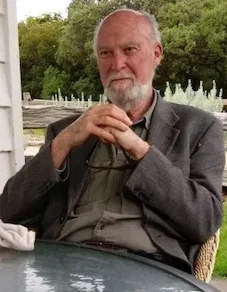
Dr Ian Linden
Perhaps we have underestimated the importance of the Pope being an American, speaking a language which well over a billion globally understand. Many young people around the world learn English as a second language. And there is something immediate and arresting when Pope Leo writes or makes speeches in our own language about matters of great importance.
There is also the sense that, with Trump and his courtiers in the White House, having the best of America in the Vatican is providential, essential rather than incidental. Trump manages to personify much that is worst in the USA. Leo's authoritative counter to Trump's words and policies provides today's youth with hope for the future and in the possibility of change.
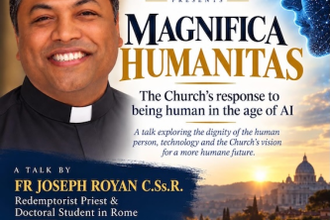
It is not that the Pope and Vatican News have suddenly become demotic, reducing their vocabulary to the popular English cultivated by The Sun - sometimes Oxbridge - journalists. There is no fear of long words and sentences and they clearly and accurately express important ideas. There is no talking down to youth or diluting the Christian message for take-away consumption. The language and embeddedness in previous papal teaching found in Leo's Magnifica Humanitas is both traditional and typical of the broad expansive themes in the encyclicals of recent Popes.
In the three weeks following its publication we have had much learned commentary on AI and Catholic Social Teaching. But what stands out in this encyclical? There is a clear acknowledgement of recent historical humanism that shares many of the Church's values, with a willingness to name names and be concrete andd specific. "Certain events make it clear that history can also change when individuals truly take the dignity of everyone seriously: the civil rights movement in the United States of America, closely associated with the testimony of Martin Luther King Jr, or the end of apartheid in South Africa following the release of Nelson Mandela and his decision not to surrender the future to hatred. In different contexts, many courageous and generous women have also stood out, including Saint Laura Montoya, Saint Teresa of Calcutta, Dorothy Day, Marie Skłodowska-Curie, Maria Montessori, Elisabeth Elliot, Wangari Maathai, Benazir Bhutto and countless others from every continent whose commitment has contributed to making history more humane".
This embrace of those who have struggled against injustice extends to what Leo calls "authentic culture and art" which "preserve this spark, resisting the normalization of evil". As a result, he suggests certain works have taken on an almost prophetic significance: "Beethoven's Ninth Symphony can be seen as a desire for unity; Guernica as a denunciation of dehumanization; Schindler's List as a call not to consign the past to oblivion". This is not someone who thinks a global Church needs to deny its European past.
Citing Beethoven and Nelson Mandela presents an insurmountable criterion for both artistic and moral excellence. But Leo partially lets us off. "The twentieth-century Catholic author JRR Tolkien….", he writes - [approvingly] - "described our responsibility in this way: 'It is not our part to master all the tides of the world, but to do what is in us for the succour of those years wherein we are set, uprooting the evil in the fields that we know, so that those who live after may have clean earth to till.' The civilization of love will not arise from a single or spectacular gesture, but from the sum total of small and steadfast acts of fidelity that serve as a bulwark against dehumanization.' This feels comforting and reassuring, fresh, relevant, addressing us and our potential rather than a consistory of cardinals.
Most importantly, Magnifica Humanitas shows a clear understanding of the preoccupations and anxiety of youth in the UK simply expressed. It is not only that Gen Z (born 1997-2012) today look unlikely to have "a clean earth to till" and a climate to foster food security in the future. "For young people, job insecurity is particularly devastating. As the Bishops of the United States of America have recalled, work is not merely a source of income but a crucial sphere in which identity is formed, friendships and relationships are forged, practical responsibilities are learned and one's vocation is discerned. When access to work is hindered by high levels of unemployment, inadequate systems of training or structural barriers, many young people find the path to their human and professional fulfilment blocked".
Older Catholics find themselves in the unusual position of discovering their Gen Z grandchildren looking to Popes for leadership, direction and hope but rarely darkening the door of a church. Francis gained their respect putting his weight behind countering climate change, manifesting in different ways his concern for the Palestinians, and, overall, for his spontaneity and accessibility. Leo has also won many hearts by following Francis' lead on these issues dear to youth, notably by his condemnation of the Israeli and American wars in the Middle East. Very few are likely to tackle a 42,000 word encyclical but very many are likely to appreciate Leo sharing their concern for their future.
Magnifica Humanitas ends with the sub-title: The Song of Hope: The Magnificat. Perhaps the Peruvian side of the Pope coming to the fore, the Latin American theme of liberation having the last word? It took me back to vespers with the Dominicans at their Mayfair priory, Johannesburg in the midst of the anti-apartheid struggle in the mid-1980s: one of the rare times when some of the mighty were being pulled down from their thrones. Leo provides encouragement today, particularly pertinent for the older generation in this threatening time: " With the same faith as Mary, let us become 'weavers of hope' in our world, sharing who we are and what we have, so that the presence of Jesus may grow among us and his Kingdom take shape".
True, becoming 'tessitori di speranza' rolls off the tongue better than 'weavers of hope'. But the reality is that there are a lot more potential weavers who are English-speaking than Italian.
Professor Ian Linden is Visiting Professor at St Mary's University, Strawberry Hill, London. A past director of the Catholic Institute for International Relations, he was awarded a CMG for his work for human rights in 2000. He has also been an adviser on Europe and Justice and Peace issues to the Department of International Affairs of the Catholic Bishops Conference of England and Wales. Ian chairs a new charity for After-school schooling in Beirut for Syrian refugees and Lebanese kids in danger of dropping out partnering with CARITAS Lebanon and work on board of Las Casas Institute in Oxford with Richard Finn OP. His latest book was Global Catholicism published by Hurst in 2009.
To read Dr Linden's blog see: www.ianlinden.com/latest-blogs/
 Facebook
 Twitter
 LinkedIn
 Print
Print Email
Email










 Facebook
 Twitter
 YouTube
 LinkedIn
 Pinterest