

Bishop Arnold: When we wage war, we turn against God and destroy the order of His creation

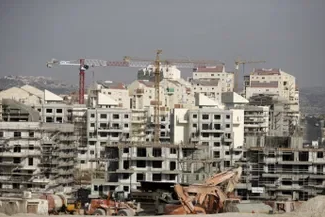
Impact of war on planet. Image: CBCEW
Source: CBCEW
Bishop John Arnold, Bishop of Salford and Lead Bishop for Environmental Issues for the Bishops' Conference, has issued a statement halfway through the Season of Creation highlighting how the world's violent conflicts are impacting on our common home. Bishop Arnold also reminds us that we all have a part to play: "We must never assume that changing our own hearts and our own behaviour will have no impact."
Bishop Arnold's statement follows:
As we move into the second half of the Season of Creation, I would like to ask Catholics in England and Wales to intensify their focus on the Holy Father's theme "They shall beat their swords into ploughshares and their spears into pruning hooks" (Is 2:4). In his message for the World Day of Prayer for Creation, Pope Leo asked us to work unremittingly for peace and to end the cycle of violence that destroys our common home. I commend his message to all of you [read here].
At the very beginning of Holy Scripture, we are given the story of creation. The way our earth is ordered is willed by God and reflects God's beauty and goodness. At the end of each day, we read: "And God saw everything that he had made, and behold, it was very good." When we wage war, we turn against God and destroy the whole order of His creation. As Pope Francis wrote in Laudato si: "War always does grave harm to the environment and to the cultural riches of peoples".
Each month, the cycle of violence in our world seems to become ever-more intense. Deaths in armed conflicts are at their highest levels for a generation.
As Pope Leo explains, whole eco systems are affected by war. Nature is wantonly destroyed to gain tactical advantage in battle. Innocent victims of war who are destitute, starving, displaced and homeless are no longer able to cultivate their environment sustainably but have to take what they can in order to keep alive. Bio-diversity is destroyed in war, and animal populations have been driven to the brink of extinction by armed conflict. In some countries, forests which were once teeming with birds and other wildlife are now silent as a result of the ecological destruction caused by war. Even water resources, the prime requirement for life, are used as a weapon of war.
Not all wars are wars between nations or between political groups vying for power within a country. In Laudato Si, Pope Francis wrote about how states had failed to prevent organised crime, violence, the drug trade and human trafficking. Criminal gangs wage violent war on and within their own communities. Unsurprisingly, they have no respect for the environment either. Often working with corrupt business interests, they illegally harvest vital environmental resources, especially forests. Such illegal forms of logging are linked to a significant proportion of all forest destruction in the world today. Along with the forests, whole eco-systems are destroyed and local climates affected as a result.
Nevertheless, you might ask "what can I do in the face of such violent destruction of people and nature, often many thousands of miles away?".
In the first place, we should consider how our own behaviour in the West might contribute to these problems, whether it be through the abuse of drugs or the purchase of timber products from unethical sources.
But lasting change requires more than this. In his message for the World Day of Creation, Pope Leo notes that war "is not only a political failure, but also a moral and spiritual one. Rooted in distorted desires and the misuse of human freedom and power, war stands as a counter-witness to the Gospel of peace."
Pope Leo continually asks us to promote peace and to "disarm" in every context in which we live: this includes where there is tension or conflict within our own communities within England and Wales.
We should think carefully about how we can respond to the season of creation by caring for the natural environment as co-workers with God so that the earth can provide a home in which all can flourish.
Action is important at the political level too. At the end of the Second World War, many people, including visionary Christians, worked tirelessly to build international institutions that would promote peace. I call upon politicians in our country to redouble their efforts to make such international organisations effective again, both in building peace and, also, in protecting our common home. As Pope Leo wrote recently in his encyclical Magnifica humanitas: "International organizations, particularly the United Nations, are essential instruments for promoting a civilisation of love, for they can foster dialogue among nations and promote the peaceful resolution of conflicts, the integral development of peoples, the protection of the most vulnerable, disarmament and the care of creation."
So, we must pray for our politicians, that they will rise to the challenges which face us.
We must never assume that changing our own hearts and our own behaviour will have no impact. Also, in Magnifica humanitas, Pope Leo used an ecological metaphor from Tolkein: "It is not our part to master all the tides of the world, but to do what is in us for the succour of those years wherein we are set, uprooting the evil in the fields that we know, so that those who live after may have clean earth to till."
Ultimately, love for God, love for neighbour and love for God's creation support and nourish each other. If we are to truly be peacemakers and sincerely respect the natural environment, we need to be continually attentive to our relationship with God.
With this in mind, I would like to commend two prayers that we could pray frequently. The first is a prayer for peace proposed by Pope St John XXIII. The second is part of a prayer for our earth proposed by Pope Francis.
A prayer for peace
Let us, then, pray with all fervor for this peace which our divine Redeemer came to bring us. May He banish from the souls of men whatever might endanger peace. May He transform all men and women into witnesses of truth, justice and brotherly love. May He illumine with His light the minds of rulers, so that, besides caring for the proper material welfare of their peoples, they may also guarantee them the fairest gift of peace.
Finally, may Christ inflame the desires of all men and women to break through the barriers which divide them, to strengthen the bonds of mutual love, to learn to understand one another, and to pardon those who have done them wrong. Through His power and inspiration may all peoples welcome each other to their hearts as brothers, and may the peace they long for ever flower and ever reign among them.
A prayer for our earth
All-powerful God, you are present in the whole universe
and in the smallest of your creatures.
You embrace with your tenderness all that exists.
Pour out upon us the power of your love,
that we may protect life and beauty.
Fill us with peace, that we may live
as brothers and sisters, harming no one.
St. Francis of Assisi, who saw the horrors of war and came to love God's creation, pray for us.
Our Lady, Queen of Peace, pray for us.
LINK
CBCEW dedicated section for Season of Creation: www.cbcew.org.uk/season-of-creation/
 Facebook
 Twitter
 LinkedIn
 Print
Print Email
Email










 Facebook
 Twitter
 YouTube
 LinkedIn
 Pinterest