

Ethiopia: Churches call for action after massacre of Christians
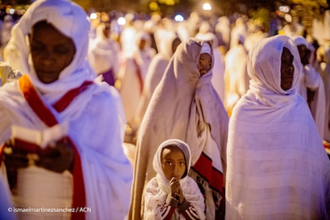
Orthodox Tewahedo worshippers at Timkat festival, Lalibela © Ismael Martínez Sánchez/ACN
Source: ACN
Ethiopia's Churches renewed urgent calls for the protection of civilians following the killing of more than 60 Orthodox believers in a wave of savage attacks.
The massacres prompted an unprecedented intervention by the Ethiopian Orthodox Tewahedo Church's Holy Synod, which demanded stronger government action to defend worshippers and provide "essential security until the problem is resolved".
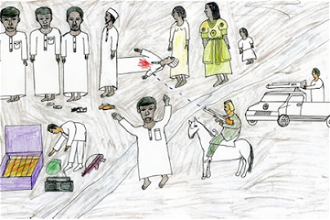
According to the Synod, armed men went from house to house killing residents with firearms and knives.
In Gora Silingo, Merti District 14 were killed on 20th October, and a further 46 on 24th October in the villages of Tereta, Chole and Birbo in Shirka District, all within the Arsi Zone of Oromia.
Elderly and children were among the victims. One church was reportedly damaged, while churches in neighbouring villages opened their doors to shelter those fleeing the violence.
The killings came after Ethiopia's Catholic bishops urged an end to hostilities, saying the Church "grieves deeply over the armed conflict that is currently present in Tigray, Afar, Amhara, Oromia and other regions".
The bishops warned that "rather than resolving differences, war serves only to deepen divisions and multiplies suffering", leaving behind devastation, loss of life and "seeds of hatred, resentment and vengeance that may endure for generations".
Their concerns were echoed by Bishop Lesanechristos Matheos of the Ethiopian Catholic Eparchy of Bahir Dar-Dessie in a pastoral letter - a copy of which was sent to Catholic charity Aid to the Church in Need (ACN).
Expressing deep concern for those enduring "fear, insecurity, displacement, loss and uncertainty", Bishop Matheos called on people to respond with prayer, wisdom, compassion and a firm commitment to peace.
Bishop Matheos stressed that "every life lost is a tragedy" and called on Ethiopians to reject hatred, misinformation and division.
He said peace requires defending human dignity, protecting the vulnerable and pursuing reconciliation without ignoring injustice.
Oromia regional government has accused armed rebel groups of carrying out the attacks to provoke religious tensions, although responsibility for the killings remains disputed and the claims have not been independently verified.
The violence comes at a particularly fragile moment for Ethiopia. Renewed fighting involving the Tigray People's Liberation Front (TPLF), allied armed groups and government forces has spread across parts of Tigray, Afar and Amhara, reviving memories of the devastating civil war that ended with the 2022 Pretoria Agreement.
Despite that peace deal, unresolved territorial disputes, regional rivalries and the plight of displaced communities continue to destabilise the country.
According to ACN''s 2025 Religious Freedom in the World report, Ethiopia's peace remains fragile, with ethnic tensions, political grievances and recurring outbreaks of religiously motivated violence placing increasing pressure on coexistence between faith communities.
With thanks to Maria Lozano
LINK
Aid to the Church in Need: https://acnuk.org
 Facebook
 Twitter
 LinkedIn
 Print
 Email










 Facebook
 Twitter
 YouTube
 LinkedIn
 Pinterest