


Ian Linden: 'Suicidal empathy' and Catholicism
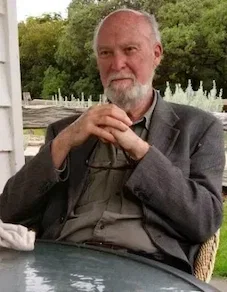
Dr Ian Linden
Right-wing extremist ways of bringing religion and ethics into politics seem to be gaining ground. Reform's recent attempt to redefine empathy is a further example. They are all interlinked so this gambit is particularly dangerous. If they weren't connected, Catholic Social Teaching would be all good intentions and no action.
Gad Saad invented the term 'suicidal empathy'. He spent a decade in Concordia - formerly a Canadian Jesuit University - becoming Research Chair in Evolutionary Behavioural Sciences and Darwinian Consumption (be reassured Darwinian Consumption is not the fittest eating the unfit). Saad's expertise is in consumer behaviour and marketing, food for Reform. His book Suicidal Empathy: Dying to be Kind was published in May this year and provided the main fodder for attacking the value of empathy. Lebanese born, Jewish, atheist, and polemicist, he recently left Canada. He felt threatened by, and had himself experienced, antisemitism (6,800 incidents in 2025 up 9% on 2024). He didn't like their immigration policy, 'wokeism' and the tax system. Saad currently does research in one of the most conservative US States, at the University of Mississippi.
Politics, Religion and Morality together are about how we live together as societies. As a section of the American evangelicals demonstrate, Christianity is not immune to Saad's type of manipulation. Islam and Judaism suffer in the same way.
The recent Reform ploy, picking up on Saad's argument that 'infectious ideas are killing common sense', is an attempt to rubbish an understanding of empathy that is politically inconvenient. In a 16 August Press Conference, former Tory Minister Robert Jenrick, now Treasury spokesman for Reform, set out policy changes to save £50 billion on disability and immigration, describing it as countering 'suicidal empathy'. The wording seems to have some resonance. 'Suicidal empathy' was given another airing as the theme in last week's Channel's 4's Moral Maze.
Empathy is not a word that features much in Catholic writing. But it fits well as a secular version of compassion, or at least a hyphenated version com-passion, with/for someone who is suffering. Here is Pope Francis' Angelus sermon on 3 August 2014: "compassion - which Jesus feels - it is not simply feeling pity; it's more! It means to suffer with, in other words to empathize with the suffering of another, to the point of taking it upon oneself. Jesus is like this: he suffers together with us, he suffers with us, he suffers for us. And the sign of this compassion is the healing of countless people he performed. Jesus teaches us to place the needs of the poor before our own". The striking image of the Church as field hospital.
By way of contrast, Reform is also picking up on a MAGA theme promoted by Vice-President Vance of 'concentric circles' of moral responsibility, family nation and, outermost, overseas aid. This spatial ranking is used to justify drastic cuts in international development aid in times of financial austerity. The parable of the Good Samaritan, of course, specifically and deliberately counters this for Christians. As Pope Francis responded to Vance: "Christian love is not a concentric expansion of interests that little by little extend to other persons and groups." This rejection of a ranking in the focus of Christian love, agape, has also been re-iterated by Pope Leo.
Though empathy isn't one of the Catholic virtues, it is clearly important in our ability to 'activate' the theological, God-given, virtue of charity. Emotional and cognitive empathy, feeling for and understanding someone else's pain, could also be seen as a necessary component of the natural, cardinal virtue of justice, the will to do good. Alistair McIntyre, following Aristotle, insists in his 1981 Virtue Ethics the virtues involve practice and a sense of direction in life, a purpose, a teleology or meaningful end. Nor is empathy a kind of super-virtue. Prudence, the ability to choose the right virtue in a particular moral situation, has more claim to be called that.
I first bumped into the importance of empathy whilst working with an insightful psychologist countering religious and right-wing extremism in a non-governmental initiative. There had been much US government emphasis on websites countering the misuse of Qu'ranic verses but, of course, jihadist recruits weren't looking at them. Our focus was on the way the extremist mind worked. In sessions with young people at risk, a numerical scale put together through complex monitoring of the frequency of certain phrases and words, indicated levels of extremist risk.
Of course a critical question was at what level of risk was violent action 'triggered'. Rather like the chance of a vehicle killing someone - it suddenly increases sharply above 30mph - there is a steep curve into a danger zone to a 'tipping point' past which terrorism is on the cards. But, as part of a psychologist's tool kit, there is in existence another scale which corresponds almost exactly though inversely, with the extremism template: for empathy.
The extremist mind has a number of features but the most obvious is an absence of emotional and cognitive empathy. This was associated with a 'them and us' binary view of the world and an inability to perform a process of integrating conflicting ideas and moral values, part of cognitive empathy. Instead, over time or sometimes suddenly, this sequence can take place. "They do not see the world as we see the world". They are 'the other'. They are wrong and bad. They must be rejected. They have to be eliminated". This descent into violence responds to emotional needs found in both extremes, Islamic jihadists and right-wing terrorists. Jihadist grooming was a process of providing a sense of belonging, justifying the anger in angry young men, and getting rid of any empathy that might influence their attitude to 'the enemy'. And sadly some 40% of jihadists, in jail, at large, on trial, have experienced some degree of mental illness.
'Suicidal empathy' would be a good description of the relationship between an extremist suicide bomber and their community of jihadists. So Saad and Reform might stop to think about how their story about 'suicidal empathy', motivated by a wish to cling to a pure belonging, to an imaginary identity and group, results in a de facto rejection of 'the other'. Comparisons can indeed be odious.
I hope this isn't unfair and shows some understanding of Professor Saad. He would have some good advice on increasing the market for, say, rosary beads, or hot-cross buns. But I'll take a rain-check, as the Americans say, on his particular purée of religion, morality and politics.
Reform's embrace of Gad Saad's ideas is designed to increase dislike and fear of Muslims and to use his polemics for their own political ends. Empathy with Muslims - our contemporary religious version of Samaritans - needed curtailing. Enter Gad Saad, culture warrior, to direct the traffic by on the other side.
Professor Ian Linden is Visiting Professor at St Mary's University, Strawberry Hill, London. A past director of the Catholic Institute for International Relations, he was awarded a CMG for his work for human rights in 2000. He has also been an adviser on Europe and Justice and Peace issues to the Department of International Affairs of the Catholic Bishops Conference of England and Wales. Ian chairs a new charity for After-school schooling in Beirut for Syrian refugees and Lebanese kids in danger of dropping out partnering with CARITAS Lebanon and work on board of Las Casas Institute in Oxford with Richard Finn OP. His latest book was Global Catholicism published by Hurst in 2009.
To read Dr Linden's blog see: www.ianlinden.com/latest-blogs/
 Facebook
 Twitter
 LinkedIn
 Print
Print Email
Email













 Facebook
 Twitter
 YouTube
 LinkedIn
 Pinterest