

Ian Linden: Lives less ordinary - Mother Teresa of Calcutta
There are many different ways of living a good, ordinary Christian life: working as an inspiring, caring school teacher, a conscientious, accessible plumber who arrives on time, a good nurse, a dedicated local councillor, a compassionate judge, amongst many occupations. Yet, there was no more mundane a life than that of the 16th century Jesuit Spanish lay brother, St. Alphonse Rodriguez. His role was opening the door of the Jesuit house in Majorca. For 46 years. He would say to himself "I'm coming, Lord", seeing in all who knocked the image of Jesus waiting outside. There are fewer ways to lead an extraordinary Christian life; saints are canonized to highlight these different ways and to be an inspiration.
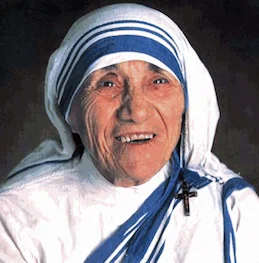
On 4 September 2016, ten years ago, Pope Francis canonised Mother Teresa of Calcutta founder of the Missionaries of Charity. Journalists like a name to headline the news stories they don't know much about - like religious stories, like saintliness. They push exceptional lives, stars of different kinds, those living with dedication to a cause, into the celebrity slot where, like gladiators, they are torn apart. Few escape. Mother Teresa occupied the celebrity slot for goodness and piety like Archbishop Desmond Tutu - also worthily - for opposition to apartheid.
The director of a progressive Catholic organisation considered by the Government at the time as a bunch of Lefties - the Freedom of Information Act occasionally works - offered a fair chance of getting negative comments about Mother Teresa and her work amongst the poor and dying. The phone call came in 1994. TV cameras, lights, a persistent interviewer. Thank heavens not live. It was amicable for a while until it became clear the interviewer was trying to elicit hostile comment on the record. Then it got enjoyable as I pretended to be unaware of the spin bowling, keeping a straight bat, I talked generally about charity as a virtue, the plight of the Indian urban poor. After almost three-quarters of an hour, now clearly annoyed, they wound up.
The desperately avant-garde Channel 4 series Without Walls on 8 November 1994 featured 'Hell's Angel', a hatchet job on Mother Teresa fronted by Christopher Hitchens and Tariq Ali, both prolific writers and journalists on the Left. "This profane marriage between tawdry media hype and medieval superstition gave birth to an icon which few have since had the poor taste to question" - a quote from the programme - gives the flavour of its contents. Mother Teresa committed two major sins: she was extraordinarily good at fundraising and her theology of suffering resulted in the patients she cared for suffering allegedly avoidable, unnecessary pain. A totally different secular view resulted in her being awarded the Nobel Prize in 1979. When she died in 1997 the Missionaries of Charity had expanded to 4,000 Sisters (5,100 today) and 300 Brothers working with the desperately poor in countries around the world.
Mother Teresa was born Anjezë Gonxhe Bojaxhiu into a pious Albanian Catholic family in 1910 in Skopje then part of the Ottoman Empire, now in Northern Macedonia. Her father died when she was ten. She shared their piety and would go on pilgrimage to a Marian shrine in today's Kosovo - then and now predominantly Muslim at least nominally. Her mother moved to Albania. The crazed Albanian communist regime denied Mother Teresa, an 'agent of the Vatican', permission to visit her mother and she never saw her again. Aged 18 she joined the Loreto Sisters (who since 2005 have been working in Albania countering sexual trafficking) taking her religious vows in India in 1937, then working as a teacher. In 1950 she started the Missionaries of Charity whose charism was "wholehearted free service to the poorest of the poor". This now includes refugees, former prostitutes, lepers, the mentally ill and the aged, and schools run by volunteers for street and sick children.
I was surprised to find in the Kosovan capital of Pristina a large cathedral named after Mother Teresa on Boulevard Bill Clinton - an unusual juxtaposition. Just two years after she was beatified in 2003, the Muslim President of an Independent Kosovo, Ibrahim Mugova, laid its foundation stone. It was finally consecrated in 2015. Muslims celebrated Christmas there, an important symbol for a tiny country that had drawn in Muslim fighters as well as Clinton's F-16s into the civil war with Serbia.
Christopher Hitchens, who died in 2011, would have turned in his grave. But there might have been a whisper of sympathy for his views about Mother Teresa especially from rival Catholic fundraisers. She represented a popular, traditional expression of Catholic charity, pejoratively dubbed sometimes as 'ambulance ministry'. It could easily be pitted against a more recent commitment by official agencies to address causes seeking social justice as a 'constitutive dimension of evangelisation'.
A striking analogy sometimes used in those days was a large sink-hole in the road, not easily seen, with a full bus approaching it. In front of the hole would be the 'progressives and radical Catholics' doing their best to stop the bus. Behind the hole would be traditionalists dedicated to caring for the victims of the crash occupying the field of humanitarian aid. The analogy didn't quite work because of an overlap; the traditionalists were moving into education and preventative actions and the 'progressives', in the Catholic international development agencies for example, were building up their burgeoning departments committed to emergency, humanitarian aid, often government funded, as well as advocacy and their different interventions.
The Loreto Sisters today both try to stop trafficking and support trafficked young women. We need both ways. In the words of Pope John Paul II; "Mother Teresa reminds everyone that the evangelizing mission of the Church passes through charity [sic], nourished by prayer and listening to God's word…. Her greatness lies in her ability to give without counting the cost, to give 'until it hurts'. Her life was a radical living and a bold proclamation of the Gospel". And that describes both the ways of putting Catholic Social Teaching into practice asked of Christians. The Church needs to be both behind the sink-holes and in front of them. And the sink-holes are growing in depth.
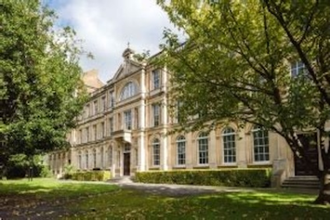
Professor Ian Linden is Visiting Professor at St Mary's University, Strawberry Hill, London. A past director of the Catholic Institute for International Relations, he was awarded a CMG for his work for human rights in 2000. He has also been an adviser on Europe and Justice and Peace issues to the Department of International Affairs of the Catholic Bishops Conference of England and Wales. Ian chairs a new charity for After-school schooling in Beirut for Syrian refugees and Lebanese kids in danger of dropping out partnering with CARITAS Lebanon and work on board of Las Casas Institute in Oxford with Richard Finn OP. His latest book was Global Catholicism published by Hurst in 2009.
To read Dr Linden's blog see: www.ianlinden.com/latest-blogs/
 Facebook
 Twitter
 LinkedIn
 Print
Print Email
Email







 Facebook
 Twitter
 YouTube
 LinkedIn
 Pinterest