


Ian Linden: The voice of reason in a secular age
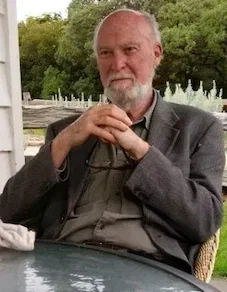
Dr Ian Linden
Britain seems constrained to join other European States in re-armament. Putin's fantasy of Ukraine's return to the Russian Federation and a restoration of the former Soviet territory, Xi Jinping's determination to absorb Taiwan by all means available, seem utterly intractable, a grave injustice if accomplished. Military deterrence is an understandable response. At one level, this 'confrontational logic' seems to make sense. But it is ultimately the victory of emotion over reason.
After earlier this year the Pope had taken the USA and Trump to task over the war in Iran, Leo didn't shy away from addressing Europe and its leaders on preparations for war, though less forcefully, in a speech at the Robert Schuman Centre in Metz on 28 September. He compared their present stance to the vision of the founding fathers of the European Union, an exemplar of peaceful relations, making in Schuman's words "any war…not only unthinkable but materially impossible."
"Today we must ask whether we are truly making 'creative efforts' to advance world peace", the Pope said "or whether we are simply seeking to 'stem the tide of war' and better prepare ourselves for wars that we assume are still to come". The title of his talk was "The Roots of Europe for Peace and Unity"; Schuman and De Gasperi were clearly influenced by their Catholicism in their founding vision for post-war Europe. It is an important reminder but not one a nation blighted by BREXIT is likely to heed, even given a Prime Minister with a Catholic upbringing. Least of all with Putin's war of aggression - the majority of Ukrainians wish to be European not a part of the Russian Federation - gaining in intensity and threats.
"World peace cannot be safeguarded if constructive efforts are not made commensurate with the dangers that threaten it" as the Pope put it. And these dangers are obvious, not least to young people who may have to live through their consequences as diplomacy risks becoming seen as a futile if necessary routine. Leo steers a difficult, but traditional, course rejecting "a naïve form of pacifism" balancing the right to self-defence against a condemnation of "repeated calls to increase military spending and the choices that follow" - which today appear to many as thoroughly justified for self-defence.
There isn't much moral wriggle-room for Christians to be drawn from the early Church's witness to non-violence. Nor in Matthew 26.52: "Put your sword back in its place" as Peter acts to defend Jesus. I was very fortunate to get to know the late Bruce Kent in the last years of his life and to develop a great admiration for his work, that of his wife, Valerie Flessati and Pax Christi. They are far from naïve. And they are, and have been, creative in their peace-making despite minimal support from the Hierarchy. At another level, the Vatican's Pontifical Ecclesiastical Academy, answerable to the Secretariat of State, trains its diplomats, nuncios, in diplomacy, and has traditionally given peace-making and peace-building top priority as an aspect of evangelisation. They should not be criticised for engaging diplomatically with tyrannical and authoritarian regimes. Especially given this is deemed impossible for Western democratic States except intermittently, clandestinely and at their peril.
In the 2025 reckoning by the Stockholm International Peace Research Institute (SIPRI) , global expenditure on weapons amounted to $2,887 billion, 2.5% of global GBP. Or in figures that you can take in, each person on earth spent $325 dollars to kill each other or prevent that happening, money which might have fed them or contributed to building a school - instead of bombing it. The parents of the 120 children killed by a US bomb in Minab school, Tehran, wrote to thank the Pope for his anguished words, calling him "the voice of the voiceless children".
The UK Foreign Office once had officers dedicated solely to human rights working in British Embassies and High Commissions. No more. Specialists survive in local politics and economics, or rather investment, selling British goods, fostering favourable relations with the UK, plus military attachés, and MI6 under diplomatic cover. And of course, ambassadors increasingly outpaced by data flows through social media, responsible for insightful reports to London, and social gatherings of the good and the great, words in ears over canapés. The old Department for International Development, budget plundered, the poor relative now merged with the Foreign Office. Staffing 'commensurate with the dangers that threaten world peace?" I don't think so.
But imagine just 1% of the forthcoming UK military expenditure up to 2035 being spent on Foreign, Commonwealth & Development Office (FCDO) staffing by experts in peace-making and peace-building, and in training diplomats with fluency in Chinese, Russian and Arabic for dialogue with despots. It is a choice. Fanciful perhaps but not 'naïve pacifism'. Would their work make a difference? Some. Building mutual trust is a marathon not a sprint. But listening, goodness and virtue in the long term can be literally disarming - as Leo points out. If there is any hope of swinging the balance from - manipulated - emotion to reason, a thoroughly Catholic strategy, such an earmarked, increased allocation to peace-building by the FCDO must be made.
If diplomatic efforts are not significantly and dramatically increased, we will remain trapped in confrontational logic and repeated defeats for democracy as, in Pope Leo's words, "people boast of lies and deceptions". It is an irony that in this, our secular epoch which claims descent from the Enlightenment, it is a Pope, growing in popularity, who provides the voice of reason.
Professor Ian Linden is Visiting Professor at St Mary's University, Strawberry Hill, London. A past director of the Catholic Institute for International Relations, he was awarded a CMG for his work for human rights in 2000. He has also been an adviser on Europe and Justice and Peace issues to the Department of International Affairs of the Catholic Bishops Conference of England and Wales. Ian chairs a new charity for After-school schooling in Beirut for Syrian refugees and Lebanese kids in danger of dropping out partnering with CARITAS Lebanon and work on board of Las Casas Institute in Oxford with Richard Finn OP. His latest book was Global Catholicism published by Hurst in 2009.
To read Dr Linden's blog see: www.ianlinden.com/latest-blogs/
 Facebook
 Twitter
 LinkedIn
 Print
Print Email
Email







 Facebook
 Twitter
 YouTube
 LinkedIn
 Pinterest