


The Extraordinary Irish Nun who defied Hitler
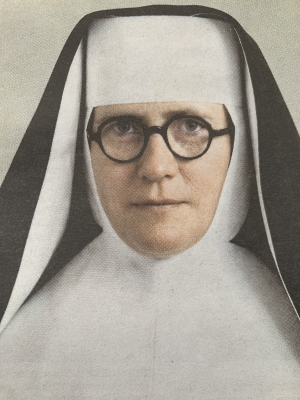
Sister Kate McCarthy
There are remarkable stories buried in Ireland's history, stories of courage and sacrifice that over time have become largely unknown or just buried in archives. Among them is the extraordinary life of Sister Kate McCarthy, a Franciscan nun from Drimoleague in County Cork whose wartime experiences brought her face to face with the brutality of Nazi Germany.
Known in religious life as Sister Marie Laurence, Kate McCarthy was no ordinary nun. During the Second World War, she became involved in the French Resistance, helping Allied servicemen and prisoners of war escape from German-occupied territory. Her activities eventually brought her to the attention of the Gestapo, resulting in arrest, interrogation, imprisonment and a death sentence.
Her story is now receiving renewed attention through a recently published book - The Nun of Ravensbrück: The Irish Nun Who Defied the Nazis - written by Irish historian and author Cathi Fleming. Published by Hachette Books Ireland, the book brings the remarkable experiences of this West Cork woman to a new generation of readers.
The story is particularly significant because it highlights the contribution made by Irish women during the Second World War, often at enormous personal risk and far from their homeland.
From Drimoleague to France
Kate McCarthy, the eldest of a family of ten children, was born at Drominidy North near Drimoleague in West Cork 17 December 1895. Aged 18, she entered the Order of Franciscans of Calais who are a French congregation. Her decision to become a nun would take her far beyond the familiar surroundings of rural Ireland.
She ministered in Béthune in northern France, where she worked as a nurse during the First World War, caring for wounded soldiers. This early experience of war, suffering and human vulnerability would shape much of the life that followed.
France became her adopted home, and she continued her religious and nursing work there in the years between the two world wars. When Germany invaded Poland in September 1939 and Europe descended into another devastating conflict, Sister Kate once again found herself in a country threatened by war.
Following the German occupation of France, she became involved in resistance activities, using her position and experience in nursing to assist people endangered by the Nazi occupation. Her work went far beyond the traditional duties expected of a religious sister.
She became connected with resistance networks, including the Musée de l'Homme network, helping Allied servicemen and prisoners of war evade capture and find routes to safety. It is believed that she helped about 200 people escape from occupied France. Every individual she assisted represented another risk: discovery could mean arrest, torture or execution.
A dangerous double life
The French Resistance was made up of people from many backgrounds, including railway workers, teachers, priests, religious sisters, students and ordinary citizens who refused to accept Nazi domination. Women played a particularly important role, acting as couriers, providing shelter, gathering intelligence and organising escape routes.
Sister Kate's involvement demonstrated how religious communities and their members could become part of the wider struggle against occupation. Her nursing work provided opportunities to help vulnerable soldiers and prisoners, but the danger was ever-present. The Gestapo operated an extensive network of informers and investigators, and those suspected of helping the Resistance faced ruthless punishment.
In June 1941, Sister Kate was arrested by the Gestapo. Her involvement in the resistance network had been discovered, and the woman who had spent years caring for others now faced the full force of the Nazi security system. She endured five extremely difficult interrogations and a lengthy period of solitary confinement. She was sentenced to death, but her eventual fate was to be even more complicated.
Under Hitler's notorious Night and Fog decree, introduced to make resistance opponents disappear without trace, prisoners could be removed from their communities and held in secrecy. For Sister Kate, this marked the beginning of a prolonged ordeal through the Nazi prison and concentration camp system.
The nightmare of Ravensbrück
After sojourns in jails at Dusseldorf, Lubeck and Hamburg, she was eventually transported to Ravensbrück, near Fürstenberg in northern Germany in November 1944. Established in 1939, Ravensbrück was the largest concentration camp specifically designed for women in Nazi Germany. More than 120,000 women and children from across Europe were imprisoned there between 1939 and 1945.
The conditions were appalling. Prisoners endured hunger, overcrowding, disease, physical abuse and exhausting forced labour. Women were regularly subjected to humiliating roll calls, sometimes standing outside for hours in freezing conditions. Sister Kate's own account of arriving at the camp provides a chilling insight into the treatment of prisoners. Women were assembled in groups and subjected to repeated counting, while SS guards and their dogs supervised proceedings.
The daily routine was one of relentless physical hardship. Prisoners could be called for roll call at 4.30 in the morning and then forced to work for up to 12 hours, digging sand, unloading coal or working in the forest. For a woman who had dedicated her life to caring for others, the experience was almost unimaginable.
Her ordeal became even more serious when she contracted typhus, a potentially fatal disease that spread rapidly through overcrowded and unsanitary conditions. She was taken to the infirmary, but feared that remaining there could mean death. She understood that seriously ill prisoners were particularly vulnerable to being selected for extermination.
Despite her illness and physical weakness, she eventually left the infirmary and attempted to survive in the camp itself. One of the most harrowing aspects of her imprisonment was the repeated selection of women for the gas chambers. On four separate occasions, Sister Kate narrowly escaped being selected for death.
Her survival was made possible partly through her own determination and partly through the solidarity of fellow prisoners, who helped her hide when danger approached. The experience left her physically weakened and profoundly lonely. Yet she continued to hold on to her faith and her determination to survive.
The women of Ravensbrück faced extraordinary suffering, but their stories also reveal the importance of friendship, mutual assistance and small acts of defiance. Even in an environment designed to strip people of their dignity, prisoners continued to help one another.
Freedom and recognition
In April 1945, as Nazi Germany approached defeat, Sister Kate was among the prisoners rescued through the Swedish Red Cross operation associated with Count Folke Bernadotte. She was brought to Malmo in Sweden on 28 April, where she could begin recovering from the physical and psychological consequences of her imprisonment. For a woman who had spent years in Nazi custody, freedom must have seemed almost beyond imagination.
Her contribution to the French Resistance was subsequently recognised by the French authorities. She received the Médaille de la Résistance, which was personally presented to her by General Charles de Gaulle in 1946. In January 1947, she received the King's Commendation for Brave Conduct for "services during the enemy occupation of North-West Europe" from Prime Minister Winston Churchill and acknowledgement from the Chief of Staff of the Royal Air Force. These honours reflected the importance of her wartime activities and the lives she had helped save.
Yet, unlike many celebrated wartime figures, Sister Kate did not seek a life in the public spotlight. She returned to Cork and resumed her religious vocation, eventually becoming Mother Superior at the Honan Convent and caring for elderly men at the Honan Home in Montenotte. Her return to the quiet routines of religious life was a remarkable contrast to the violence and suffering she had experienced during the war. She died suddenly on 21 June 1971 and was laid to rest in St Finbarr's Cemetery in Cork City.
A story brought back to life
For many years, the full extent of Sister Kate's wartime experiences remained relatively unknown outside historical and religious circles. Her story, however, has increasingly attracted attention from historians and those interested in Ireland's contribution to the European resistance movements.
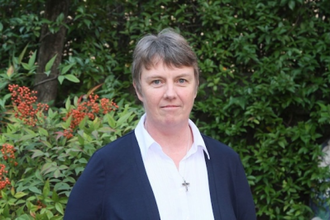
One of the people responsible for bringing her remarkable life to a wider audience is author Cathi Fleming, a retired primary school teacher and historian from County Kildare. Fleming became interested in the story after discovering references to Irish women who had been imprisoned at Ravensbrück during the Second World War. What began as an interest in an overlooked piece of history developed into years of research, including visits to the former concentration camp.
Her research resulted in From Rebel County to Ravensbrück Camp: The Remarkable Story of Kate McCarthy published in 2024, which helped establish a fuller account of the West Cork woman's extraordinary life. Her latest book, The Nun of Ravensbrück: The Irish Nun Who Defied the Nazis, published recently takes the story to a wider readership through historical fiction based on real events.
The novel explores Kate's experiences in the French Resistance, her arrest and imprisonment, and the extraordinary relationships between women struggling to survive the concentration camp. The story has also received attention from Irish media, with RTÉ examining her involvement in the French Resistance and the extraordinary circumstances of her imprisonment.
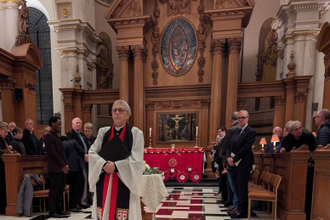
In February 2025, the Embassy of Ireland in Berlin organised commemorative events highlighting the experiences of Irish women imprisoned at Ravensbrück. Cathi Fleming participated in a panel discussion alongside Ravensbrück Memorial Director, Dr Andrea Genest, and author Margo Gorman. The events helped bring renewed recognition to the Irish women whose contribution to the anti-Nazi resistance had been largely overlooked.
Remembering a daughter of West Cork
Sister Kate McCarthy's story is particularly significant for West Cork. She was born in a small rural community in Drimoleague, yet her actions brought her into one of the most dangerous resistance movements in occupied Europe.
Her life challenges the traditional image of a nun as someone removed from the political and military realities of the world. Although her vocation was rooted in faith and service, she was prepared to take enormous personal risks when confronted with injustice and human suffering. She was not a soldier carrying a weapon on a battlefield. Driven on by the motto of St Francis of Assisi - "Start by doing what is necessary, then what is possible, and suddenly you are doing the impossible" - her weapons were courage, compassion, determination and a willingness to help people in desperate circumstances.
It is estimated that around 200 Allied servicemen owed their freedom, at least in part, to her resistance activities. That achievement alone deserves recognition. But perhaps the most extraordinary part of her story is that, having survived interrogation, solitary confinement, forced labour, disease and repeated selections for the gas chambers, she returned to Ireland and continued the work of caring for others.
There is an important lesson in her life about the capacity of ordinary people to perform extraordinary acts when confronted with evil. For Drimoleague and the wider West Cork community, Sister Kate McCarthy represents a remarkable chapter in local history. Her name deserves to be remembered alongside the many individuals who risked everything to resist Nazi tyranny.
Her story is also a reminder that Ireland's history during the Second World War was not confined to neutrality at home. Irish men and women living abroad were caught up in the conflict, and some became active participants in the struggle against Nazi occupation. Through the painstaking research of Cathi Fleming and the renewed interest generated by The Nun of Ravensbrück, the extraordinary life of Sister Kate McCarthy is finally receiving the attention it deserves.
A young woman who left Drimoleague to serve God and care for the sick became a resistance fighter, a prisoner of the Gestapo and a survivor of one of the darkest chapters in European history. She returned home having endured horrors that few could comprehend. Her story is not simply one of survival. It is a story of humanity, courage, faith and an unwavering refusal to abandon others in their hour of need. And it is a story that West Cork, Ireland and the wider world should never forget.
In 1964, the Order of Franciscans of Calais, founded in Calais in France in 1854, changed their name to Franciscan Missionaries of Our Lady. They operated the Honan Nursing Home in Cork until 1985. Today, they run the La Verna Centre at Ballinderry, Mullingar, Co. Westmeath where they offer opportunities to support spiritual and personal growth. Their programmes include workshops on faith, self-development, and human connection, alongside regular prayer gatherings and adoration. For more personal guidance, they provide spiritual accompaniment and healing sessions. As well as comfortable and very reasonably priced accommodation, they offer rooms to professional and qualified therapists at a reasonable hourly rate. Further information available at https://fmolireland.ie/.
Another wartime hero was Irish priest Monsignor Hugh O'Flaherty (1898-1963) who was a Vatican official who organised an underground escape network in Nazi-occupied Rome during World War II. Known as the "Scarlet Pimpernel of the Vatican," his network saved approximately 6,500 Jews, Allied prisoners of war, and anti-fascists.
(Matt Moran is an author and writer living in Co. Cork with a particular interest in missionary stories. His widely acclaimed book - The Legacy of Irish Missionaries Lives On - is available from mattmoran2021@gmail.com).
 Facebook
 Twitter
 LinkedIn
 Print
 Email








 Facebook
 Twitter
 YouTube
 LinkedIn
 Pinterest