

Cameroon: why should we care?
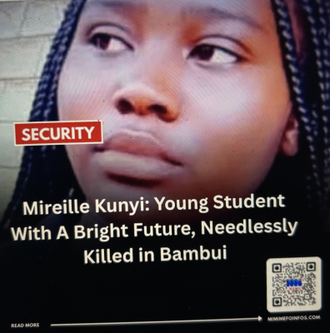
More than 6,500 people are known to have been killed since the conflict escalated in 2016
This week marks the 10th anniversary of the start of Cameroon's Anglophone Conflict. The international community will shrug with indifference.
The continuing suffering of more than six million Africans who cherish the right to speak English, teach an English curriculum and practice English common law counts for little in our age of post-morality politics. Yet, three geopolitical reasons explain why the global north/the West should want a sustainable solution to Cameroon's conflict.
The most headline-grabbing issue is the threat of mass migration if the violence continues. There is a military stalemate between Cameroon's Francophone-dominated government and the separatists fighting for their own Anglophone nation called Ambazonia, fuelled by a war economy enriching the participants. Meanwhile, hundreds of thousands of civilians have been displaced or have emigrated because the economy in the two Anglophone regions is at a standstill, many schools have been closed for a decade, and both sides kill, terrorise and extort civilians with impunity.
The government of 93-year-old Paul Biya refuses to consider credible inclusive talks. Nor are Biya's likely successors open to charting a road map offering all Cameroonians a stake in the future. Last year's presidential election was "rigged" according to Freedom House, opposition figures are imprisoned and civil society is harassed. Cameroonians with transferable skills will look elsewhere. Since migration is a toxic issue in the West, we should be keen to bring lasting peace to Cameroon.
The second reason the global north should engage in Cameroon is also a self-interested one. The current corrupt Biya government is unpopular, as the violence following the election showed. Francophones and Anglophones should be united in disgust at the self-enrichment of their rulers. Similar regimes in the region have been subject to Russian-sponsored disinformation campaigns. Autocrats have been replaced by military dictatorships, most of them overtly aligned with Moscow.
The third reason to engage is that it would be foolish to allow Cameroon to drift further into Russia and China's spheres of influence. The Carnegie Endowment charts how Russia offers African dictators mercenaries, military training, weapons, and disinformation skills in exchange for a military presence, export markets that circumvent sanctions, and far-reaching industrial cooperation such as joint weapons manufacturing and licensed arms production. China offers barter agreements based on natural resources, often guaranteeing Beijing long-term access to strategic minerals at discounts.
Following President Biya's attendance at the 2023 Russia-Africa summit, military cooperation deals have drawn the two nations even closer. Moscow allegedly aims to establish a naval base in Cameroon's port of Douala - its first on the west coast of Africa.
The call for international engagement in Cameroon is not a demand that outside powers impose a ready-made peace model. The most durable settlements in Africa emerge when international support reinforces, rather than replaces, local traditions of reconciliation and accountability. From community-based mediation mechanisms to more formal processes such as South Africa's Truth and Reconciliation Commission and transitional justice approaches in countries emerging from conflict, African societies show peace is strongest when rooted in local legitimacy, dialogue, and the restoration of social relationships.
The real choice is not between Western universalism and cultural relativism, nor between externally imposed solutions and local traditions. It is between a peace process shaped by Cameroonians themselves and the continuation of a war that has destroyed lives, communities, and trust. Western governments, the African Union, and international institutions should support an inclusive process that combines internationally recognized principles of human dignity, accountability, and political participation with African approaches to mediation, truth-telling, and reconciliation. Such a framework would avoid both paternalistic intervention and the cynical misuse of "culture" to justify impunity.
Supporting peace in Cameroon is not an act of charity; it is an investment in a more stable and democratic Africa. The international community should amplify the efforts of civil society, religious leaders and community mediators working to prevent further fragmentation and violence. No military solution exists for the Anglophone conflict. The real danger is diplomatic neglect. As Western attention has drifted elsewhere, Russia and China have expanded their influence by positioning themselves as reliable partners to embattled regimes. The result is a growing geopolitical vacuum in which democratic values, accountable governance and locally driven peacebuilding are increasingly sidelined. Unless the West rediscovers the importance of principled engagement, it risks losing not only influence but also the opportunity to support Africans seeking a peaceful and democratic future on their own terms.
Serge Banyongen is a professor of international relations at the University of Ottawa
 Facebook
 Twitter
 LinkedIn
 Print
Print Email
Email














 Facebook
 Twitter
 YouTube
 LinkedIn
 Pinterest