


Gospel in Art: Explain to us the parable of the weeds of the field
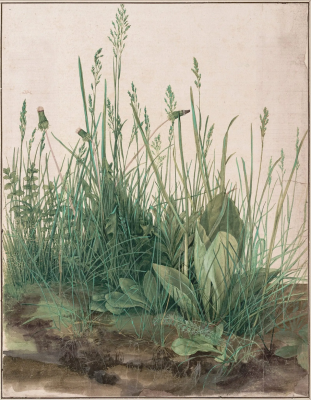
Great Piece of Turf by Albrecht Dürer , 1503 © Albertina Museum, Vienna
Source: Christian Art
Gospel of 28 July 2026
Matthew 13:36-43
At that time: Jesus left the crowds and went into the house. And his disciples came to him, saying, 'Explain to us the parable of the weeds of the field.' He answered, 'The one who sows the good seed is the Son of Man. The field is the world, and the good seed is the sons of the kingdom. The weeds are the sons of the evil one, and the enemy who sowed them is the devil. The harvest is the end of the age, and the reapers are angels. Just as the weeds are gathered and burned with fire, so will it be at the end of the age. The Son of Man will send his angels, and they will gather out of his kingdom all causes of sin and all law-breakers, and throw them into the fiery furnace. In that place there will be weeping and gnashing of teeth. Then the righteous will shine like the sun in the kingdom of their Father. He who has ears, let him hear.'
Reflection on the watercolour on paper
Today's Gospel, in which Jesus explains the parable of the wheat and the weeds, is very realistic. He does not pretend that the world is free from evil, nor does he suggest that the Church will be somehow untouched by it. Until the final harvest, wheat and weeds will grow side by side. Holiness and sin, faithfulness and failure, often exist uncomfortably close together... even within the community of believers. Matthew's Gospel itself recognises this. Later, Peter asks Jesus, "Lord, if my brother sins against me, how often must I forgive?", acknowledging that even among Christ's disciples there will be wounds that will require forgiveness and healing.
History bears this out. The sins of those who were called to serve Christ have at times caused deep suffering and scandal to the Church. We can all think of countless examples of how the sins of a few deeply affected the Church as a whole. BUT... the presence of evil is never the final word. Christ does not abandon his Church because of its imperfections; rather, he continues patiently to purify, heal and renew it through the Holy Spirit. As St Paul reminds us, "where sin increased, grace abounded all the more" (Romans 5:20). Our task is not to lose heart, but to cooperate with that grace, allowing the Divine Artist to continue restoring his image within us until the day of the final harvest.
Albrecht Dürer's Great Piece of Turf, painted in 1503, appears, at first glance, to be nothing more than a clump of wild grass with weeds. There are no grand biblical scenes, no saints, no dramatic events. Instead, Dürer kneels before an ordinary patch of earth and studies it with extraordinary care. Every blade of grass, every weed, every tiny plant is rendered with astonishing accuracy. Wheat and weeds, beautiful flowers and common wild plants all grow together, intertwined in the same soil. Nature itself becomes a quiet meditation on today's Gospel.
It is difficult to distinguish at first which plants are useful and which are merely weeds. Yet Dürer does not uproot or judge them; he simply observes them with patience and wonder. In much the same way, Christ tells us that good and evil often grow side by side until the final harvest. Our task is not to become impatient judges of others, but to allow the Divine Gardener to continue his patient work within our own hearts. Under God's loving care, even the most tangled patch of ground can become a place where grace quietly flourishes.
LINKS
Christian Art: www.christian.art
Today's image: https://christian.art/daily-gospel-reading/matthew-13-36-43-2026/
 Facebook
 Twitter
 LinkedIn
 Print
Print Email
Email













 Facebook
 Twitter
 YouTube
 LinkedIn
 Pinterest