


Gospel in Art: The kingdom of heaven is like a grain of mustard seed
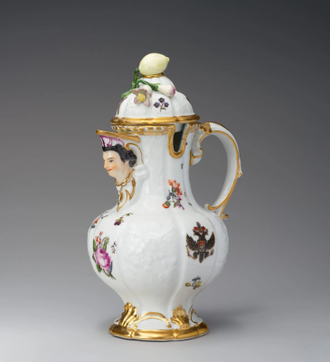
Mustard Pot, Meissen Manufactory, 1744-1745 © Metropolitan Museum, New York
Source: Christian Art
Gospel of 27 July 2026
Matthew 13:31-35
At that time: Jesus put another parable before the crowd, saying, 'The kingdom of heaven is like a grain of mustard seed that a man took and sowed in his field. It is the smallest of all seeds, but when it has grown it is larger than all the garden plants and becomes a tree, so that the birds of the air come and make nests in its branches.'
He told them another parable. 'The kingdom of heaven is like leaven that a woman took and hid in three measures of flour, till it was all leavened.'
All these things Jesus said to the crowds in parables; indeed, he said nothing to them without a parable. This was to fulfil what was spoken by the prophet: 'I will open my mouth in parables; I will utter what has been hidden since the foundation of the world.'
Reflection on the Mustard Pot
Jesus' brief parable about the mustard seed would have immediately resonated with his listeners. The tiny black seed was well known throughout the Holy Land. Although remarkably small, it could grow into a large shrub, reaching several metres in height. Farmers and gardeners were familiar with its astonishing transformation. Jesus chose this ordinary plant to reveal something great: God's Kingdom often begins in ways that seem insignificant, almost invisible, yet possesses an immense power for growth. What appears small in God's hands can become something that offers shelter, nourishment and life to many.
Our charming Meissen porcelain mustard pot, made around 1744-45, is far more than a simple table accessory. It formed part of the magnificent Andreevsky Service, an opulent dinner service commissioned by August III, King of Poland and Elector of Saxony, and presented as a diplomatic gift to Empress Elizabeth of Russia. The pot is decorated with the black double-headed Russian imperial eagle and the insignia of the Order of Saint Andrew, Russia's highest order of chivalry, founded by Peter the Great. Crafted in hard-paste porcelain, it demonstrates the extraordinary technical brilliance of the Meissen factory, Europe's first producer of true porcelain. It is fascinating that such exceptional artistry was devoted to an object intended simply to hold mustard.
Mustard was already widely cultivated in the ancient Near East long before the time of Christ. Archaeologists have found mustard seeds in Egyptian sites dating back more than 3,000 years, and the Romans and Greeks prized mustard both as a seasoning and as a medicine. In Jesus' own day, mustard was made by crushing or grinding the tiny seeds with a mortar and pestle, then mixing the resulting powder with grape must (freshly pressed, unfermented grape juice) or with vinegar, water or wine to create a paste. Indeed, the English word mustard derives from the Latin mustum ardens, meaning "burning must", referring to the spicy mixture of crushed seeds and grape must.
There is something deeply symbolic also about this. The tiny seed had to be crushed before its full flavour was released. Likewise, the Kingdom of God often grows through humility, sacrifice and patient perseverance. The smallest acts of kindness, the quietest prayers and the simplest gestures of faith may seem insignificant, yet in God's providence they possess the power to transform lives.
LINKS
Christian Art: www.christian.art
Today's image: https://christian.art/daily-gospel-reading/matthew-13-31-35-2026/
 Facebook
 Twitter
 LinkedIn
 Print
Print Email
Email















 Facebook
 Twitter
 YouTube
 LinkedIn
 Pinterest