

Mandela, a moral compass, a symbol of hope
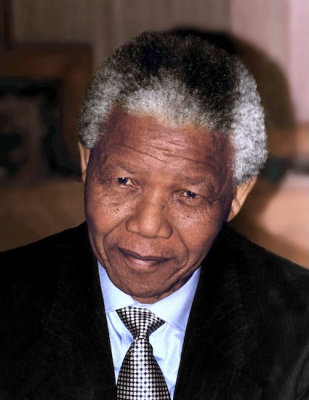
Nelson Mandela 1994 - Wiki Image
On 18 July we will celebrate Nelson Mandela International Day - celebrated globally on the day that he was born. Let's recognise "Mandela's values and his dedication to the service of humanity in: conflict resolution; race relations; promotion and protection of human rights; reconciliation; gender equality and the rights of children and other vulnerable groups" (UN).
At a time when the world seems to be spinning in the wrong direction, let's build on the values of heroes such as Nelson Rolihlahla Mandela. His Xhosa name was 'Madiba'. He was born into a royal family of the Xhosa-speaking Thembu tribe in the South African village of Mvezo, where his father was the Chief. He grew up in Qunu - from the age of two. This icon of social justice, a global advocate for human rights, a man who is described as the 'Father of the Nation' in South Africa, remains a symbol of hope in our troubled world.
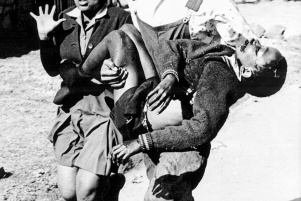
Mandela endured 27 years in prison, most of these years in solitary confinement (1962 - February 11, 1990) in South Africa, for opposing apartheid (Afrikaans for "separateness"). This was a brutal system of institutionalised racial segregation and the promotion of white supremacy, enforced by the South African government from 1948 to the early 1990s. It stripped the majority the population, who were not white, of political rights, severely restricted their freedom of movement, and mandated rigid physical and social separation.
Mandela survived 18 years on Robben Island, the maximum-security prison, where he performed hard labour in a limestone quarry. He was transferred to Pollsmoor Prison in 1982 and spent months in Victor Verster Prison before his release in 1990. He walked out of prison, not as a broken man, or one who was filled with hatred for those who had unjustly imprisoned him, but as a man filled with a commitment to continue his mission to dismantle apartheid. He chose forgiveness and actively pursued reconciliation. He spearheaded the negotiations that successfully abolished Apartheid.
He was the country's first black head of state and the first elected in a fully representative democratic election. He served as President of South Africa from 1994 to 1999. He declined a second presidential term. As an elder statesman, he focused on combating poverty and HIV/AIDS through the charitable Nelson Mandela Foundation. At the date of his death on 5 December, 2013 aged 95, he had received more than 250 honours, including the Nobel Peace Prize.
Let us learn from his wise words: "No one is born hating another person because of the colour of his skin, or his background, or his religion. People must learn to hate, and if they can learn to hate, they can be taught to love, for love comes more naturally to the human heart than its opposite."
I had the honour of meeting Mandela during his visit to Brixton Recreation Centre, London, on 12th July 1996. This was the first state visit to Britain by a South African President. He was accompanied by Prince Charles (now King Charles).
I still have warm memories of the chants: "Madiba! Madiba!"; the upbeat reggae music filling the air, and the amazing sight of people, including school children (they all had the day off in Lambeth), dancing and lining the streets, chanting on rooftops and balconies. It is estimated that more than 12,000 people gathered there on that eventful day.
I share an extract from Mandela's Nobel Peace Prize address in 1993: "This must be a world of democracy and respect for human rights, a world freed from the horrors of poverty, hunger, deprivation and ignorance, relieved of the threat and the scourge of civil wars and external aggression and unburdened of the great tragedy of millions forced to become refugees."
When Mandela died in December 2013, Pope Francis sent a formal telegram to South African President Jacob Zuma, highlighting several core aspects of Mandela's leadership. He praised Mandela as an inspiring figure who forged a new South Africa built on "non-violence, reconciliation, and truth." In his condolences, the Pope prayed that Mandela's legacy would encourage future generations to prioritise "justice and the common good. Additionally, Pope Francis honoured Mandela's memory in public addresses and social media, highlighting his struggle against racism and intolerance.
Today, I also pay tribute to my deceased father, Balgobin Ramdeen, who, on Wednesday 22 July, would have been 101 years old. He lived a purposeful life - husband of Ruby Ramdeen (nee Manning), father of seven, grandfather of many. He was an MP in TT's first Independent Parliament (1961-1966), an educator, Attorney-at-Law, Barrister (Lincoln's Inn), author, and columnist, who wrote under the pseudonym: "Cassandra." As Parliament stated in its tribute to him when he died in 2016: "He held steadfast on his views for liberating the oppressed."
If you believe, as I do, that freedom, equality, justice and peace are attainable in our troubled world, then commit to play your part to effect change in your homes, communities, the world. And remember, small steps matter.
Leela Ramdeen is Consultant of Trinidad & Tobago Catholic Commission for Social Justice & Archdiocese's Ministry for Migrants and Refugees
Facebook: www.facebook.com/ccsjtt
Instagram: ammrcatholictt
Twitter: @ammrcatholictt1
 Facebook
 Twitter
 LinkedIn
 Print
Print Email
Email





 Facebook
 Twitter
 YouTube
 LinkedIn
 Pinterest