

Faith-based groups officially complain about HSBC financing linked to coal mine in Colombia

HSBC bank headquarters in Canary Wharf, London. Photo: Sean Hawkey/WCC
Churches and faith-based organizations from Colombia, the United Kingdom, and Ireland, together with investment and ecumenical partners, have submitted a complaint under the Organisation for Economic Co-operation and Development (OECD) Guidelines for Multinational Enterprises on Responsible Business Conduct concerning HSBC Holdings plc and its financial relationship with Glencore, the company operating the Cerrejón coal mine in La Guajira, Colombia.
The complaint to the UK National Contact Point was jointly submitted by Iglesia Metodista de Colombia (Methodist Church in Colombia), Methodist Church of Great Britain, Methodist Church in Ireland, Epworth Investment Management Ltd, and CEPALC (Ecumenical Centre for Communication in Latin America) on 5 June.
The complainants argue that financial institutions have a responsibility to ensure that financing and investment practices are aligned with human rights, environmental standards, and their own climate commitments.
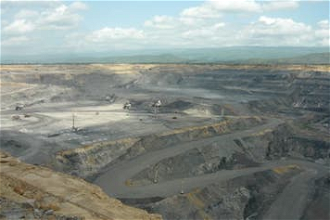
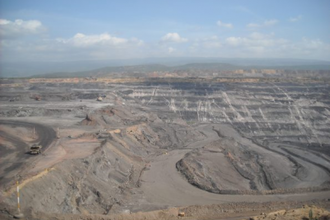
The Cerrejón mining operation has for years faced concerns and criticism related to environmental degradation, impacts on water access, displacement of communities, and health impacts affecting local and Indigenous populations in La Guajira.
The complaint calls on the UK National Contact Point to examine whether HSBC's financing relationship with Glencore is consistent with the OECD Guidelines and expectations regarding responsible business conduct and due diligence.
The submission is supported by the World Council of Churches (WCC) as part of its "Hope for Children through climate justice" initiative. Rev Prof Dr Jerry Pillay, WCC general secretary, said: "Faith communities have a moral responsibility to advocate for climate justice, human dignity, and responsible stewardship of creation. This initiative reflects growing concern among churches and communities worldwide regarding the role financial systems play in shaping the future of people and planet."
The WCC emphasized that the initiative is not intended as a campaign regarding a single financial institution, but rather as part of a broader call for responsible finance and accountability in the context of the climate crisis.
"The issue goes beyond one company or one bank," said Pillay. "Communities affected by extractive industries deserve to be heard, and financial institutions should align their financing practices with their own climate and human rights commitments."
The OECD complaint mechanism provides a non-judicial international process through which organizations and communities can raise concerns regarding responsible business conduct by multinational enterprises and financial institutions.
The complainants expressed their willingness to engage constructively in dialogue through the OECD process and reiterated their call for greater transparency, meaningful due diligence, and a transition toward sustainable and ethical financing practices.
The organizations involved in the initiative are also encouraging wider discussion within faith communities, financial institutions, and public on the responsibility of global finance actors in addressing climate crisis and protecting vulnerable communities.
The WCC initiative Hope for Children through climate justice equips churches to engage with legal and accountability mechanisms in cases where children's rights are affected by the actions of financial institutions, especially through investments into fossil fuels expansion.
 Facebook
 Twitter
 LinkedIn
 Print
Print Email
Email










 Facebook
 Twitter
 YouTube
 LinkedIn
 Pinterest