


The Shared House of Bethlehem
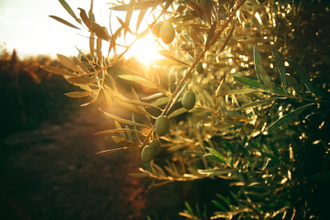
Photo by Flor Saurina on Unsplash
Toine van Teeffelen writes from Bethlehem: On Sunday, Mary and I attend a memorial service, thirty days after the death of a family member.
The setting is unusual: the lesser-known Armenian section of the Church of the Nativity. In a side space, wedged between the Greek Orthodox and Roman Catholic sections, stand two Armenian altars. One commemorates the moment when Mary dismounted from the donkey; the other recalls the Holy Family drinking water from a spring. Brief moments, made tangible in stone and ritual.
Visitors sit and stand scattered throughout the space. Some take seats that technically belong to the Greek Orthodox altar - I do as well. A family member spontaneously hands me a host: a generous piece of bread, given by the Greek Orthodox priest at the neighbouring altar. The gesture feels entirely natural. The atmosphere here is that of a shared community, a common home. Children wander freely around the altar. I find myself thinking of my childhood, when moving around in a (Western) church would usually provoke a stern look.
The service is in Armenian, a language most of those present do not understand. Long chants fill the space, beautiful but undemanding; they allow the mind to drift. The soft murmur of conversation - amplified by the church's echo-resembles the hum of voices just before a concert begins.
Afterwards, we shake hands. The family forms a long, slightly broken line in the middle of the church. This arrangement is only possible because there are no tourist lines. At the exit, small plastic bags containing so-called blessed bread are handed out. Bread as a sign of community: eating together, sharing together. Bethlehem means "house of bread" in Hebrew and "house of meat" in Arabic. In both cases, it symbolically denotes a house of abundance. (In older Semitic languages, the root L-Ḥ-M had a broader meaning of "food" or "to nourish," which narrows the semantic distance between bread and meat.)
Domicide - the destruction of homes, as in Gaza and Lebanon - is in fact the destruction of domestic life.
Mary and I then eat falafel at a Syriac place across from the Church of the Nativity, next to the Omar Mosque. The space is underground and feels like a grotto-cool, sheltered, intimate. It is precisely here that another reading of the Nativity story takes on meaning. According to the local Arab Women's Union, the Eastern version makes more sense than the familiar Western one. Not that the Holy Family was turned away from an inn-culturally speaking, almost unthinkable-but rather the opposite: they were taken in. Only the upper level of the family house was overcrowded. So they were led down to the grotto below, where the animals were kept, where it was warmer, and where in winter a child could be born.
Mary points to an Aramaic text on the wall. Aramaic, the language of Jesus' time, is still used during the liturgy by the Syriac Orthodox community in Bethlehem.
We walk through the old city and across the market. It is a beautiful day. Mary points out a room that once belonged to her family, and a little later the way to her childhood home. In an old shop she buys a piece of fabric, planning to embroider a traditional Palestinian pattern into it.
Scattered throughout the city we notice the nawwār: the first blossoms of the olive trees. They glow softly in the sunlight. It seems that this year's harvest may be exceptionally good.
Toine van Teeffelen, an MA graduate in social anthropology and a PhD holder in discourse analysis from the University of Amsterdam, moved from the Netherlands to the occupied West Bank in 1994. Alongside working as a guide, he conducted workshops for universities, schools, and educational NGOs, and served as the development director at the Arab Educational Institute, a Pax Christi Partner in Bethlehem. His contributions on discourse analysis and Palestine have appeared in local publications and international journals.
 Facebook
 Twitter
 LinkedIn
 Print
Print Email
Email






 Facebook
 Twitter
 YouTube
 LinkedIn
 Pinterest