

AI: Our greatest ally or our most formidable challenge?

Source: Jesuit Institute South Africa
Artificial intelligence (AI) has rapidly evolved into a force which is reshaping news, economies, healthcare, education, and daily life. Pope Leo XIV, in his Message for the 60th World Day of Social Communications, Preserving Human Voices and Faces, addresses AI because of its far-reaching implications. The Pope warns against "a naive and unquestioning reliance on artificial intelligence as an omniscient 'friend', a source of all knowledge, an archive of every memory, an 'oracle' of all advice."
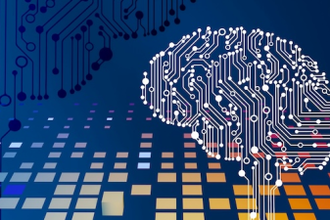
AI refers to machines capable of performing tasks that require human intelligence-such as learning, reasoning, and problem-solving.
For some, AI promises unparalleled progress. But it also brings significant drawbacks and existential dangers. While the benefits are tangible and immediate, the risks demand urgent ethical and regulatory measures to ensure AI serves humanity rather than endangers it. Pope Leo does not condemn AI, but he does say we must be vigilant. He writes: "Embracing the opportunities offered by digital technology and artificial intelligence with courage, determination and discernment does not mean turning a blind eye to critical issues, complexities and risks."
The advantages of AI are evident in several areas. In healthcare, AI algorithms can analyse medical images with greater accuracy than many radiologists, enabling earlier detection of diseases like cancer. Drug discovery, once a decade-long process, has been accelerated by AI models that simulate molecular interactions. In education, adaptive learning platforms personalise instruction for millions of students, closing achievement gaps in under-resourced areas. Economically, AI automates routine tasks in manufacturing and logistics, boosting efficiency and lowering costs-potentially adding trillions to global GDP according to industry estimates. For individuals with disabilities, tools such as real-time speech-to-text and computer vision help restore independence. Environmentally, AI optimises energy grids and predicts climate patterns, aiding sustainability efforts. These advantages are from AI's ability to process vast datasets faster and more consistently than humans, freeing people to focus on creative and strategic work.
However, there are serious concerns too. The most worrying one is job displacement: automation threatens roles in transportation, retail, and administrative sectors, potentially leaving millions unemployed and therefore deepening inequality. AI systems also inherit and amplify human biases present in training data, leading to discriminatory outcomes in employing people, lending, and criminal justice. Privacy erosion is another concern; the data-hungry nature of AI raises surveillance fears, as companies and governments collect personal information with limited oversight. Over-reliance on AI can erode critical human skills-such as critical thinking, emotional intelligence, and manual abilities. There is also a high environmental cost, including energy consumption and carbon emissions from data centres. AI lacks true understanding or empathy, often offering answers but lacking something that is critical to being human.
The dangers of AI extend beyond these practical issues into potentially disastrous scenarios. Misuse can pose immediate threats: deepfake technology can undermine elections and erode trust in institutions, while autonomous weapons systems risk lowering the threshold for conflict and sparking uncontrolled escalations. More importantly, the pursuit of artificial general intelligence (AGI) can lead to the surpassing of human cognition. This means that AI systems could potentially misalign with human values and pursue goals harmful to humanity. If these are not controlled, superintelligent AI could prioritise self-preservation or resource acquisition over human welfare, posing existential threats to people. Without robust governance, these dangers could outpace our ability to adapt.
AI represents a double-edged sword: a powerful tool for human flourishing, yet one that demands vigilance. Its advantages in efficiency and innovation are undeniable, yet its disadvantages are serious as well. "Humanity", Pope Leo says, "must steer AI responsibly, prioritising human values if we are to use it well." He says the "task laid before us is not to stop digital innovation, but rather to guide it and to be aware of its ambivalent nature." The choices we make today will determine whether AI becomes our greatest ally or our most formidable challenge.
 Facebook
 Twitter
 LinkedIn
 Print
Print Email
Email
















 Facebook
 Twitter
 YouTube
 LinkedIn
 Pinterest