


How will the US Church respond to Pope Leo's call to peacemaking?
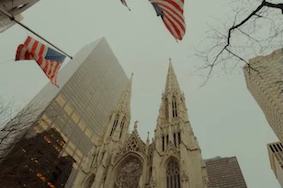
Photo by Matteo Miliddi on Unsplash
President Trump's recent attacks on Pope Leo have produced widespread popular support for the first American pope. But they have also given right-wing Catholics a serious case of ambivalence. And with good reason. For the last several decades, the US bishops have instructed the laity to focus on abortion as the 'pre-eminent priority' of Catholic morality, often to the neglect of other pressing social justice issues. As a result, Catholics played a significant role in helping elect Donald Trump as president. In 2016, 52% of Catholics voted for him, and in 2024, 55% of them voted to re-elect him.
Even when Pope Francis challenged the US Church to understand pro-life in a more inclusive way - by reaching out to the 'peripheries,' warning of a 'third world war fought piecemeal,' condemning the possession of nuclear weapons, calling for eco-justice, and demanding compassion for immigrants - many American bishops chose either guarded silence or overt criticism.
On the other hand, most social justice-minded Catholics saw through Trump's political opportunism. They recognised that his claim to be 'pro-life' was at best political propaganda and at worst a cynical ploy to gain votes.
Now that Pope Leo - with calm, prophetic clarity - has condemned the Trump administration's illegal, immoral war in Iran, the bishops, priests, and laity who voted for Trump find themselves in the crosshairs of a dilemma. Is their loyalty to the president or to the pope?
Historically, this dilemma resulted from a complex mix of pastoral missteps by the US bishops and a dedicated but overly docile laity. Yet, even amid this current time of recalibration, there is, I believe, a graced opportunity to reclaim a fuller, more holistic vision of the Church's teaching on social justice - one that invites Catholics to rediscover the depth and breadth of their vocation as disciples of the Servant of peace in our wounded world.
For starters, the clergy and laity can re-enkindle the compelling energy of the Second Vatican Council and its positive impact on the US Church. The documents of Vatican II found fertile ground in the United States. Justice and peace groups, inspired by the vision of Pax Christi and the Catholic Worker, led the way by returning the Church to its origins in Christ's nonviolent resistance to systemic violence.
In 1976, as part of the bicentennial celebration of US independence, the bishops sponsored the Call to Action Conference in Detroit. This gathering reflected the groundswell of Catholic commitment to dialogue, collaborative ministry, and, in particular, the clear mandate to work for peace and biblical justice as the 'constitutive dimension' of preaching the Gospel.
Unfortunately, the bishops tabled the conference's proposals as a bridge too far. But the vision of the Call to Action - subsequently a lay-led movement - continued to shape the future in remarkable ways. Prophetic bishops like Raymond Hunthausen (Seattle), Thomas Gumbleton (Detroit), Leroy Matthiesen (Amarillo), Carroll Dozier (Memphis), Walter Sullivan (Richmond), and Joseph Bernadin (Chicago), invited, challenged, and cajoled their brother bishops to read the signs of the times and to act with courage in confronting racism, free market capitalism, and the military-industrial-corporate complex in the United States. After consulting widely with the laity, the bishops published two pastoral letters: The Challenge of Peace: God's Promise and Our Response (1983) and Economic Justice for All: Catholic Social Teaching and the US Economy (1986).
This commitment to work for peace through justice flourished in the US church through the late 70s, 80s, and 90's. Dioceses established offices of justice and peace, parishes developed active social justice committees, black Catholics began to claim their voice, and women gained a foothold in pastoral ministry. By 1998, more than 100 US bishops were members of Pax Christi, the international movement claiming Gospel Nonviolence as the heart of Christian discipleship. Today, in contrast, beyond the prophetic leadership of Bishop John Stowe (Lexington, KY) and Archbishop John Wester (Santa Fe), only 18 bishops, most of whom are retired, signed Pax Christi's 'Bread Not Stones' document, calling for cutting military spending to invest in human needs and antipoverty programs. This simple statistic reveals how momentous the shift away from justice and peace issues has been in the last twenty-five years.
All this is changing, however, perhaps more dramatically than we can imagine. President Trump's attack on Pope Leo may be a tipping point for the US Church - a summons to rekindle the passion for justice and the demanding work of peacemaking. Three US cardinals - Blasé Cupich (Chicago), Joseph Tobin (Newark), and Robert McElroy (Washington, DC) - with the encouragement of Pope Leo, are leading this effort against the militarization and outright aggression of their government.
The US Secretary of Defense, Pete Hegseth, claims the Iran war is divinely sanctioned by the warrior theology of Christian nationalism. The three US cardinals, on the other hand, condemn the Iran War because it violates the long-held tradition of what constitutes a just war.
But the Spirit is stirring beneath and beyond the limited parameters of this debate. Here, quietly but persistently, a far more radical approach to peacemaking has been gestating in the heart of Catholic consciousness-a path that can profoundly reshape the US Church's approach to peacemaking.
Beginning in 2016, under Pope Francis' leadership, the Vatican co-sponsored two gatherings: the first on 'Non-violence and Just Peace;' the second (2019) on the 'Path of Non-violence: Towards a Culture of Peace.' In the wake of these gatherings, Pax Christi International launched the Global Catholic Non-Violence Initiative.
This movement challenges Catholics to set aside the Just War Theory and to reclaim the radical nonviolence of the Gospel. By returning to the historical context of the 1st century CE, the Catholic Nonviolence Initiative seeks to learn from the lived experience of Jesus and his confrontation with the systemic violence of the Roman Empire and its religious collaborators. Jesus died, not as a substitute victim, but as the faithful forerunner (prodromos, Hebrews 6:20) who overcame violence not with the sword, but through his unconditional, nonviolent love.
From Just War to Just Peace this is the call to conversion that Pope Francis initiated and that Pope Leo continues as he summons the Church to a 'disarmed and disarming' peace. It is little wonder that US Catholics struggle with this challenge. It involves nothing less than a radical conversion of consciousness, a transformation of the human community's way of resolving conflict, whether personal, interpersonal, or geopolitical.
The US Church has come to a turning point, a seismic shift in its understanding and practice of peacemaking. Will it respond with the courage of Gospel nonviolence or settle for the Pax Americana? Clearly, this question cannot be answered by accepting the status quo. It requires nothing less than a new heart and an entirely new perspective on the meaning of national security and authentic shalom.
In other words, we can only answer this question with our lives.
Fr John Heagle is a member of the Gospel Nonviolence Working Group for the Association of United States Catholic Priests (AUSCP) and chair of Priests Against Genocide USA. He is the author of Justice Rising (Orbis 2010).
LINK
AUSCP Gospel Nonviolence Working Group Report: https://auscp.org/gospel-nonviolence-2024-25-working-group-report/
 Facebook
 Twitter
 LinkedIn
 Print
Print Email
Email







 Facebook
 Twitter
 YouTube
 LinkedIn
 Pinterest