
Genocide and the Palestinian People - Why US priests are struggling with this social justice Issue
In recent months, Catholic priests in the United States have been invited to join an international movement opposing genocide and advocating for a just peace in Palestine. Unfortunately, the response has been slow-alarmingly so. To date, just over 100 priests-out of approximately 37,000 nationwide-have signed on. Why the hesitation? What factors account for the reluctance of US priests to support this movement?
To address these questions, it is first necessary to understand the vision and purpose of this international movement. Inspired by Pope Leo's appeal for "a disarmed and disarming peace," Italian priests took to the streets in Rome and other cities in late September 2025 under the banner Preti Contro il Genocidio (Priests Against Genocide). Since then, the movement has expanded rapidly, now including more than 2,200 priests-among them, bishops and cardinals-in over 54 countries.
The guiding document of Priests Against Genocide is firmly grounded in Vatican II theology, biblical justice, and Catholic pastoral practice. Drawing from the Church's social teaching and international human rights agreements, its message conveys both geopolitical realism and Gospel compassion. The statement calls faithful Catholics to stand with their pastors in solidarity with the oppressed people of Gaza and the West Bank.
The document explicitly references international law, United Nations resolutions, and the International Criminal Court's rulings. In doing so, it clearly states that the charge of genocide is based on established legal foundations-foundations recognized even by several Israeli scholars. The movement also emphasizes that it is not "against" anyone. On the contrary, it promotes the dignity of the Jewish people and honours the sacred heritage shared between Catholicism and Judaism. More importantly, in today's politically sensitive climate, it carefully separates respect for Jewish identity from opposition to Zionism-including the delusional theology of Christian Zionism-both within the US and in their support for the current militarized, right-wing Israeli government.
With this background, we now turn to some of the reasons why priests are reluctant to join Priests Against Genocide USA.
First, with the onset of President Trump's latest war of choice in Iran, media attention has shifted away from the ongoing crisis in Gaza to focus on this illegal, unjust, and destructive 'excursion' (Trump's word) against the Iranian people. In addition, many in the international community have mistaken the so-called ceasefire in Gaza for genuine peace. As Palestinian pastor and theologian Munther Isaac has observed, "what politicians are selling the world is not peace; it is submission." Since the truce began, more than 360 Palestinians have been killed. To make matters worse, seasonal rains flood the tent camps, children continue to die, and humanitarian conditions worsen daily. There has been no meaningful discussion of justice, no acknowledgment of war crimes, no accountability, and no talk of reparations. As Gazan journalist Mohammed Shehada bluntly states, "what lies ahead is not peace, but a more insidious, systematic continuation of genocide in slow motion."
Second, immigration currently dominates pastoral priorities in the US Church, as reflected in recent statements by the US Conference of Catholic Bishops. While this focus is both necessary and urgent, it cannot excuse inaction on behalf of the Palestinian people. There is no moral tension between resisting ICE raids in Minneapolis and opposing genocide in Gaza. Both struggles arise from the same radical moral imperative: the defense of universal human rights.
Third, with President Trump's second term, a widespread fear has enveloped many American institutions, including government agencies, universities, medical centers, and law firms-especially those that have publicly committed to diversity, equity, and inclusion (DEI). This environment has fostered anxiety about being labeled antisemitic, as seen in the suppression of campus protests and the dismissal of longtime civil servants. For many priests, this fear can lead to silence, even when moral clarity urges them to speak courageously and act with compassion in their ministry.
Fourth-and likely most significant of all-it has become painfully clear that the bishops in the United States are reaping a whirlwind of their own devising. For decades, the USCCB has made opposing abortion the 'preeminent priority' in Catholic moral teaching, often to the neglect of other pressing social justice issues. Largely due to this single-issue focus, the US bishops, priests, and Catholic laypeople helped elect Donald Trump in 2016 and again in 2024. On the other hand, from the outset, most social justice-minded Catholics recognized Trump as a political con artist. His anti-abortion stance is driven not by moral conviction but by political calculation -a cynical ploy to gain votes. Over the past year, Trump's lack of moral values has become even more obvious. As a result, the US bishops are now struggling to find their moral authority to speak out on the wider issues of justice and peace. Their political loyalty to Trump's 'pro-life' agenda has created a crisis of credibility, as they now come face to face with his administration's brutal immigration policies, his illegal and immoral war in Iran, and his backing of Netanyahu's destructive actions in Gaza and in Iran. Given this history, it is not surprising that many US priests-particularly among younger clergy, who already lean toward a more conservative theological perspective-hesitate to publicly align with Priests Against Genocide USA.
What conclusions can we draw from these tensions in the US Church? An increasing number of grassroots Catholic laity, faith leaders, and peace activists are voicing opposition to current US policies regarding Israel and Palestine. This in turn reflects a broad shift in public discourse, as more people call for accountability, justice, and a re-examination of the United States' role in international affairs. In this evolving landscape, Priests Against Genocide USA has the potential to become a critical pastoral presence within the wider justice and peace movements. By advocating for the oppressed and drawing on a foundation of Gospel nonviolence, this movement can become a prophetic voice in the ongoing struggle for human dignity and rights.
Once again, the US Church finds itself at a "Catholic moment"-a graced opportunity to read the signs of the times, to listen, pray, and discern. And then to act-to act, in the words of Father Daniel Berrigan, SJ, with "outraged love" on behalf of oppressed people everywhere.
Here is the link to sign the Priests Against Genocide, USA petition. It includes an outline of the original document and an easy-to-sign form: https://formurl.com/to/priestsagainstgenocideusa
Fr. John Heagle is a member of the Gospel Nonviolence Working Group for the Association of United States Catholic Priests (AUSCP) and chair of Priests Against Genocide USA. He is the author of Justice Rising (Orbis 2010).
 Facebook
 Twitter
 LinkedIn
 Print
Print Email
Email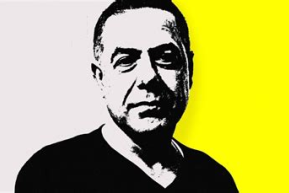





 Facebook
 Twitter
 YouTube
 LinkedIn
 Pinterest