

Rights. Justice. Action. For ALL Women and Girls
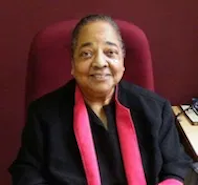
Leela Ramdeen
The Theme for International Women's Day tomorrow, 8 March is: 'Rights. Justice. Action. For ALL Women and Girls'. António Guterres, Secretary General of the UN, has stated that achieving gender equality and empowering women and girls is "the unfinished business of our time, and the greatest human rights challenge in our world."
Christianity teaches that all people possess inherent, inviolable dignity because they are created in the image and likeness of God (imago Dei - Genesis 1:26-27). This dignity is a gift from God. Each person deserves respect and love. Human life is sacred and the dignity of the human person is the foundation of a moral vision for society. Discrimination in all forms is contrary to the teachings of Christ.
While acknowledging that globally women and girls continue to face deep-seated, systematic injustices, if we are to inspire others to join in the struggle, it is important to celebrate/honour the successes and progress made over the past generations. This will help us to maintain momentum in the fight for equality/equity/justice for women and girls.
Research shows that:
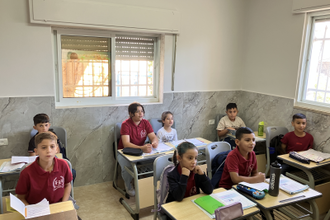
- significant global progress has been made in increasing educational opportunities for women and girls over the last few decades. However, despite progress, 119 million girls are out of school, often due to poverty, child marriage, conflict, and gender-based violence. Tertiary education remains uneven, and challenges remain regarding quality education, completion rates, and safety,
- approximately 83% - 87%% of countries (around 162-165 nations) have enacted laws addressing domestic or intimate partner violence - compared to only 19 in 1995. Remember that enacting laws must be followed up by education/empowerment campaigns and enforcement of legal violations,
- there has been significant growth in laws prohibiting gender-based discrimination in employment since 1995
- global rates of child marriage and female genital mutilation are in decline,
- Latin America and the Caribbean have shown significant progress in female heads of state, and several parliaments globally have achieved or exceeded gender parity,
- as of January 2025, women held 27.2% of seats in national parliaments, up from 11.3% in 1995;
- 53 countries have recently introduced or implemented reforms to strengthen social security systems, including those focused on maternity leave and cash transfers (International Social Security Association 2025 report).
Note that while legal reforms have been implemented in some countries to remove discriminatory laws, legal gender inequality remains widespread. 178 countries maintain legal barriers that restrict economic participation and over 20 countries prevent women from passing nationality to their children. These laws include unequal inheritance rights, restrictions on travelling, working, or accessing bank accounts without male permission, and limited legal capacity.
The UN states that "Nowadays, no nation has closed the legal gaps between men and women. Right now, women have only 64 per cent of the legal rights that men hold worldwide. In fundamental areas of life, including work, money, safety, family, property, mobility, business, and retirement - the law systematically disadvantages women."
Numerous laws worldwide continue to embed discrimination against women and girls. For example: the Taliban-led government in Afghanistan has introduced a new 90-page penal code, known as De Mahakumu Jazaai Osulnama, which has effectively reduced the status of women to that of "slaves" or property. This new Penal Code codifies violence, obedience and gender apartheid. Men are now allowed to beat their wives until women have "broken bones" or "open wounds". As journalist Beatriz Lecumberri states: "An Afghan man can spend 15 days in jail for breaking his wife's arm, or five months if he mistreats a camel." Afghan girls over the age of 12 are barred from accessing education.
And let's not forget the systemic violation of the rights of women and girls in the West. For example, as ONHCR reports, the "Epstein Files contain disturbing and credible evidence of systematic and large-scale sexual abuse, trafficking and exploitation of women and girls. According to the experts, these acts could amount to sexual slavery, reproductive violence, enforced disappearance, torture, inhuman and degrading treatment, and femicide.
"These crimes were committed against a backdrop of supremacist beliefs, racism, corruption, extreme misogyny, and the commodification and dehumanisation of women and girls from different parts of the world," the experts said.... "The 'Epstein Files', are suggestive of the existence of a global criminal enterprise..."
Without systems that work for women and girls, their rights remain a forlorn dream. Goal 5 of the Sustainable Development Goals, to "Achieve gender equality and empower all women and girls", is worth pursuing. Let's act now!
Leela Ramdeen is Consultant of Trinidad & Tobago Catholic Commission for Social Justice & Archdiocese's Ministry for Migrants and Refugees
Facebook: www.facebook.com/ccsjtt
Instagram: ammrcatholictt
Twitter: @ammrcatholictt1
 Facebook
 Twitter
 LinkedIn
 Print
Print Email
Email







 Facebook
 Twitter
 YouTube
 LinkedIn
 Pinterest