


Gospel in Art: Give back to Caesar what belongs to Caesar
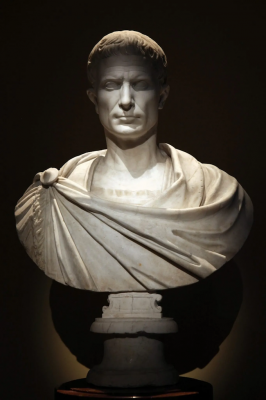
Gaius Julius Caesar, 1st century AD © Kunsthistorisches Museum, Vienna
Source: Christian Art
Gospel of 4 June 2024
Mark 12:13-17
The chief priests and the scribes and the elders sent to Jesus some Pharisees and some Herodians to catch him out in what he said. These came and said to him, 'Master, we know you are an honest man, that you are not afraid of anyone, because a man's rank means nothing to you, and that you teach the way of God in all honesty. Is it permissible to pay taxes to Caesar or not? Should we pay, yes or no?' Seeing through their hypocrisy he said to them, 'Why do you set this trap for me? Hand me a denarius and let me see it.' They handed him one and he said, 'Whose head is this? Whose name?' 'Caesar's' they told him. Jesus said to them, 'Give back to Caesar what belongs to Caesar - and to God what belongs to God.' This reply took them completely by surprise.
Reflection on the Ancient Roman Bust
Today's Gospel reading raised a political question. The debate at the time was whether or not the Jews should pay the Roman taxes to Caesar. It was a new tax that came in in the year 6AD and was heavily contested by the Jewish people. As our Gospel reading states 'Pharisees and some Herodians' put a question to Jesus. Interestingly, these two groups themselves disagreed about the answer. The Pharisees believed that the tax ought not be paid, and they considered the tax to be offensive. The Herodians however, who had old and strong ties with Rome, believed it should be paid. So Jesus was cornered and any answer he gave would offend one of the parties.
Jesus, 'seeing through their hypocrisy', knew that a trap was laid. He knew though that what united the two groups was their common hatred of him. Jesus replied by not denying that the people had certain responsibilities to Caesar and thus civil responsibilities, but clarifying that they also have responsibilities to God. Jesus does not prohibit paying taxes to Caesar but he affirms that what is due to the true God is much greater. The gospel reminds us that our ultimate loyalty is to God. It is God who has first claim on our lives, not any human authority.
I share with you a 1st-century carved marble bust of the Emperor Caesar. These marble busts functioned as public sculptures, to honour the politicians or army generals. Whilst many examples of Roman busts have survived, they often got re-sculpted during Roman times. For example when Emperor A died, then many of his busts would be re-sculpted to now portray Emperor B. Hence not many busts of the early emperors survived, as the majority would have been recycled and recarved. However, gradually over time, the Romans attached more and more importance to their family heritage. Actually, ancestry was one of the best indicators of a man's political or military ability. If for example you were the descendant of well accomplished military commanders, then you too, had the potential to 'claim' to be a great leader. Therefore, as time moved on, more of the busts were preserved and revered without being re-sculpted, as a testimony to one's ancestral lineage.
LINKS
Gospel in Art: https://christian.art/
Today's Reflection: https://christian.art/daily-gospel-reading/mark-12-13-17-2024/
 Facebook
 Twitter
 LinkedIn
 Print
Print Email
Email













 Facebook
 Twitter
 YouTube
 LinkedIn
 Pinterest