

Sunday Reflection with Canon Robin Gibbons: 17 September 2023
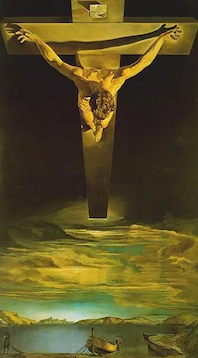
Christ of St John of the Cross - Salvador Dali
Twenty-fourth Sunday in Ordinary Time
I am reminded when I read the gospel of today that forgiveness and being forgiven is not common currency in today's world, discussions on forgiveness, examples of the power of forgiveness are rare, and that is sad. Yet every one of us will find ourselves either feeling that somehow we may need to forgive something done to us personally, or realising the harm we have done another recognise that the only way out of a problem is to be brave and ask for pardon.
Recently I had cause to be told by somebody in my family that perhaps the way out of an intractable issue within the family setting, was for me to ask for forgiveness. Only I had no idea what I was supposed to have done, and though I may have wanted forgiveness for many things, in this instance I could not ask this of somebody who seemed to have completely projected their woes on me, on others. In this matter my own conscience was clear, so I asked myself what did I need this forgiveness for? Was it wrong to tell me to reach out in this way?
I'm afraid that pastor and priest I may be, but the idea of asking a vague blanket forgiveness of somebody for a problem not of my making needed further thought. There is intention isn't there? Does somebody's hurt feelings from something they perceived you said or did constitute a sin needing forgiveness? Difficult that one! Often I would suggest a 'no'- particularly if it is a perceived feeling of slight. Yes talking it out might be good, getting a mediating person often essential, but what might be necessary is that other word, apologise, 'if I have hurt, offended you unthinkingly, I apologise, but I cannot ask for forgiveness'!
Why I use that illustration is to show how bound up we can get with feelings, perceptions, my rights, your impositions and so on. A litigious society like our own, does not help either, because we can get caught up in a problematic drama that is unending with a blunted sense of social and individual sin where values become distorted, perhaps even forgotten.
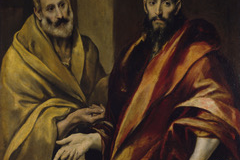
Yet we do need to examine ourselves, and yes, our society and church for the attitudes prevailing in ourselves and our communities, that lead to a sinful manners of behaving. Religious people need to beware of this, which is why Peter's apparently noble request of Jesus: "Lord, if my brother sins against me, how often must I forgive? As many as seven times?" (Mt 18v21) Is answered by an unequivocal - "I say to you, not seven times but seventy-seven times" (Mt 18 v22).
Peter was pushing boundaries in a merciful sense, Judaism required forgiveness of the same person for the same offense at least three times. Seven was twice that plus one. So here, Peter was suggesting taking it to the extra mile when it comes to forgiving others. But Jesus in reply extends this to an unlimited number, and brings home a deeper truth, that in all we say, do, act it is God whose forgiveness is at the heart of mercy.
It is clear from the teachings of Jesus that God expects those whom He forgives to also forgive everyone who sins against them up to the amount they themselves have been forgiven. In the sense that every sin we commit is somehow committed against God, those who are forgiven by God are forgiven for every sin, every wrong and wicked choice, we ever do over the course of our lifetimes. The dreadful and honest truth we need to face as people is that nobody will ever sin against us anywhere near to the amount we have all sinned against God. But this should not lead us into the gloomy paths of attributing to the Holy One the hurts and pains we may feel as humans, the mystery of sin, of missing the mark is just that, our actions cause their own result, if we cut ourselves off wilfully and deliberately, and do not love God or our neighbour as ourselves and refuse the gift of forgiving, then as `Jesus says at the end of the gospel of the unjust and unforgiving servant, "So will my heavenly Father do to you, unless each of you forgives his brother or sister from their heart."(Mt 18:35)
It isn't easy is it ? Those who absolutely and resolutely refuse to forgive, and instead seek vengeance and wrath, may be showing that they are also not very willing to receive God's forgiveness for their much larger debt of sin. But take heart, for this does not apply to those of us who want to forgive yet are grappling with how to manage it. All around us are the shattered consequences of our sins, but we carry on, broken we still somehow find healing and wholeness.
Even though we're not perfect, we can demonstrate willingness to become obedient to love, as Christ our brother and teacher is. We can live in hope that the Triune Holy One understands more than we can ever know, that through Christ and the power of the Spirit the Abba has forgiven us for far more than we will ever need to forgive in others. We are not ungrateful servants, but trusting ones.
Lectio
On Forgiveness
1. ISAAC THE THEBAN
One day Abba Isaac went to a monastery. He saw a brother committing a sin and he condemned him. When he returned to the desert, an angel of the Lord came and stood in front of the door of his cell, and said, 'I will not let you enter.' But he persisted saying, 'What is the matter?' and the angel replied, 'God has sent me to ask you where you want to throw the guilty brother whom you have condemned.' Immediately he repented and said, 'I have sinned, forgive me.' Then the angel said, 'Get up, God has forgiven you. But from now on, be careful not to judge someone before God has done so.'
2. Part of the Last Testament of Dom Christian de Chergé one of the Algerian Martyrs
If it should happen one day - and it could be today - that I become a victim of the terrorism that now seems to encompass all the foreigners living in Algeria, I would like my community, my church, my family, to remember that my life was given to God and to Algeria; and that they accept that the sole Master of all life was not a stranger to this brutal departure.
I would like, when the time comes, to have a space of clearness that would allow me to beg forgiveness of God and of my fellow human beings, and at the same time to forgive with all my heart the one who will strike me down.
I could not desire such a death; it seems to me important to state this: How could I rejoice if the Algerian people I love were indiscriminately accused of my murder?
My death, obviously, will appear to confirm those who hastily judged me naïve or idealistic: "Let him tell us now what he thinks of it!" But they should know that … for this life lost, I give thanks to God. In this "thank you," which is said for everything in my life from now on, I certainly include you, my last-minute friend who will not have known what you are doing … I commend you to the God in whose face I see yours. And may we find each other, happy "good thieves" in Paradise, if it please God, the Father of us both.
3. Hans Küng, 'The Church', see also page 283-284
The Churches themselves can do nothing to free themselves from guilt in the sight of God, they can only seek to be freed: they are dependent on forgiveness. So the first step in healing the breach must be an admission of guilt and a plea for forgiveness addressed both to God, the Lord of the Church, and to our brothers: "Forgive us our trespasses, as we forgive those who trespass against us." In asking for forgiveness, we ask for the healing of the division and in asking for forgiveness we declare that we are ready to do whatever is God's will to remove the division: Metanoia!
"There can be no ecumenism worthy of the name without a change of heart. For it is from newness of attitudes, from self-denial and unstinted love, that yearnings for unity take their rise and grow towards maturity. We should therefore pray to the divine Spirit for the grace to be genuinely self-denying, humble, gentle in the service of others, and to have an attitude of brotherly generosity towards them. . . . St John has testified: 'If we say that we have not sinned, remake him a liar, and his word is not in us' (1 John 1:10). This holds good for sins against unity. Thus, in humble prayer, we beg pardon of God and of our separated brethren, just as we forgive those who trespass against us. Let all Christ's faithful remember that the more purely they strive to live according to the gospel, the more they are fostering and even practicing Christian unity" (Decretum de Oecumenismo of Vatican II, 7)
 Facebook
 Twitter
 LinkedIn
 Print
Print Email
Email









 Facebook
 Twitter
 YouTube
 LinkedIn
 Pinterest