


Campaigners report alarming expansion of euthanasia in Australia
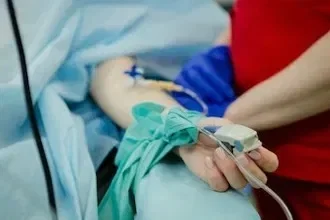
Photo by Olga Kononenko on Unsplash
Source: Right to Life
The staggeringly swift expansion of euthanasia law in Australia continues, as the Australian Capital Territory (ACT) has reported its first euthanasia deaths, showing that the territory appears on track to have the highest proportion of assisted deaths in its first year among all jurisdictions in the world with their own assisted death laws.
ACT's assisted death legislation, the most recent assisted death law to begin operating in Australia, is the most expansive assisted death legislation in Australia, and one of the most extreme in the world.
It is the only scheme currently operating in Australia with no fixed time within which an applicant must be expected to die. It also sets no minimum waiting period between key steps, meaning that a person could request euthanasia in the morning and be dead by the afternoon.
"Slippery slope" expansion of law began just one day after the law passed
While in other jurisdictions, politicians sponsoring assisted-death laws have focused heavily on claims that their proposed legislation is the strictest or very restrictive, ACT campaigners did the opposite, boasting on the day assisted dying was implemented that it was the "most progressive" assisted suicide model in Australia.
Astonishingly, just one day after the legislation had passed, the expansion of the law was put in motion, with the Legislative Assembly voting 16-7 in support of a motion calling on the Government to expand the law to introduce euthanasia for individuals incapable of consent at the point of death via "advance requests".
On track for highest percentage of deaths in the world at year one, three times the percentage at year one in Canada
The ACT's first report records 57 deaths following administration of a lethal substance between 3 November 2025 and 30 June 2026.
Using the ACT's 2025 registered deaths total adjusted to the same eight-month period assuming deaths are evenly distributed throughout the year, 57 deaths is equivalent to around 3.5% of estimated deaths from all causes over that period.
If the proportion of deaths from euthanasia and assisted suicide remained at this level through to the end of the law's first year of operation, the ACT would have recorded the highest percentage of deaths from euthanasia and assisted suicide in the world at year one among all jurisdictions in the world with their own assisted death laws.
That would be more than three times the share recorded in Canada, where assisted deaths accounted for around 1% of all deaths in 2017, the first full calendar year after federal legalisation, based on Statistics Canada's death figures.
Canada is widely regarded as having one of the most extreme assisted death laws in the world.
Moves to expand law
The ACT Voluntary Assisted Dying Oversight Board is chaired by Darlene Cox, who had a track record of being an advocate for assisted death laws and actively campaigned for expanding the assisted suicide law prior to taking the position as chair.
Before the law passed, Cox signed two submissions on assisted death as executive director of the Health Care Consumers' Association. The first submission said eligibility should "prioritise access over safeguards". The second broadly backed the Bill and suggested the Government introduce a more expansive law.
After her appointment as chair, Cox personally called assisted death as the "ultimate demonstration of consumer empowerment".
Currently, some parts of the assisted death process must take place in person because of federal restrictions on what can be discussed remotely.
In its first oversight report, the Board urged the ACT Government to press the Australian Parliament to lift federal restrictions on telehealth assisted deaths. If this change to the law that they are lobbying to be made goes ahead, an assisted death could involve a video call or a phone call for all stages of the assessment for assisted suicide. This could make coercion far harder to detect.
Furthermore, on the first anniversary of its introduction, the Government is considering introducing advance requests for people to end their lives when they are no longer capable of consent.
These so-called "advance requests" would mean that people may have their lives ended by euthanasia who, at the point of administration of the fatal drugs, cannot give their consent to it.
In addition to calls to expand assisted suicide and euthanasia further, the report reveals, between 3 November 2025 and 30 June 2026:
- 53 people died of euthanasia and four people died by assisted suicide.
- A patient died only two days after their initial request.
- The ACT has no minimum waiting period between key steps in the process.
- In cases of self-administration, the report notes that this data is not routinely collected, so the time between administration and death could be far higher.
- In one case in Oregon, the time between self-administration and death was more than five days.
- One patient took more than two hours to die following the administration of lethal drugs and in two cases the amount of time between taking the lethal drug and death was unknown
In the 53 cases of euthanasia, there were three reported instances of complications, including "other complications" where the details were not listed, and six cases in which it was unknown whether complications had occurred.
A practitioner of euthanasia describes the act of ending the life of their patient(s) as "undeniably sacred".
The report records 65 instances of the drugs being dispensed and 57 deaths following administration. This means that there could be at least eight dispensed lethal drugs still in the community.
There were 13 cases of non-compliance with the assisted dying law identified in only eight months.
Alisdair Hungerford-Morgan, Chief Executive of Right To Life, a charity that opposes the introduction of assisted suicide and euthanasia, and campaigns instead for greater investment in palliative care, said: "If the proportion of deaths from euthanasia and assisted suicide remained at this level through to the end of the law's first year of operation, the ACT would have recorded the highest percentage of deaths from euthanasia and assisted suicide in the world at year one among all jurisdictions in the world with their own assisted death laws."
"That would be more than three times the share recorded in Canada, widely regarded as having one of the most extreme assisted death laws in the world, where assisted deaths accounted for around 1% in the first full calendar year after federal legalisation"
"This will likely get much worse if the law is expanded and safeguards are removed in ACT, as is being called for by assisted death campaigners and astonishingly by the very Oversight Board tasked with ensuring the law and its purported safeguards operate properly".
"We are calling on ACT's Health Minister, Dr Marisa Paterson, to do everything she can to prevent further expansion of this already extremely broad law and to commission an urgent independent inquiry into ACT's assisted suicide and euthanasia system, including whether claimed safeguards in current legislation are protecting vulnerable people in practice".
Dr Gregory Jackson, Head of Research at Right To Life, said: "The fact that at least one person took so long to die reveals that assisted death is not always the peaceful way to die that its supporters pretend. Worse still, it could have taken far longer, and there could have been serious complications that were simply not recorded."
"The law is already extremely broad and gaps in the data are already becoming apparent. The fact that complications are unknown in some instances and that time from administration to death is also unknown in some cases is alarming. The Board should be focusing its energies on rolling back this law, not expanding its scope."
LINK
Right To Life UK: www.righttolife.org.uk
 Facebook
 Twitter
 LinkedIn
 Print
 Email











 Facebook
 Twitter
 YouTube
 LinkedIn
 Pinterest