


Gospel in Art: When he comes and knocks...
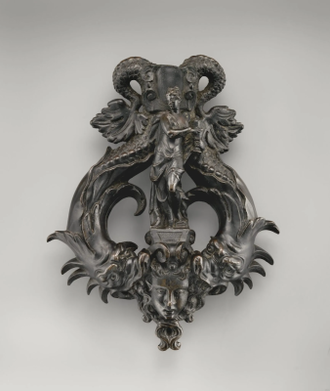
Bronze door knocker, Italian, Venice late 16th C © Metropolitan Museum, New York
Source: Christian Art
Gospel of 20 October 2026
Luke 12:35-38
At that time: Jesus said to his disciples, 'Stay dressed for action and keep your lamps burning, and be like men who are waiting for their master to come home from the wedding feast, so that they may open the door to him at once when he comes and knocks. Blessed are those servants whom the master finds awake when he comes. Truly, I say to you, he will dress himself for service, and have them recline at table, and he will come and serve them. If he comes in the second watch, or in the third, and finds them awake, blessed are those servants!'
Reflection on the door knocker
A knock at the door interrupts us. Before we know who is there, we pause: is this someone we long to see, is it a colleague who needs to have a quick chat, an unexpected visitor, or news we would rather not receive? A closed door and a knock leaves us wondering about the person on the other side. In today's Gospel, Jesus gives that uncertainty a hopeful meaning. The servants are waiting for their master to return from a wedding feast. Their lamps are lit; they are ready to open the moment he knocks.
What happens next is extraordinary. Finding his servants awake, the master seats them at the table and begins to serve them himself. The one they have waited to welcome now makes them his honoured guests. This is a complete reversal of the expected. His coming brings the astonishing generosity of a Lord who delights in caring for those who belong to him. Beyond the door truly stands the one who loves us. But his knock shouldn't come a surprise. We can prepare. We can prepare for his arrival in the ordinary encounters of each day. Someone asks for our time, needs a listening ear, or quietly hopes to be noticed. Such interruptions are all invitations to prepare for the coming of Christ.
Door knockers have been around for a very long time. We don't know exactly who invented the first one, or when, but examples survive from the ancient world, dating back to Ancient Greek times. Many of the early examples feature a lion's head with a metal ring hanging from its mouth, a design we still see on front doors today. Over the centuries, craftsmen became more adventurous. Alongside simple iron rings appeared animal faces and elaborate bronze figures, turning an everyday object into a small work of art. Before you had even entered a house, its door knocker could give you a little taste of what lay inside. Our wonderfully elaborate bronze door knocker was made in Venice towards the end of the 16th century. At its centre stands a small, classically dressed figure, framed by two fantastical sea creatures. Their long bodies curve downwards to large heads with open mouths and sweeping fins.
These days, of course, we are more likely to press an electric doorbell. We might even find ourselves speaking to a camera, while the person answering is nowhere near the house! The old door knocker has now become mere decoration, though there is still something rather satisfying about lifting a heavy brass lever and letting it fall. Whatever has changed, the simple message remains: someone is here, hoping we will open the door. And that brings us back to today's Gospel: Christ comes to meet us. He knocks... and are we ready to let him in?
LINKS
Christian Art: www.christian.art
Today's Reading: https://christian.art/daily-gospel-reading/luke-12-35-38-2026/
 Facebook
 Twitter
 LinkedIn
 Print
 Email
















 Facebook
 Twitter
 YouTube
 LinkedIn
 Pinterest