

'Uprooting the evils in the fields that we know' - Centenary of the Miner's Strike, 60 years since Aberfan
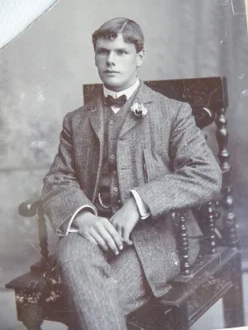
Evan Price
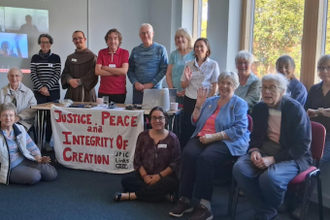
In preparation for the morning prayer of the JPIC Links day on the impact of mining on people and land, I read again my father's autobiography. Being brought up in Treorchy in the Rhondda valley where his father was a coal miner I realised again that the miseries of mining is my family's story.
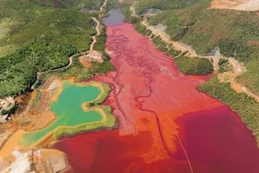
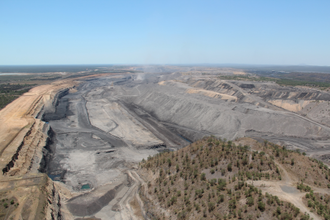
Dad said that once a squirrel could travel the length of the 'Fair Rhondda valley' without touching the ground, but the coming of the mines changed all this and said that was described as 'the rape of the Rhondda'. At our day, Franciscan brother Hugh told us that his brothers in the Philippines and Papua New Guinea say that logging to create roads causes 40 times more deforestation than one mine itself. Pope Francis in July 2021 speaking to those affected by mining in South America echoed the 'cry of sadness and impotence for the pollution of the water, air and land'.
Dad experienced this pollution first hand as he writes:
'On our way home from school we generally stopped at a spot where there was a fast flowing stream which originated at the local colliery higher up the valley.
This was reasonably wide but by climbing up onto the higher bank on one side it was possible to jump and land on the other side. This was the one occasion when my jump was not successful and I landed in the middle of the stream.
The water was a yellowy colour and we always referred to it as 'scarlet fever water'.
I had the unpleasant task of walking home, soaked to the skin and agonised with the thought I was going to develop scarlet fever.'
In 1899, aged 12 my grandfather, Evan Price was sent to work down the Park and Dare Treorchy coal mines, owned by the Ocean coal mining company. Thousands of men laboured in the Rhondda valley mines extracting coking and steam coal to power the ocean liners of the time.
'Dad was up and off to work at 6am, returning home in mid afternoon, black faced and extremely tired. Often he would fall asleep in the chair, but generally he would have a bath first and change into his clean clothes. Since we had no bathroom, it involved other means of bathing, as was the case with the majority of the miners. A large tin bath was brought into the living room and placed in front of the glowing coal fire. My mother brought in the necessary hot water and that's where my father had his bath. I remember the deep blue or black weals and scars on his body, testimony to the arduous and dangerous nature of his job, hacking away in a bent or prone position at the seam of coal.'
If you zoom into my Grandad's wedding day photo you can see the coal ingrained into his finger nails that no amount of scrubbing could get rid of. When I read Pope Leo's encyclical, Magnifica Humanitas I thought of the child who was my Grandad at 12 years old bearing the scars of coal mining on his body.
Pope Leo writes, 'in some regions of the world, children and adolescents work in dangerous conditions, crushing the materials from which rare earth elements are extracted. The bodies of these people are scarred, injured and worn down so that computational flow may continue uninterruptedly. (Magnifica Humanitas #173 )
This year is the centenary of the General Strike and the miners' lockout. On 30 April 1926, coal mine owners locked out over a million British miners-including thousands across the South Wales coalfield-after the miners refused demands for wage cuts and longer working hours under the slogan "Not an hour on the day. Not a penny off the pay". Isolated for half a year without regular income, mining families in Treorchy relied on community-run soup kitchens, local cooperative credit, and international solidarity aid (including support from Russian workers).
Pope Francis writes of the 'cry of pain in reaction to violence, threats and corruption; a cry of indignation and for help for the violations of human rights'.
While Dad writes:
I remember that it dragged on relentlessly and the miners and their families suffered greatly as a results - there was poverty everywhere. There was an ever present air of dejection and the miners draped every hole and corner of the town in large groups waiting, waiting, waiting, for a return to their work in the pits. But it was not all gloom and doom. Improvisation and inventiveness became the order of the day, particularly in sporting and leisure time activities. 'On a more sober note, I must mention the community soup kitchens which became prevalent and so necessary to feed the poor and needy.'
By November 1926, exhausted by starvation and mounting debts, the miners were forced back to work under lower wages and longer hours.
After 36 years down the pit my Grandad died in June 1935.
Dad writes:
'The many years he had toiled as a miner had taken their toil. He had been admitted to Cardiff Infirmary suffering from silicosis, the miners' dreaded disease. Sadly he died under the operation. The post mortem revealed that it was the large quantity of coal dust in his lungs that had caused his death. An attempt was made to secure some financial compensation, but it was in vain and we did not receive a single penny.'
A search of Hansard reveals that my Dad's family were not the only ones seeking in vain compensation through recourse to national government.
Pope Francis writes of the: 'cry of incomprehension for the lack of inclusive and supportive processes from civil, local and national authorities, which have the fundamental duty to promote the common good.'
40 years after the Coal Miners' strike caused such hardship in the next door valley to the Rhondda valley on 21st October 1966 a large wave of black slurry from the waste tip crashed into Pantglas Junior school, Aberfan and the surrounding houses killing 116 children and 28 adults. In 1947 the coal industry had been nationalized under the National Coal Board (NCB). The official inquiry placed full blame on the NCB calling it, 'Systemic Negligence and Lack of Policy'. The NCB had ignored warnings from local council members who had raised concern about the dangerous state of the tips. In spite of warnings the tip had been built on top of an active spring and weeks of heavy rain had caused water to build up inside the coal waste turning it into a mass of black slurry.
My Dad's brother, Islwyn as a member of the civil defence corps was one of the volunteers called to the scene of the disaster. My cousin says it had a profound effect on his father saying that "Dad was never the same after this."
In January 2026 Pope Leo acknowledged that modern technologies depend on minerals, while condemning the conditions under which many are extracted, adding that, 'The dynamisms of progress should always be managed through an ethic of responsibility," In his encyclical, 'Magnifica Humanitas' Pope Leo denounces, 'the tendency to let the logic of efficiency, control and profit alone shape personal, social and economic decisions.'
Pope Leo quotes Gandalf in JRR Tolkien's Lord of the Rings:
"It is not our part to master all the tides of the world, but to do what is in us for the succour of those years wherein we are set, uprooting the evil in the fields that we know, so that those who live after may have clean earth to till."
Looking at how mining has impacted the people and the land of my own family tree has given me a new perspective on and insight into mining. I heard from the speakers in our JPIC Links day the same struggles and abuses being played out in our current world and I left with a determination to to take Gandalf's advice to heart. As a memorial to the children of Aberfan perhaps you could do the same?
LINKS
Beneath the surface - The impact of mining on people and land: www.indcatholicnews.com/news/56058
Message of Pope Francis to those affected by the mining industry July 2015:
Catholic Church and Mining: https://lsri.campion.ox.ac.uk/node/1822
Subscribe to LSRI newsletter: https://campion.us10.list-manage.com/subscribe?u=b3585b7498938fdf94b9ede63&id=26c141e3d2
London Mining network: https://londonminingnetwork.org/
LMN educational materials: https://londonminingnetwork.org/2020/10/education-resources/
Subscribe to LMN newsletter: https://londonminingnetwork.us3.list-manage.com/subscribe?u=c24fb513fdd6c17178d7b384c&id=0445293c07
 Facebook
 Twitter
 LinkedIn
 Print
 Email










 Facebook
 Twitter
 YouTube
 LinkedIn
 Pinterest