


A Strange Way Home
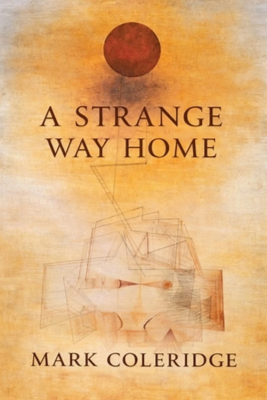
A Strange Way Home, by Mark Coleridge - Connor Court Publishing
Archbishop Mark Coleridge of Brisbane in Australia has not had the media coverage in the UK - or political champions - of Cardinal George Pell and Archbishop Anthony Fisher of Sydney. Pell, a climate change sceptic was a regular at London's neo - liberal Institute for Economic Affairs and a known critic of Pope Francis. Fisher, an ethicist, led World Youth Day preparations for 2008 in Sydney and became known as an internationally acclaimed Dominican. Both studied at Oxford. Coleridge, by contrast took his doctorate at the Biblicum in Rome, other studies in Australia itself and learnt German in Rotenberg-Stuttgart, Spanish in Salamanca as well as Biblical languages, French and Italian. In this new autobiography he emerges as a dedicated, thoughtful and interesting man curious about people, service and life. Cautious about the quality of Pope Benedict's governance skills and enthusiastic about Pope Francis and Pope Leo he also sets a counter tone to some of Pell's criticisms of the former.
Some perhaps convert enthusiasts will scour this book's pages for a searing moment of insight , or an intense testimony on the nature of 'faith' and find Coleridge's prose lacking. On closer reading though they will find the deep commitment of cradle Catholicism tested not merely by one dramatic moment but by multiple breaking processes, renewals and re-conversions across a lifetime. High amongst these is his experience of being President of the Australian Bishops' Conference as the Australian Royal Commission of Enquiry into the failure of child protection by institutions came to complete its work: He describes how the Australian Bishops set up a separate body to handle their safeguarding work and have argued since whether it should be adequately funded - or at all. In turn the Australian Bishops created their own insurance vehicle too and in the face of huge insurance claims in the light of numerous abuse convictions it came close to insolvency. One Bishop was even dismissed for alcohol fuelled sexual crimes.
With deep insight and a crackling solidarity Coleridge then observes that in the past he had not understood, had no insight into trauma and that now 'we need to see things from the perspective of the abused' and 'when we hear the voice of (survivors) we hear the voice of the crucified.' Survivors' intense anger - like a battering ram on systemic episcopal and ecclesiastical failure - he describes as entirely legitimate even while challenging to hear.
Other turning points in Coleridge's life, meanwhile, have a happier hue bound up as they are with encounters with the charismatic movement, long years teaching, visiting with the Church and Muslim leaders in Indonesia, family moments with John Paul II and the death of his mother especially.
At almost every turn throughout the narrative Religious Orders are cherished, honoured and recognised as collaborators and for their work. Coleridge lives with Orders while studying, works with them on formation and as a supply Priest, and stays in touch through his years in Rome working in the Vatican for Pope St John Paul II. As Auxiliary Bishop in Melbourne, Archbishop in Canberra and then responsible for the vast geographical space of Brisbane's Archdiocese such appreciation endures. It is perhaps these encounters that lead him to believe that women should be involved in as many fora within the church as possible.
Coleridge writes with much good humour in the tone of the prose and recounts several humorous moments too. Long term friends and a deep affection for his family are constants across the lifespan set out before us. The increasing ethnic diversity of Australian Catholicism is appreciated in part driven by closer links with, for example, Vietnam and Nigeria. Good food, wine, and travel from time to time is celebrated, not hidden, as is the cost and joy of leadership at times of progress (a new building of beauty, an innovation in mission) or delay and frustration (failure to legally recognise the racisms in Australian society or problems sorting governance crises in major Catholic charities). What emerges is a rich, well loved, well lived character still reflecting intensely and still full of hope for the future.
While, for a British or American reader, the book at moments assumes significant knowledge of mainland European Catholicism, the Holy See and aspects of Australian history that not all may have to hand overall this is a read that will inform, engage and encourage.
Ultimately, after retirement - not self dramatically at the outset - comes the authors settled view with experience that the Church he has 'come to love' has at times 'infuriated...and even shocked me' but 'in the end has enabled me to come home to myself, to my family, to the world, and to Christ'.
Nevertheless, for those whose only view of Catholic life in Commonwealth Australia has been approvingly mediated by especially the late Cardinal Pell this book's pages will likely be accompanied by several sharp intakes of breath. There is no celebration of neo-liberalism, climate scepticism or liturgies 'more like political rallies' to give such interlocutors comfort here.
Dr Francis Davis is an Honorary Professor at Queen Mary, University of London. He was previously a trustee of Portsmouth Catholic Diocese.
 Facebook
 Twitter
 LinkedIn
 Print
Print Email
Email










 Facebook
 Twitter
 YouTube
 LinkedIn
 Pinterest