


Vatican at UN on promoting intercultural dialogue, countering hate speech
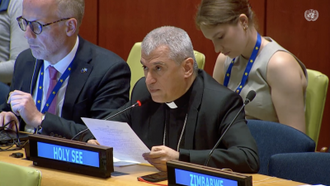
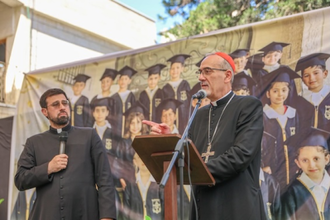
Archbishop El Kassis
Source: Holy See to the United Nations
On 17 September 2026, in New York, Archbishop Christophe Z El Kassis, Permanent Observer of the Holy See to the United Nations, delivered a statement at the Global Conference on Promoting Interreligious and Intercultural Dialogue and Tolerance in Countering Hate Speech.
The Permanent Observer reaffirmed that every human person possesses an inviolable dignity that no ideology or expression of contempt may diminish, and that hate speech poisons public discourse and too often prepares the ground for violence and persecution.
Archbishop El Kassis underscored that freedom of expression, while a fundamental right, carries corresponding responsibilities, and recalled the Holy See's promotion of interreligious and intercultural dialogue as an essential path toward overcoming prejudice.
The text of the statement follows.
Statement by HE Archbishop Christophe Z El Kassis,
Permanent Observer of the Holy See to the United Nations,
at the Global Conference on Promoting Interreligious and Intercultural Dialogue and Tolerance in Countering Hate Speech
New York, 17 September 2026
Mr Chair,
My Delegation would like to thank the Kingdom of Morocco, the United Nations Alliance of Civilizations and the United Nations Office on Genocide Prevention and the Responsibility to Protect for organizing today's conference.
The Holy See reaffirms that every human person is created in the image and likeness of God and possesses an inviolable dignity that no ideology, ideology of hatred, or expression of contempt may diminish. From this foundational truth flows the moral imperative to reject every form of intolerance, discrimination, and hate speech that wounds the human family and undermines the conditions for peaceful coexistence.
Hate speech - whether directed against individuals or communities on the basis of their religion, ethnicity, nationality, or any other characteristic - contradicts the commandment to love one's neighbor, poisons public discourse, inflames division, and too often prepares the ground for violence and persecution.
As Pope Leo XIV says "The first contribution we can make toward a more humane civilization is to be mindful of our words. […] Words have enormous power, something we experience in our daily interactions."[1] By disarming words, the first steps are taken to weave the fabric of social peace and foster a culture of dialogue, tolerance and respect for differences.
However, peace cannot be woven by words alone. True tolerance is not indifference or relativism. It is the active recognition of the equal dignity of every person and the freedom of conscience that belongs to each. It requires the patient effort of dialogue, mutual understanding, and the rejection of stereotypes. In this spirit the Holy See promotes interreligious and intercultural dialogue as an essential path toward overcoming prejudice and building a better world for all.
Mr Chair,
Freedom of expression is a fundamental right that must be protected. Yet this freedom carries corresponding responsibilities. Speech that deliberately incites hatred or violence cannot claim the protection of liberty; rather, it erodes the very conditions in which genuine freedom can flourish. Pope Leo XIV insists "Let us disarm communication of all prejudice and resentment, fanaticism and even hatred; let us free it from aggression. We do not need loud, forceful communication, but rather communication that is capable of listening and of gathering the voices of the weak who have no voice. Let us disarm words and we will help to disarm the world. Disarmed and disarming communication allows us to share a different view of the world and to act in a manner consistent with our human dignity."[2]
I thank you.
[1] Pope Leo XIV, Encyclical Letter Magnifica Humanitas, 214.
[2] Pope Leo XIV, Address to the representatives of the Media, 12 May 2025.
 Facebook
 Twitter
 LinkedIn
 Print
Print Email
Email






 Facebook
 Twitter
 YouTube
 LinkedIn
 Pinterest