


Holy See at UN calls for moral commitment to protect civilians in conflict
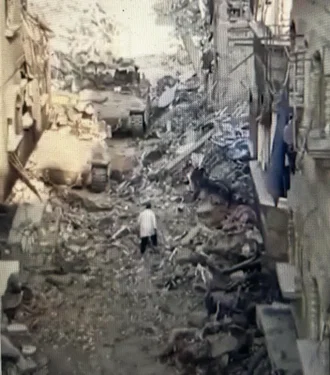
Dr Hussam Abu Safiya director of Kamal Adwan hospital in Gaza, imprisoned without charge since December 2024
The Holy See has highlighted the urgent need to uphold international humanitarian law and protect civilians, noting increased attacks on religious sites and healthcare workers.
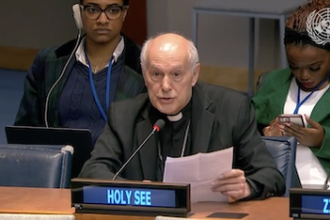
Addressing the Security Council's Open Debate on the 'Protection of Civilians in Armed Conflict' held in New York this week, the Delegation of the Holy See outlined the tragic reality faced by millions worldwide as civilians bear the heaviest burden in modern conflicts, suffering displacement, violence, hunger, and the collapse of critical services.
Protecting civilians, the delegation stressed, is not merely a political or operational challenge but a profound moral obligation.
"In the words of Pope Leo XIV, 'the principle of humanity, inscribed in the conscience of every person and recognised in international law, entails a moral obligation to protect the civilian population from the horrific effects of war,'" the delegation reminded the Council.
Stressing the profound ethical responsibility that transcends legal frameworks, three key areas of concern were raised.
Protection of places of worship and religious communities
Attacks on religious sites and communities are a "grave concern," the delegation warned. Such acts wound the spiritual and social fabric of societies.
It noted that in times of conflict, these places often serve as refuges, offering aid and fostering solidarity.
Ensuring religious freedom during conflict, the Holy See said, is essential to safeguarding human dignity and sowing seeds of reconciliation.
Safeguarding medical personnel and facilities
The delegation noted that despite a decade since the adoption of resolution 2286, attacks on healthcare workers and facilities continue unabated.
"Those who are wounded or sick must never be denied care, and those who provide humanitarian assistance must never be targeted," it reiterated.
Ethical concerns and emerging technologies in warfare
Focusing on emerging technologies, particularly artificial intelligence, that feature increasingly in modern conflicts, the Holy See stated: "No machine can replace the moral judgment required when human lives are at stake."
It warned that technology lacking meaningful human control risks distancing decision-makers from the human costs of war and weakening accountability toward civilian protection.
The Holy See delegation concluded with an appeal for respect for international humanitarian law and a renewed emphasis on prevention, dialogue, and peaceful resolution of conflicts.
"Authentic peace is built, not through fear or destruction, but through encounter, trust and responsibility," the delegation affirmed.
Quoting Pope Leo XIV, it reminded the Council that "Peace begins with each one of us: in the way we look at others, listen to others and speak about others."
 Facebook
 Twitter
 LinkedIn
 Print
Print Email
Email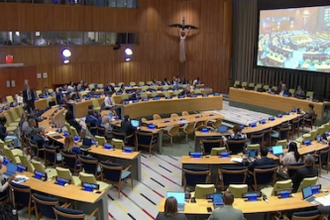










 Facebook
 Twitter
 YouTube
 LinkedIn
 Pinterest