

Statement of Holy See at UN Treaty on Non-Proliferation of Nuclear Weapons
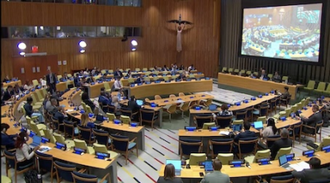
On 5 May 2026, in New York, the Delegation of the Holy See to the Eleventh Review Conference of the Parties to the Treaty on the Non-Proliferation of Nuclear Weapons (NPT) delivered a statement in Main Committee III.
Reaffirming its support for the peaceful use of nuclear energy in full compliance with international obligations, the Holy See highlighted the vital role of the IAEA, the importance of strengthened safeguards, and the need to expand access to peaceful nuclear technologies, especially for developing countries. The Holy See stressed the urgency of protecting nuclear facilities in conflict zones and called for responsible, sustainable approaches to nuclear activities, reiterating its support for Nuclear-Weapon-Free Zones.
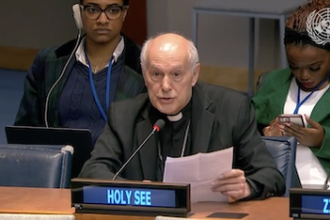
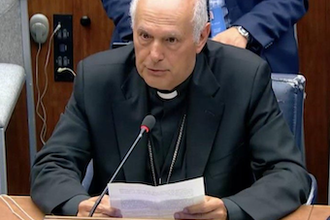
The statement was delivered by Mgr Robert D Murphy, Head of the Holy See Delegation.
The text of the statement follows.
Statement by the Holy See
at the Main Committee III
of the Eleventh Review Conference of the Parties to the Treaty on
the Non-Proliferation of Nuclear Weapons
New York, 5 May 2026
Mr Chair,
At the outset, the Holy See Delegation congratulates you on assuming the Chair of Main Committee III and assures you of its full cooperation. This Delegation would also like to thank the Secretariat for its continued support to the work of this Committee.
The peaceful use of nuclear energy remains a tangible example of how science and technology can serve humanity and the common good.
The Treaty on the Non-Proliferation of Nuclear Weapons recognizes the inalienable right of all States Parties to engage in the research, production, and use of nuclear energy for peaceful purposes, provided they comply with their non-proliferation obligations. Full and balanced implementation of this principle is essential to the integrity and credibility of the Treaty as a whole. In this sense, exercising this right is inseparable from the responsibilities it entails, as well as the trust on which the Treaty is founded.
In this regard, the Holy See emphasises the pivotal role of the International Atomic Energy Agency (IAEA) in promoting the safe, secure and peaceful use of nuclear technologies. Through its technical cooperation programmes, capacity-building initiatives and support to national institutions, the Agency plays a concrete role in strengthening States' ability to apply nuclear technologies for peaceful purposes. These efforts are particularly significant for developing countries, where access to these applications is not yet guaranteed equally and where strengthening national capacities can contribute to development and reduce disparities among States. In this context, the universal adoption of strengthened safeguards, including the Additional Protocol, remains important in building confidence that nuclear programmes are devoted exclusively to peaceful purposes.
Mr Chair,
Expanding access to technical cooperation and capacity-building programmes remains a priority. Peaceful nuclear applications continue to provide tangible solutions in areas such as medicine, agriculture, food security, water management and environmental monitoring in many parts of the world.
At the same time, the benefits of peaceful nuclear energy must be considered alongside the responsibilities that come with it. Ensuring the safety and protection of nuclear facilities, particularly in situations of armed conflict, remains an urgent and shared concern. In this regard, the Holy See recalls the longstanding consensus within the international community that armed attacks on nuclear facilities must never take place, as they could result in radioactive releases with serious consequences for the affected State and beyond.
Recent events have drawn attention to the seriousness of such risks, including the potential for radioactive releases with far-reaching humanitarian and environmental consequences. Against this backdop, the Holy See draws attention to both the immediate and long-term impacts of nuclear activities, including uranium mining and radioactive waste. These activities require responsible and sustainable approaches that integrate environmental protection, public health considerations, and the needs of present and future generations.
More broadly, the development of peaceful nuclear technologies must be firmly rooted in international cooperation and multilateral engagement. In this context, the Holy See recognizes the contribution of Nuclear-Weapon-Free Zones to regional stability and security, encouraging all States possessing such weapons to ratify the protocols to these treaties, and supporting ongoing efforts to establish a Nuclear-Weapon-Free Zone in the Middle East.
Mr Chair,
The peaceful use of nuclear energy must be guaranteed, in full respect of international safeguards and obligations. Only then can it foster trust among States and contribute to a more peaceful and secure world.
Thank you, Mr Chair.
 Facebook
 Twitter
 LinkedIn
 Print
Print Email
Email












 Facebook
 Twitter
 YouTube
 LinkedIn
 Pinterest