

Holy See at UN: Nuclear testing harms more than one generation
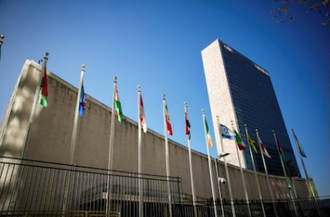
UN headquarters New York
Source: Vatican Media
On the International Day Against Nuclear Tests on 1 September the Counselor and Chargé d'Affaires at the Permanent Observer Mission of the Holy See to the United Nations, Mgr Robert D Murphy spoke about the important and "stark reminder" of this world day to the devastating effects of nuclear testing.
Speaking at the High-level Plenary Meeting to Commemorate and Promote this day, he highlighted how it offers a renewed call for "shared responsibility in protecting present and future generations from its enduring consequences."
Nuclear testing leaves long-lasting effects. Indigenous peoples and other affected communities, particularly women, children and future generations, live with physical, psychological, social, and environmental consequences of nuclear testing.
A report by Norwegian People's Aid (NPA) showed that more than 2,000 nuclear tests took place between 1945 and 2017-both underground and atmospheric-in 15 countries. A further NPA report highlighted how survivors have increased rates of cancer, cardiovascular disease, congenital anomalies, and trauma.
Mgr Murphy stressed how this suffering "should have reinforced the common conviction that peace cannot be preserved by developing ever more destructive weapons."
Yet, despite the evidence, there is a "renewed reliance on nuclear deterrence, increasingly aggressive nuclear rhetoric and attempts to question the long-standing international norm against nuclear testing risk undermining this conviction."
Referencing Pope Leo XIV's encyclical Magnifica Humanitas, the Counselor expressed the Holy See's call for the Comprehensive Nuclear Test Ban Treaty to come into effect. Decades after it was adopted, it is still "an urgent priority" if the global appeal against nuclear testing is to be strengthened.
"In the meantime, it is essential that existing moratoria are observed," Monsignor Murphy pushed, "in order to preserve one of the most important achievements of the international community in the pursuit of peace and international security."
Moreover, the Counselor stressed the Holy See's appreciation for the "indispensable work" of the Preparatory Commission for the Comprehensive Nuclear Test Ban Treaty Organization.
Its International Monitoring System and verification regime has shown how science, technology, and international collaboration can work towards the common good.
Banning nuclear testing is an essential aspect of the wider moral and legal obligation to stop the proliferation of nuclear weapons and work towards eliminating them. On that line, Monsignor Murphy reaffirmed the Holy See's dedicated support for the Treaty on the Non-Proliferation of Nuclear Weapons, as well as the Treaty on the Prohibition of Nuclear Weapons.
Working towards these goals, he argued, "which are mutually reinforcing, is indispensable in the realization of a world free of nuclear weapons and, ultimately, to the establishment of a just and lasting peace."
The International Day Against Nuclear Tests gives the world a chance to ponder the ongoing effects of these tests and the need to reject the logic of fear.
Mgr Murphy concluded his address, reminding everyone present how essential it is to "embrace the path of dialogue and disarmament to ensure a future in peace founded upon the dignity of every member of the human family."
 Facebook
 Twitter
 LinkedIn
 Print
Print Email
Email













 Facebook
 Twitter
 YouTube
 LinkedIn
 Pinterest