


African Catholic Clergy invoke continent's history of war and Apartheid to demand end to violence in the Holy Land
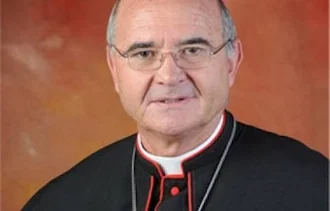
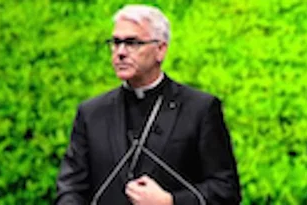
South African Cardinal Stephen Brislin, Archbishop of Johannesburg.
Catholic clergy from South Africa, Nigeria, Zimbabwe, Cameroon, Senegal, Mali and Uganda - including Cardinal Stephen Brislin of South Africa - have issued a joint statement declaring that the policies and actions of the Government of Israel in Gaza constitute genocide. The statement is issued on behalf of Priests Against Genocide - Africa (PAGA), the African chapter of the international Priests Against Genocide network.
Drawing on Africa's own experience of war, displacement and apartheid, the signatories say their history compels them to recognize the same patterns in Palestine, citing Nelson Mandela's 1997 declaration that South African freedom is incomplete without Palestinian freedom, and findings by the International Court of Justice (ICJ) and human rights groups that Israeli policies amount to apartheid.
The statement grounds its appeal in Scripture and Catholic social teaching, and is explicit that its condemnation targets the Government of Israel and its policies - not Jews or Judaism - while also condemning "without qualification" the killing of civilians and hostage-taking by Hamas on 7 October 2023.
The priests call for: an immediate end to the genocide in Gaza and the violence in the West Bank, with full humanitarian access; an end to forced displacement in the Holy Land; cooperation with international judicial mechanisms; suspension of weapons and surveillance technology at risk of misuse; ethical scrutiny of related investments; and support, accountability and reparations for those harmed; and a political future grounded in Palestinian self-determination alongside Israeli and Palestinian equality, security and dignity.
They extend the same appeal to African governments, insisting international law must apply equally to conflicts in Sudan, South Sudan, eastern Congo and Cabo Delgado.
Signatories on behalf of Priests Against Genocide - Africa (PAGA)
- Cardinal Stephen Brislin (South Africa)
- Fr Kufre Afangide, SPS (Nigeria)
- Fr Matthew Charlesworth, SJ (Zimbabwe)
- Fr Hans-Joachim Lohre, MAfr (France/Mali)
- Fr Bonaventure Mashata, MAfr (South Africa)
- Fr Mokesh Morar (South Africa)
- Abbott Magloire Nkounga Tagne (Cameroon)
- Fr Peter-John Pearson (South Africa)
- Fr Joseph Sene OMI (Senegal)
- Fr John Wababa (Uganda)
The full statement follows:
Statement by African members of the international network Priests Against Genocide
We are Catholic priests African by origin or African by mission.
Our continent knows war. We carry the memory of the civil wars in Mozambique and Angola, the Rwanda genocide, and the wars of Liberia and Sierra Leone. Today we see war again in Sudan and South Sudan, eastern DRC, the Sahel, and Cabo Delgado in northern Mozambique. Millions across Africa have been forced from their homes, some as refugees, many more displaced within their own countries.
We therefore speak about Palestine, and the ongoing genocide in Gaza, not because African suffering matters less, but because our suffering has taught us to recognise the suffering of others. Nelson Mandela declared in 1997 that "our freedom is incomplete without the freedom of the Palestinians." South Africa, a nation that knows apartheid and dispossession, later brought the case against Israel before the International Court of Justice under the Genocide Convention. Having learned to recognise dehumanisation in our own history, we cannot refuse to recognise it in another people.
Genocide is not simply another word for war: under international law, it concerns acts committed with intent to destroy, in whole or in part, a national, ethnic, racial or religious group. Based on what international legal scholars and world-renowned genocide experts have argued, we believe that the policies and actions of the Government of Israel in Gaza constitute genocide.
The Southern African tradition of Ubuntu reminds us that our humanity is bound together. Scripture asks the same question in the first pages of Genesis: "Where is your brother?" (Gen 4:9). St Paul expresses the same truth: "If one member suffers, all suffer together with it" (1 Cor 12:26). Cain's evasion - "Am I my brother's keeper?" - cannot be the answer of Christians when another people suffers before our eyes. Every human person bears the image of God (Gen 1:27); dignity is not conferred by citizenship, ethnicity or military power. The Second Vatican Council names genocide among those acts which "poison human society" (Gaudium et Spes, 27).
A particularly horrifying feature of this genocide is that, for the overwhelming majority of Gaza's population, there has been no reliable route to safe refuge - only repeated displacement within a closed territory, from one unsafe place to another. To order people to flee when there is no safe place to flee to is not protection.
Our concern for the Holy Land does not diminish our concern for Africa. The Bishops of Mozambique have declared that "the future of Mozambique cannot be built on violence." The Catholic Bishops of Sudan and South Sudan called the killing of civilians "an offence against God," warning: "Revenge is not justice. Collective punishment is not strength."
Southern Africa also knows apartheid, condemned by its bishops as "intrinsically evil" as early as 1957. That history makes us attentive to patterns of territorial separation, restriction of movement and dispossession.
B'Tselem, Human Rights Watch and Amnesty International have each concluded that Israeli policies toward Palestinians amount to apartheid, and in 2024 the International Court of Justice found Israeli measures maintain a "near-complete separation" between Palestinian and settler communities in the West Bank and East Jerusalem.
Archbishop Desmond Tutu, after visiting the Holy Land, said it "reminded me so much of what happened to us black people in South Africa." We cannot condemn apartheid in our history and refuse to recognise these patterns inflicted upon Palestinians.6. Our condemnation is directed at the Government of Israel and the policies and actions for which it is responsible - not at Jews or Judaism. We reject antisemitism and Islamophobia alike. We condemn without qualification the killing of civilians, hostage-taking and other grave crimes committed by Hamas and other armed groups on 7 October 2023. Their crimes do not diminish Israel's obligations under international law, nor justify genocide or collective punishment. We will not answer one dehumanisation with another.
There is also a direct African interest at stake. Technologies of surveillance, facial recognition and automated targeting have been developed and refined in the control of Palestinians, then sold internationally - including in Africa - promoted as "combat-proven." African countries have already encountered the dangers of such technology through systems like Pegasus, and those who design, authorise and deploy such systems remain morally responsible for what they do. Pope Leo XIV has called for artificial intelligence to be "disarmed" and for an "unarmed and disarming peace" - appeals this genocide shows belong together. As the Second Vatican Council teaches, peace is "an enterprise of justice" (Gaudium et Spes, 78).
For these reasons, and because genocide must be stopped rather than mourned after the fact, we call for:
1. an immediate end to the genocidal policies and actions in Gaza and violence in the West Bank, with full humanitarian access and protection for civilians, medical personnel, aid workers and journalists;
2. an end to forced displacement and to the destruction of conditions necessary for civilian life in the Holy Land;
3. full cooperation with international judicial and investigative mechanisms;
4. suspension of weapons and technologies at serious risk of use in grave violations of international law, and scrutiny by African governments of the surveillance, AI and military technologies they purchase;
5. ethical scrutiny by Christian institutions of investments tied to grave violations of human dignity, and
sustained humanitarian, medical and trauma-healing support for those harmed, together with truth, accountability and reparations; and a political future grounded in Palestinian self-determination and in the dignity, freedom, equality and security of Palestinians and Israelis alike.
As Africans, we make the same appeal to our own governments and the African Union: we cannot invoke international law for Palestinians and neglect it for civilians in Sudan, South Sudan, eastern Congo or Cabo Delgado.
Our appeal is not made because Palestinian lives are worth more than Israeli or African lives. It is made because Palestinian lives are not worth less. Our answer cannot be silence. Our answer cannot be hatred. Our answer must be truth, justice, mercy - and a true peace which is never merely the absence of fighting. The Second Vatican Council teaches that "peace is not merely the absence of war" but "an enterprise of justice" (Gaudium et Spes, 78).
The prophet Isaiah expresses the same truth: "The work of justice will be peace" (Is 32:17).
On behalf of Priests Against Genocide - Africa (PAGA)
- Cardinal Stephen Brislin (South Africa)
- Fr Kufre Afangide, SPS (Nigeria)
- Fr Matthew Charlesworth, SJ (Zimbabwe)
- Fr Hans-Joachim Lohre, MAfr (France/Mali)
- Fr Bonaventure Mashata, MAfr (South Africa)
- Fr Mokesh Morar (South Africa)
- Abbott Magloire Nkounga Tagne (Italy/Cameroun)
- Fr Peter-John Pearson (South Africa)
- Fr Joseph Sene OMI (Senegal)
- Fr John Wababa (Uganda)
JOIN THE NETWORK
All Catholic priests, deacons and bishops are invited to join the network: https://forms.gle/WH66Tzqa6KgKzyra8
For further information, please contact the Priests Against Genocide Network:
profetiperlapace@gmail.com · info@priestsagainstgenocide.org
 Facebook
 Twitter
 LinkedIn
 Print
Print Email
Email






 Facebook
 Twitter
 YouTube
 LinkedIn
 Pinterest