

African history - much more than slavery
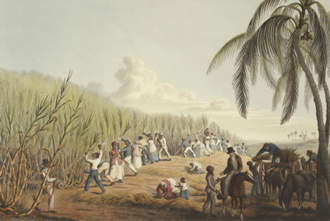
Slaves cutting the sugar cane on the Island of Antigua, 1823 British Library Unsplash
Today, Emancipation Day, we observe 188 years since full emancipation and the abolition of slavery in T&T (and across the British Empire) on August 1, 1838, and 160 years since the 13th Amendment abolished it in the USA in December 1865. To people of African origin, emancipation means liberation, cultural reclamation, and an ongoing journey towards dignity/human rights. It commemorates the end of chattel slavery, honours relentless resistance, and serves as a call for justice and equity.
Starting African history at the abolition of slavery-or even at the transatlantic slave trade-erroneously reduces Africa to a narrative of trauma, external victimisation, and "Western rescue". Africa's story spans the cradle of human evolution, vibrant pre-colonial empires, and sophisticated systems of governance that thrived long before European contact.
Today, we reflect on the brutal violation of human rights, due to the forced enslavement and movement of millions of people from Africa to European colonies and plantations. Economic growth at the expense of human misery is scandalous. "For over 400 years, more than 15 million men, women and children were the victims of the tragic transatlantic slave trade, one of the darkest chapters in human history" (UN). Our ancestors suffered unimaginable brutality, unthinkable cruelty and gross injustice because of the slave trade.
History records that from the first moment of attack and capture in their homeland, Africans sought to escape from bondage. As we remember the work of abolitionists such as William Wilberforce, never forget the struggles of enslaved people for their freedom. Read about the relentless resistance of enslaved Africans - from the time they were enslaved; maritime mutinies; through sabotage on plantations, armed Insurrections; and as runaways. See Jacqueline L Scott's blog: 14 Slave Rebellions in the Caribbean - in Black Outdoors. There were hundreds of rebellions by enslaved people in the Americas.
Runaways forged formidable communities known as Maroons. Utilising clever guerrilla warfare, these freedom fighters built secure settlements in rugged mountains, deep swamps, and dense rainforests. In Jamaica, the Maroon communities fought the British Empire to a standstill, forcing colonial authorities to sign historic peace treaties in 1739 that formally recognised their autonomy and territorial rights. Frederick Douglass rightly stated: "Without a struggle, there can be no progress." A UN vote in March recognised transatlantic slavery as the "gravest crime against humanity." In favour (123 nations): Against (3 nations): .Abstentions (52 nations).
Although the Slavery Abolition Act was passed in Britain in 1833, "When Britain abolished the practice of enslavement, plantation owners across the British Empire received a share of £20 million, around £17 billion in today's money, in compensation. In contrast, the newly emancipated people received no compensation and were forced into a new apprenticeship scheme, which tied them to their plantations for up to six further years. In reality, little had changed for enslaved people. They were still expected to work ten-hour days, and punishments such as flogging were still allowed. These apprenticeships were ended in 1838, when emancipation was finally achieved" (BBC).
Emancipation is for everyone. Today, many national leaders and governments are asking for reparations for slavery. Over 80 nations and global panels have united under a joint 19-point framework demanding financial redress, debt cancellation, and the return of looted artifacts. CARICOM demands reparatory justice from former European colonial nations for the trans-Atlantic slave trade, and chattel slavery through its CARICOM Reparations Commission and a structured Ten Point Plan for Reparations.
Sir Ronald Sanders calls it vulgar and a reversal of history for a former British Government Minister to suggest that former colonies should pay reparations to Britain. In his commentary "The Vulgarity of Asking the Enslaved to Pay," Sanders criticised the claim as an insult to the memory of enslaved people.
In 1985, Pope St John Paul II apologised to Africans for the involvement of Christians in the slave trade: "… we ask pardon from our African brothers and sisters who suffered so much because of the slave trade …" On July 10, 2015, during a speech in Santa Cruz, Bolivia, Pope Francis apologised and asked for forgiveness for the "'grave sins' committed by the Church during the colonial era." On February 9, 2006, at the Anglican Church's general synod in London, the Archbishop of Canterbury issued an apology "for the Church's complicity in sustaining-and profiting hugely-from the trade."
As we pay tribute to the resilience of our ancestors, remember, Emancipation is an unfinished mission that requires dismantling modern social, economic, and educational inequalities. Let's address the multifaceted complexity of emancipation.
Happy Emancipation Day!
Leela Ramdeen is Consultant of Trinidad & Tobago Catholic Commission for Social Justice & Archdiocese's Ministry for Migrants and Refugees
Facebook: www.facebook.com/ccsjtt. Instagram: ammrcatholictt. Twitter: @ammrcatholictt1
 Facebook
 Twitter
 LinkedIn
 Print
Print Email
Email









 Facebook
 Twitter
 YouTube
 LinkedIn
 Pinterest