

Fr Michel Abboud at WeBelieve: Blessed are the Peacemakers
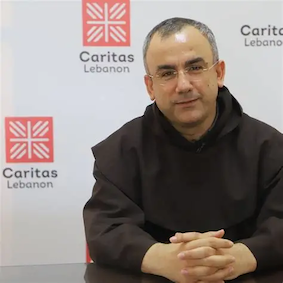
Fr Michel Abboud, image Caritas Lebanon
Fr Michel Abboud, OCD, immediate past President of Caritas Lebanon and Provincial Superior of the Carmelite Fathers in Lebanon gave the following reflection at WeBelieve Festival of Catholic Life: entitled Blessed are the Peacemakers - From the Wounded Heart to the Healing of the World.
"Blessed are the peacemakers, for they will be called children of God." Matthew 5:9
First of all, I would like to thank you for this invitation. I especially thank CAFOD for inviting me from Lebanon to participate in this gathering and to share this meditation with you.
Blessed are the peacemakers, for they will be called children of God." Matthew 5:9 this is a phrase from the Gospel said by Jesus.
This is meditation, so, I would like to speak to your hearts.
In thirty minutes, we cannot say everything about peace, but we can reflect together and take one step towards becoming true peacemakers.
Let us begin with some questions:
What is peace?
What are we called to do to build peace?
How can we live in peace so that we may become peacemakers?
If peace means only the absence of war, can we truly imagine a world without violence and bloodshed?
From the beginning of human history, blood has been shed. Cain killed his brother Abel. Herod ordered the killing of the children of Bethlehem. Christ Himself was crucified, and many of His apostles were martyred. Even today, wars continue and innocent blood is still being shed.
So where is peace?
Is peace only a myth? Is it a dream, an illusion or a mirage that we can see but never reach?
I come from Lebanon, a country in the Middle East with a unique Christian identity.
I am fifty-three years old, and my generation has never really known a Lebanon completely free from war, conflict or violence.
Yet, despite everything we have experienced, we have also discovered the true peace of Christ. We have tried, in the middle of suffering, to live this peace and to become peacemakers in our families, our communities and our country.
When we read the Gospel, beginning with the life of the Virgin Mary, we see that her life was never easy. When she received the announcement of the angel, a crisis began with Joseph, her fiancé. Later, when the time came for Jesus to be born, Mary and Joseph tried to find a comfort place in the hotel, but they didn't find, Jesus was born in a manger because there was no room for them.
Yet Mary carried peace within her because she carried Jesus.
When Mary entered the house of Elizabeth, Elizabeth said to her:
"As soon as the sound of your greeting reached my ears, the child in my womb leaped for joy."
Mary entered that house carrying Christ, and her presence brought joy, hope and peace. This is the mission of every peacemaker: to carry Christ within us and bring His presence into every home, every family and every wounded heart.
I would also like to thank CAFOD because, through its presence and service, it has become a peacemaker in Lebanon. By helping people in need, CAFOD brings peace into families. When we help a family obtain food, education, healthcare or a dignified life, we are not simply giving material assistance. We are opening the door for hope, dignity and peace to enter that home.
1. Peace in a Wounded World
Dear brothers and sisters,
I bring you this greeting from Lebanon-not only as a traditional Christian greeting, but as a prayer from a country that knows both the beauty of living together and the pain of division.
In Lebanon, peace is not just an idea.
Peace is a child sleeping without fear.
It is a mother finding medicine for her family.
It is a school that stays open.
It is people from different religions and communities choosing friendship instead of hatred.
It is a family that refuses to lose hope.
It is ordinary people who continue to serve others even when the future is uncertain.
I have learned that conflict does not only destroy buildings. It also wounds hearts. It changes the way people think, speak, and look at one another. Even when the fighting stops, the pain often remains inside people.
That is why the words of Jesus are so powerful:
"Blessed are the peacemakers, for they will be called children of God." (Matthew 5:9)
Jesus is not speaking to people living in a perfect world. He is speaking to a world marked by violence, injustice, fear, and suffering. He tells us that another way is possible because God's Kingdom has come among us.
Jesus does not say, "Blessed are those who love peace," or "Blessed are those who avoid conflict." He says, "Blessed are the peacemakers."
Peace doesn't happen by itself. It must be welcomed as God's gift, lived in our hearts, shared in our relationships, and built every day through our words and actions.
In the Bible, peace means much more than the absence of war. The Hebrew word shalom means wholeness, harmony, healing, and right relationships-with God, with ourselves, with others, and with all creation.
A peacemaker is not simply a peaceful person. A peacemaker is someone who allows God to bring healing and reconciliation through his or her life.
Jesus promises that peacemakers will be called children of God, because they act like their Father. God didn't abandon humanity when we turned away from Him. Instead, He came to us in Jesus Christ, took the first step, and offered us reconciliation.
2. Peace Is a Person Before It Is a Program
On the evening of Easter, the disciples were gathered behind locked doors. They were afraid. They felt disappointed and confused. They had abandoned Jesus during His Passion, and now they didn't know what the future would bring.
Suddenly, Jesus came and stood among them.
His first words were not words of blame. He didn't ask, "Why did you leave Me?" or "Why were you afraid?" Instead, He simply said:
"Peace be with you." (John 20:19)
Then He showed them His hands and His side-the wounds of the Cross.
This is one of the most beautiful images of Christian peace.
The risen Jesus doesn't hide His wounds. He transforms them. His wounds are no longer signs of defeat; they have become signs of love, forgiveness, and victory.
True peace doesn't mean pretending that suffering never happened. It doesn't erase painful memories. Instead, it allows God's love to heal what has been wounded.
Jesus had already told His disciples:
"Peace I leave with you; My peace I give to you. I don't give to you as the world gives." (John 14:27)
The world often speaks about peace as the result of power, control, or fear. Sometimes people think peace comes when one side defeats another.
But Jesus shows us a different way.
His peace comes through love.
His peace comes through forgiveness.
His peace comes through the Cross.
Saint Paul expresses this truth in a beautiful sentence:
"Christ Himself is our peace." (Ephesians 2:14)
Notice that Saint Paul doesn't say that Christ teaches peace or simply gives peace. He says that Christ is our peace.
Peace is not first an idea or a strategy. Peace is a Person.
When we live close to Jesus, His peace begins to change our hearts. Without Him, even our best efforts for peace can become pride, anger, or the desire to prove that we are right.
That is why every Christian peacemaker must return again and again to Jesus.
Before asking, "How can I change the world?" we should first ask:
Lord, where is there anger in my own heart?
Whom have I refused to forgive?
What fear controls my life?
Which wounds still need Your healing?
Only hearts that have received God's peace can become instruments of peace for others.
At the Cross, Jesus teaches us the true path of peace.
He speaks the truth without hatred.
He suffers violence without becoming violent.
He forgives without calling evil good.
He gives His life instead of taking the life of others.
And through His Resurrection, He shows us that love is stronger than death.
This is the peace that the Church is called to announce.
The Church doesn't have every political solution to the problems of the world. But she has something even greater: Jesus Christ, the Prince of Peace.
Our first mission is not simply to speak about peace.
Our first mission is to live in Christ, so that His peace becomes visible through our lives.
peacemaking begins-not with our own strength, but with God's love and initiative.
3. The First Place of Peace Is the Human Heart
When we speak about peace, we often think about wars, conflicts between nations, or problems in society. These are important. But Jesus teaches us that the first battle is much closer to us.
The first place where peace must begin is the human heart.
The writer and monk Thomas Merton once said that "the root of war is fear."
These words are very true.
Fear can make us suspicious of others.
Fear can become anger.
Anger can become hatred.
Hatred can become violence.
Many conflicts in the world begin inside the human heart long before they appear in society.
Jesus teaches the same truth. He says that evil actions come from within the human heart (Mark 7:20-23). If our hearts aren't healed, we will continue to create division around us.
This is why prayer is not an escape from the world.
Prayer is where peace begins.
In the Carmelite tradition, silence is not empty. Silence is the place where we meet God. In silence, we stop listening only to our fears and begin listening to God's voice.
Prayer allows us to ask honest questions:
Why am I angry?
Why am I afraid?
Why is it difficult for me to forgive?
What is God asking me to change?
Saint Teresa of Avila reminds us that God alone is enough.
When God becomes the center of our lives, we no longer need power, recognition, or control to feel secure. We become free to love.
Saint John of the Cross gives us one of the most beautiful pieces of advice:
"Where there is no love, put love, and you will draw out love."
He does not say, "Wait until others love you first."
He says, begin with love.
That is the Christian way.
The Christian isn't called simply to react to the world but to transform it with the love of Christ.
Let us take a moment of silence.
Close your eyes if you wish.
Take a slow breath.
Imagine Jesus standing before you, just as He stood before His disciples after the Resurrection.
Listen to Him saying gently:
"Peace be with you."
Now bring before Him one person with whom you have difficulty.
Perhaps someone who has hurt you.
Perhaps someone you have judged.
Perhaps someone you cannot forgive.
Do not argue.
Do not explain.
Simply place that person into the hands of Jesus.
Ask Him quietly:
"Lord, heal my heart. Show me the next step toward peace."
(Pause for about 30-40 seconds.)
This silence is not an escape from reality.
It prepares us to return to the world with a new heart.
Because true contemplation always leads to compassion.
The more we encounter Christ in prayer, the more we become capable of bringing His peace to others.
4. What Peacemaking Is - and What It Is Not
Today, many people speak about peace. But not everyone means the same thing. As Christians, we need to understand what true peacemaking really is.
First, peacemaking is not avoiding conflict.
Sometimes we remain silent because we are afraid. We do not want problems. We prefer comfort to truth.
But Jesus teaches us something different. He says that if we remember that our brother or sister has something against us, we should first seek reconciliation before offering our gift at the altar (Matthew 5:23-24).
Real peace requires courage.
Sometimes it means having a difficult conversation.
Sometimes it means asking for forgiveness.
Sometimes it means admitting that we were wrong.
Second, peacemaking is not accepting injustice.
Peace does not mean allowing violence to continue.
It does not mean asking victims to remain silent.
It does not mean pretending that evil does not exist.
Jesus always defended the dignity of every person. He spoke with love, but He also spoke the truth.
Christian peace always protects the weak and stands beside those who suffer.
Third, peacemaking is not choosing neutrality between truth and falsehood.
True peace is built on truth.
The Church teaches that peace is founded on four great values:
Truth, because lies always create division.
Justice, because people cannot live in peace if they are treated unfairly.
Mercy, because justice without mercy easily becomes revenge.
Love, because only love can transform enemies into brothers and sisters.
These values cannot be separated.
Truth without love becomes harsh.
Love without truth becomes weak.
Justice without mercy becomes punishment.
Mercy without justice becomes empty.
Christian peace brings all these together.
One of the most difficult parts of peacemaking is forgiveness.
Many people misunderstand forgiveness.
Forgiveness doesn't mean saying that evil was acceptable.
It doesn't mean forgetting what happened.
It does not mean allowing abuse to continue.
Forgiveness means refusing to let hatred control our hearts.
It means choosing freedom instead of bitterness.
It means trusting God with justice instead of seeking revenge ourselves.
Forgiveness is the beginning of healing.
But forgiveness and reconciliation aren't exactly the same.
I may forgive someone even if that person never asks for forgiveness.
Reconciliation, however, requires both people.
It requires truth.
It requires repentance.
It requires trust to be rebuilt.
Sometimes this happens quickly.
Sometimes it takes years.
Sometimes, because of serious harm, a relationship cannot return to what it once was.
Even then, the Christian heart remains open to God's grace and refuses to live in hatred.
Jesus always showed us this way.
He never ignored the truth.
He never encouraged revenge.
He always invited people to conversion, healing, and a new beginning.
This is the mission of every Christian peacemaker.
Not simply to stop conflict,
but to help people discover the healing power of God's truth, mercy, justice, and love.
5. A School of Peacemakers
If we want to learn how to become peacemakers, we should look at the saints. They lived in different times and cultures, but they all allowed Christ to transform their hearts.
St. Francis of Assisi: Peace Through Brotherhood
St. Francis greeted everyone with these simple words:
"May the Lord give you peace."
For Francis, peace wasn't just a greeting. It was a way of life.
He chose humility instead of pride.
He chose simplicity instead of power.
He chose love instead of violence.
One of the most remarkable moments of his life was during the Fifth Crusade (1217-1221).
While Christians and Muslims were at war, Francis crossed the battle lines to meet Sultan al-Malik al-Kamil.
He didn't go with weapons.
He didn't go to insult or humiliate.
He went as a man of faith, respect, and peace.
That meeting reminds us of an important truth:
Peace begins when we stop seeing people as enemies and begin seeing them as persons created in the image of God.
Francis also taught us another beautiful lesson.
We often know his prayer:
"Lord, make me an instrument of your peace."
Notice the word instrument.
An instrument doesn't create the music by itself.
It allows the musician to play through it.
In the same way, we don't create peace by our own strength.
We allow Christ to work through us.
Thomas Merton: Peace Through an Inner Conversion
Thomas Merton reminds us that we cannot build peace in the world if we do not allow God to bring peace into our own hearts.
He warns us that even good causes can become dangerous if they are driven by pride or hatred.
Sometimes we fight for justice while forgetting charity.
Sometimes we defend the truth while losing compassion.
Prayer protects us from this danger.
It teaches us to see every human person not as a problem, but as someone loved by God.
The more we discover our true identity as God's children, the less we need to judge or condemn others.
Dorothy Day: Peace Through Mercy
Doroth Day believed that peace must become visible in everyday life.
For her, peace was not only discussed in conferences or books.
It was lived in kitchens, shelters, hospitals, prisons, and homes.
She welcomed the poor.
She fed the hungry.
She defended the dignity of every person.
She believed that every act of mercy is also an act of peace.
When we feed the hungry, we resist the violence of neglect.
When we welcome a stranger, we resist the violence of exclusion.
When we visit the sick or the prisoner, we proclaim that every human life has value.
Peace becomes real when love becomes practical.
St. Thérèse of Lisieux: Peace Through Little Things
Finally, St. Thérèse teaches us that we don't need to do extraordinary things to become peacemakers.
Most of us will never negotiate peace between nations.
But every day we have opportunities to build peace.
We can choose patience instead of anger.
We can choose kindness instead of criticism.
We can forgive instead of keeping resentment.
We can smile instead of complaining.
We can pray for someone who has hurt us.
These small acts may seem insignificant, but they change hearts.
And changed hearts change families.
Changed families change communities.
Changed communities change nations.
This is the "Little Way" of St. Thérèse.
Great peace begins with small acts of love.
The saints remind us that peacemaking is not about having a special personality.
Some saints were quiet.
Others were strong and outspoken.
What united them was not their character.
It was their willingness to let Christ transform them.
That is the true school of peacemakers.
Before we can change the world, we must first allow Jesus to change us.
6. From Contemplation to Daily Life
After reflecting on Scripture and learning from the saints, we may ask ourselves:
How can I become a peacemaker in my daily life?
Jesus does not ask all of us to solve the world's problems. But He asks each of us to bring His peace wherever we are.
Peace begins with simple, faithful choices made every day.
Let me suggest five practical steps.
1. Spend Time with God Every Day
A peacemaker must first receive God's peace.
Take at least ten minutes each day for silent prayer.
Read a passage from the Gospel.
Sit quietly before the Lord.
Tell Him honestly what is in your heart.
Ask Him:
"Lord, make my heart like Yours."
Without prayer, we easily become anxious, impatient, or discouraged.
With prayer, we learn to see people through the eyes of Christ.
2. Watch Your Words
Many conflicts begin with words.
Our families, our workplaces, and especially social media can become places of anger and division.
Before speaking or writing, ask yourself:
Is it true?
Is it necessary?
Is it loving?
Will it build peace?
As Saint James reminds us, the tongue can either bless or destroy.
A Christian should always choose words that bring hope, respect, and truth.
3. Take the First Step Toward Reconciliation
Do not always wait for the other person.
If you have hurt someone, apologize.
If you have been hurt, ask God for the strength to forgive.
Sometimes one simple conversation can heal years of misunderstanding.
Peacemakers do not wait for perfect conditions.
They have the courage to take the first step.
4. Practice Mercy
Peace grows wherever mercy is lived.
 Facebook
 Twitter
 LinkedIn
 Print
Print Email
Email











 Facebook
 Twitter
 YouTube
 LinkedIn
 Pinterest