

Ian Linden: Catholics and social cohesion - dealing with Islamophobia
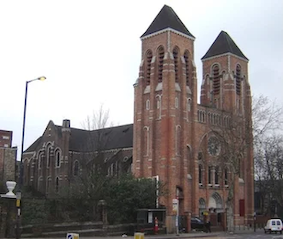
St Ignatius, Stamford Hill
Under Conservative rule, combatting Islamophobia tended to be relegated to the realm of 'whataboutery' and to lack substance. Government's recent commitment to funding protective Mosque security, and the Muslim Trust for its work researching data on anti-Muslim hate crime and its victim support, is welcome.
Threats and attacks on Mosques, imams, and 'microaggression' against Muslims in distinctive dress - women in hijabs are particularly vulnerable - is growing. The Trust estimates that every five days a Mosque suffers hostile action of some sort.
On 25 July, Muslim leaders were gathering in Birmingham for an emergency meeting.
Meanwhile in Birmingham, the Department of Education is funding pilot school courses on antisemitism provided by the Archdiocese education service with the Catholic Education Service and the Board of Deputies of British Jews. Combatting antisemitism remains a high priority, and for the Government, is clearly linked to Middle East foreign policy.
Our big cities and Churches are noted for their diversity. St Ignatius', Stamford Hill, for example, is pure London. It has recently been resplendent with the flags of some 40 nations. Irregular attendees might have thought them a tribute to the World Cup, though the Vatican flag over the door to the presbytery would have given pause for thought - no notable strikers fostered at the end of the Via della Conciliazione. The 40 different nationalities/Londoners provided the display celebrating the annual parish festival. But Muslims aren't popular with Catholics from Nigeria where Christians have a hard time in the Islamic North.
The Church of its nature offers an identity that ought to relativise nationality. And St Ignatius', its priests, from the DRC, Nigeria and Philippines as well as from Britain, altar servers, readers and its people, form a religious microcosm of London, a defiant no pasaran to the manipulators of xenophobia. They relate to 'place' and don't need Andy Burnham to tell them about it. But they also relate to the countries where the different generations, their parents or grandparents, came from and were born. Celebrating the significance of this religious gathering is not naïve romanticism. Hackney and Tottenham, like many inner city communities, have had their riots with different ethnic groups on different sides.
Such complex UK realities fall into the sphere of both theology and sociology. They come under the heading of 'integration', a catch-all like culture, not often clearly defined. Baroness Louise Casey analysed in a December 2016 study what works and what doesn't work in the integration of Britain's Muslim communities.
Integration is more of a subjective concept than at first sight. Should integration be 'a two-way street', each meeting half way. Or, to stay with the traffic analogy, is an immigrant like a driver on the slip- road onto a motorway. The traffic on the inside lane of the motorway needs to give way and let the slip-road driver in, but, once on the motorway, the driver must obey the highway code and obey the overhead signs. The second analogy might better fit the reality. Neither option makes for an easy ride for the immigrant. Least of all for the Muslim immigrant.
Take Palestinians for example. A Christian immigrant has an easier time than a Palestinian Muslim; they can integrate into widely accepted national bodies, the Christian churches. Nor do they have an alcohol ban limiting socializing in pubs. A Muslim joining a Mosque finds himself/ herself amongst a worshipping community that may have arrived only a generation ago, and may still be seen as 'foreign'. Worse, they daily risk encountering some degree of Islamophobia, influenced by perverse distortions of Islam overseas, notably jihadist terrorism or the persecution of women in Afghanistan.
British Catholics might feel particular empathy with Muslims. Henry VIII's 1534 Act of Supremacy, declaring himself head of the Church tying religion to the political power of the throne and creating the Church of England, severed links with Rome. By the 17th century Catholicism was largely seen as an alien religion, a fifth column in a Protestant country, persecuted and excluded from public office. The physical threat was still apparent in 1780, the anti-Catholic Gordon riots lasted days destroying property. The restoration of the Catholic hierarchy in 1850 caused Protestant demonstrations. In 2008, Archbishop Rowan Williams' championing 'constructive accommodation' toying with the idea of recognition for aspects of Shari'a Law, along the lines of Jewish Beth Din courts, caused a major controversy. He had launched a national Christian-Muslim Forum two years earlier.
The existence, and growth, of Britain's over four million Muslim population is a highly politicised aspect of Britain's demography. Islamophobia is a strong element in the xenophobia of far right-wing Parties. The Jewish population of Britain is only some 300,000; antisemitic violence and hate speech is proportionately greater per head - and the Jewish community comparatively more effective in drawing attention to the hurt and anxiety it causes.
The Muslim Council of Great Britain (MCB) was formed in 1994 at Government instigation to provide a broadly representative organisation, some 500 affiliated Muslim bodies, with which to relate and give Muslims a public voice. Whilst the MCB spoke out against acts of terrorism, relations soured in 2009 when Daud Abdullah, its Deputy- Secretary General signed a declaration from the Global Anti-Aggression Campaign, an international grouping of radical Muslims with links to Hamas and with some members allegedly from extremist jihadist organisations. Hazel Blears MP, Secretary of State for Communities and Local Government, called for his resignation. The declaration was a response to Israel's assault on Gaza - with the customary rationale of curtailing rocket fire - over three weeks 2008-2009, Operation Cast Lead. Gordon Brown's Government condemned Daud for promoting violence.
The MCB Secretary-General, Abdul Bari, was unwilling to sack Abdullah on grounds that such government intervention undermined the independence of a religious organization. This was both disingenuous and provocative, though he later willingly accepted capacity building help from the TUC. The Government adopted 'a policy of non-engagement' towards the Muslim Council, temporarily restoring relationships for five months before the 2010 general election. 'Non-Engagement' has continued since then, Governments officially refusing to associate with the MCB for sixteen years, though individuals, both Stephen Timms MP and Nick Clegg MP for example, attended meetings even when holding ministerial office.
To find interlocutors for reports, consultations and advice, Government relied mainly on hand-picked Muslims mostly sympathetic to State sponsored programmes such as Prevent - viewed as discriminatory by many Muslims. This had an alienating effect but did bring into national prominence several significant figures from the Muslim community. The Church sought similar partners for its inter-faith dialogue with Muslims.
One of these, an outstanding leadership voice, Leicester's Shaikh Ibrahim Mogra, himself a former deputy Secretary-General of the MCB, visited Pope Francis on 5 April 2017 as Co-Chair of the Christian-Muslim Forum, one of four imams accompanied by Cardinal Vincent Nichols. His reaction was typically warm: "I think it's going to be one of the most powerful messages that will go out to the Muslim world that the Christian communities are our friends….I think we should reciprocate that".
Rejection of the Muslim Council did not encourage integration. Prime Minister Burnham needs to put this right. And the Church needs to recall Ibrahim Mogra's delight at his welcome in the Vatican and could do more to show by example how wrong and misguided Islamophobia remains today.
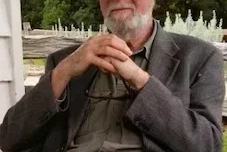
Professor Ian Linden is Visiting Professor at St Mary's University, Strawberry Hill, London. A past director of the Catholic Institute for International Relations, he was awarded a CMG for his work for human rights in 2000. He has also been an adviser on Europe and Justice and Peace issues to the Department of International Affairs of the Catholic Bishops Conference of England and Wales. Ian chairs a new charity for After-school schooling in Beirut for Syrian refugees and Lebanese kids in danger of dropping out partnering with CARITAS Lebanon and work on board of Las Casas Institute in Oxford with Richard Finn OP. His latest book was Global Catholicism published by Hurst in 2009.
To read Dr Linden's blog see: www.ianlinden.com/latest-blogs/
 Facebook
 Twitter
 LinkedIn
 Print
Print Email
Email






 Facebook
 Twitter
 YouTube
 LinkedIn
 Pinterest