


Why St Therese still speaks to us today
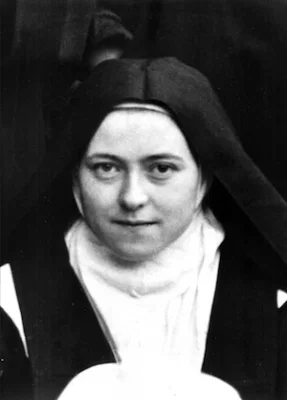
It was a beautiful May; Mary's month. A time of blossom and renewal, and for many of us another joy, as we prepare for the next season of the Spiritual Classics Book Club. Soon we will gather again to read, reflect and pray together. This time we turn to a favourite work of the Catholic tradition: The Autobiography of St Thérèse of Lisieux, known as Story of a Soul.
It is hard to think of a better book to begin a new season. St Thérèse is one of the most loved saints of the modern Church. A Carmelite nun who lived a hidden life in Lisieux, she died in 1897 at only twenty-four. Yet from that short life came a spiritual witness that has touched millions. Now recognised as a Doctor of the Church, she remains wonderfully approachable. It is the story of a soul learning to trust God completely.
For many Catholics, reading Story of a Soul is like meeting a friend: human, humble, and filled with radiant love for God. Some saints can seem distant at first. We admire them, but may feel their holiness places them far above us. With St Thérèse, something different often happens. We admire her deeply, but we also recognise her.
Her writing is marked by innocent honesty. She shares her joys, struggles, childhood memories and longing for holiness. She speaks of loving God in small, hidden moments. St Thérèse was not naïve. She knew suffering, loss, obedience, illness, and the demands of faith. Yet she had a remarkable simplicity: she could look at God as Father, at Jesus as beloved Lord, and at her own weakness as a reason for trust.
This makes Story of a Soul ideal for anyone hesitant about reading the spiritual classics. It has great depth, but it does not ask the reader to begin with complex ideas. It begins with a life: a child, a family, memories, griefs, joys and desires. St Thérèse shows how God can shape a soul through love, prayer, and ordinary events.
As she reflects on her childhood, we are invited to consider our own relationship with God. What were our first impressions of faith? Where did we first learn to pray? Were we confident, fearful, trusting or hesitant? Who helped us see something of Jesus Christ?
Her path shows us that our personal histories are where Christ meets and shapes us. Our relationship with Jesus Christ is not abstract or distant. It is personal, rooted in the story of our lives. Like Thérèse, we are invited to bring our whole selves into that relationship.
One of the most beautiful passages comes when Thérèse reflects on why God gives extraordinary graces to some saints, such as St Paul or St Augustine, while others live simpler and more hidden lives. She came to see that God's love is revealed in the simplest soul as truly as in the most sublime. If every tiny flower wanted to be a rose, spring would lose its loveliness.
"Our Lord's garden is full of flowers," she tells us. "He chose to create great saints who may be likened to lilies and roses, but He has also created lesser ones, who must be content to be daisies or simple violets, which blossom at His feet and whose only mission is to gladden His eyes when He looks down."
That image speaks powerfully to ordinary Catholics. It reminds us that holiness is not a competition. We are not all called to be the same kind of saint. The spiritual life is not about anxious comparison, but about receiving the grace given to us and offering ourselves to God with love. A daisy is not a failed rose; it has its own place in the garden of God.
This is why reading St Thérèse in a group can be so helpful. One person may notice the beauty of her family life; another, the pain of losing her mother so young. Someone else may be struck by her sensitivity, determination, longing for God, or by the "little way" as a practical path for ordinary life.
Her struggles with distraction in prayer, spiritual dryness, and the desire to be loved and noticed are not confessions of failure. They are recognitions of the human condition, offered to God with trust. She does not pretend that the life of faith is always easy, but shows that weakness itself can become a place of trust.
This is why we treasure the spiritual classics. They are not museum pieces, but living companions. They remind us that holiness is not only for the obviously heroic, but for those who desire to love God faithfully in the circumstances actually given to them.
Although Thérèse grew up in a devout Catholic family, she lived in a France increasingly hostile to the faith. Anti-clericalism, secularism and suspicion of the Church were widespread. In many ways, her world was not unlike our own, where faith can feel marginal, misunderstood, or quietly pushed aside. Many Catholics know what it is to live where prayer, grace, vocation or the love of Christ can feel difficult to speak about openly.
St Thérèse can help us here too. She teaches that trust in God can flourish even when the surrounding culture is indifferent or hostile. Holiness does not depend on living in a society that supports faith. It depends on responding to God where we are. Small acts offered with love matter. Hidden fidelity matters. Trust in Jesus matters. The desire to love God, even when we feel weak, matters deeply.
This is also why the Spiritual Classics Book Club exists. Many Catholics want to deepen their faith but are not sure where to begin. Others have Story of a Soul on the shelf, or on a list of books they have always meant to read. Reading alone can be fruitful, but momentum is not always easy. The Book Club offers a friendly way to read the spiritual classics in fellowship with others.
A spiritual classic asks us to slow down and let the text speak to the heart. In a busy culture of scrolling and distraction, meeting each week to read a saint is quietly counter-cultural. It is gentle, and deeply nourishing.
Our meetings take place online on Thursday evenings at 7pm UK time, from 4 June. The format is straightforward: prayer, reading, reflection and discussion. People are welcome to contribute, but no one is forced to speak; listening can be just as valuable as sharing. The aim is not to rush, but to allow the saint's wisdom to accompany us. And this season, what a companion we have in St Thérèse.
Even if joining a book club is not something you feel ready for, why not give this book a try? Take up Story of a Soul slowly and prayerfully. Let St Thérèse introduce herself. Let her simplicity and trust speak to your relationship with Jesus Christ.
And if you would like to read along with us, even better.
To register, please use this link: Sign Up Form
To ask questions about the club, please email: bookclub@rcdow.org.uk
 Facebook
 Twitter
 LinkedIn
 Print
Print Email
Email
















 Facebook
 Twitter
 YouTube
 LinkedIn
 Pinterest