


Tina Beattie, A Theology of Becoming: Body, Blood, Birth and Sacrament
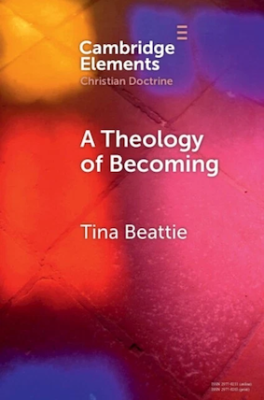
Tina Beattie, A Theology of Becoming: Body, Blood, Birth and Sacrament
Published by Cambridge: CUP, 2026
Reading this book reminded how much theology is literally and metaphorically bloodless. Here, by contrast, Tina Beattie takes us through the birth of each of her four children, with the joy, pain and sometimes trauma involved. She draws on her experiences to interrogate the images we have of the divine-human relationship. Too often, she says, these images are violent, sclerotic or oedipal. And while some feminist approaches to motherhood have offered an alternative approach, they risk an idealised account of childbirth which skate over its 'visceral and sometimes violent realities'.
She holds that both theology and western culture in general have been in thrall to metaphors of violent conquest, or of abstractions which emphasise reason and deny the feelings. Tina Beattie wants a richer, more nuanced anthropology which respects the potential of women to image God. In particular we should take seriously the female in her potentiality of becoming two, that is, the possibility of birthing a new person. 'We might say that God's being is an eternal becoming and emerging …'
She draws attention to how, in Christian tradition there are glimmers of a birthing God. In building up her case she draws from patristics, medieval art, psychology and especially Marian theology. Matrescence - the bearing and upbringing of children - is always a complex mixture of joy and sorrow, guilt and achievement. Women measure themselves against the perfect mother of consumerism and blame themselves for not matching the ideal. They are given consolation by the figure of Mary, who 'shares all the griefs and anxieties of maternal life, even though she is full of grace, sinless and chosen by God.'
As a celibate priest I thought I had a good basic understanding of what pregnancy involved. I was wrong. For example, a woman's body is permanently changed by pregnancy, not only in the obvious way by stretch marks, but by what is known as microchimerism, in which mother and child exchange cells that will leave a permanent DNA trace of each in the other. The author is bracingly honest about the dangers of childbirth, especially in countries where poverty results in poor healthcare. An obstructed delivery can literally end with a woman's body ripped apart. If she survives she may be doubly incontinent and socially shunned.
This book compresses a great deal into its few pages. I would call it a monograph, except that the word sums up a rather dull treatise. On the contrary it is challenging and insightful, without the reader having to agree with her at every point. I hope that a bigger book on the same theme is on its way. At places I longed for the author to open out the argument. For example, what does she make of Romans 8.22, where Paul writes of the universe as 'groaning in one great act of giving birth'? Christian theology is very cautious here, because it is a short step from this to theogony, the idea of god(s) being born.
The reader might also wonder about the implications of what she writes for commercial surrogacy, 'wombs for rent', which is not discussed. Surrogacy is the ultimate personalisation of consumerism, reaching even into the uterus itself, and now widely accepted in society. But how do we square this with the fact that baby and mother leave an indelible presence in each other, or with the importance for health of the bonding process in the first weeks after birth?
There were other writers I wanted her to engage with, for example Meister Eckhart and his emphasis on the fecundity of the divine ground of being, or from our own times, the writings of Carol Gilligan on female networking or Grace Jantzen on natality.
I am not sure that the model proposed here transcends the problems of a binary worldview. But in reading this book I learned a great deal, and was made to think a great deal. I yearn for future theological explorations to be written in the same spirit of honesty.
 Facebook
 Twitter
 LinkedIn
 Print
Print Email
Email











 Facebook
 Twitter
 YouTube
 LinkedIn
 Pinterest