

People of goodwill urged to come together to fight caste-based injustice
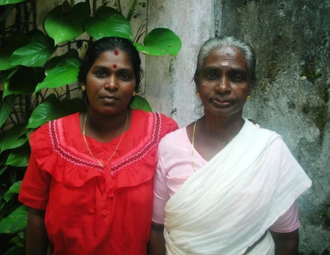
Women from Dalit community, Kerala - Wiki Image
"Thirteen Dalits are murdered every week across India due to ever-increasing caste-based violence. Yet many incidents of horrific caste-based discrimination and violence go unreported due to fear, social pressure and lack of support," said Sister Manju Devarapalli, a Carmelite religious sister and General Secretary of National Dalit Christian Watch in India.
Sister Devarapalli was speaking at a conference organised by The Christian Network Against Caste Discrimination (CNACD) at the London Jesuit Centre last Thursday 16th April.
She said: "The caste system is not a relic of the corrupt past, it is an indictment of a present in which millions are being exploited and abused. It is carried out in plain sight and perpetuated by wealth, influence and an instinct to defer to those at the top."
Sister Devarapalli urged not passive sympathy but an active response: "Legal reforms that bury abuse; international advocacy and financial support."
She explained how India's caste system of social stratification became a central mechanism of British colonial governance. Despite being officially outlawed at independence in 1947, it stubbornly endures.
Within this system, the Dalits - categorised as ritually unclean 'untouchables' - are condemned to a harsh life of segregation and exploitation. They are obliged to use separate water sources, cremation and burial grounds, and to live in marginalised communities. Their access to places of worship is restricted. Social 'transgressions' - such as wearing footwear or riding a horse - can be brutally punished. Those crimes which are reported against Dalits occur every 18 minutes.
Less than ten per cent of marriages are inter-caste and, in rural north India in particular, women who defy such social stigma are vulnerable to murder (the grotesquely misnamed phenomenon of 'honour killings').
According to Sister Devarapalli, hate speech in general is on the rise in India, with the Hindu nationalist majority, including its leadership, targeting Muslims and Christians.
She explained that the 'upper castes' such as Brahmins and Rajputs dominate key economic and political positions and have disproportionate ownership of the land. Conversely, most Dalits remain landless labourers and 1.3 million are 'manual scavengers' - responsible for cleaning dry latrines, despite a 1993 banning of this degrading work. Other Dalits carry out leather work and waste collection. Fifty million Dalits are estimated to exist under conditions of modern slavery.
Sister Devarapalli concluded by saying, "Desmond Tutu warned: if you are neutral in situations of injustice, you have chosen the side of the oppressor."
In a video address, the Catholic cross-bench peer David Alton lamented the endless daily atrocities of the caste system which, like the Apartheid system, deprived the Dalits of essential humanity. He said, 'We must learn from the Anti-Apartheid movement and apply economic sanctions, boycotts and diplomatic isolation.'
Dr Anderson Jeremiah, the Anglican Bishop of Edmonton, and a Dalit from Tamil Nadu, spoke of the crippling educational barriers for his community. He himself endured humiliation and obstruction, made to sit at the back of the class and only able to learn English when aged 20, but 'I saw the power that knowledge brings.' He also decided to become a priest. 'I saw the Church has the capacity to provide transformation, to bring dignity, humanity and freedom to people.'
He noted that 75 per cent of Christians in India are from Dalit communities although the leadership structure is generally still from the 'higher' castes. He applauded the fact that the Catholic church now had a Dalit cardinal and two Dalit bishops.
Fr Roy Sebastian SJ from India, who works alongside the Dalits, spoke of the grim reality of funds for Dalit development being withheld by government, of rampant violence, and of exclusion of Dalit Christians by other Indian Christians. More positively, he was able to report of the training of 6000 community leaders thanks to Church support.
Meena Varma, Executive Director of the International Dalit Solidarity Network, spoke of the struggle to 'get the UK government to fulfil its responsibilities' by providing legislative protection for the Dalits, because the caste-based system remains a lived reality in the South Asian diaspora (7.5 per cent of the UK population).
It is estimated, that world-wide some 260 million people suffer from discrimination based on caste. Some 25 million are estimated to have migrated from South Asia to other countries. Caste-based prejudice and discrimination are operative in more than 100 countries where South Asians have migrated, including the UK.
Following general discussion, the conference advocated intersectional solidarity with all people of goodwill. It urged ongoing fact-finding and the need to give voice to the Dalits in the struggle to provide justice and dignity. A synodal approach should be maintained: both the Bishops' Conferences in Britain, and the Roman conference with bishop synodal presidents reporting to Pope Leo in the autumn, should discuss this issue as a matter of serious and urgent ongoing concern.
The CNACD warmly invites people to contact it in the hope of instilling fresh momentum into its crucial work.
LINKS
CNACD: www.cnacd.co.uk/
National Dalit Christian Watch: https://ndcw.org/
 Facebook
 Twitter
 LinkedIn
 Print
Print Email
Email










 Facebook
 Twitter
 YouTube
 LinkedIn
 Pinterest