

India: A New Year Charter for Christians from fear to the promise of 2026
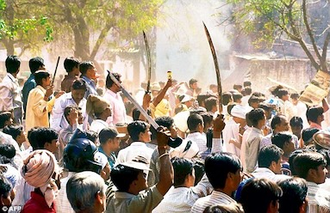
Communal violence.Image: Indian Currents
Source: Indian Currents
Many Christians could not celebrate Christmas last year. They were not all in remote villages or small towns. Even in metropolitan cities, some fellow believers spent a day in a police station on New Year's Day. But hope is of the essence; it is vital to acknowledge the gravity of recent years without surrendering to despair.
Researchers studying the situation of the Christian community in India seek the community's roadmap for democratic engagement, drawing strength from the Constitution, the moral leadership of institutions of Hierarchy and the common people, and the quiet courage of ordinary citizens.
And perhaps more, it seeks empathy from the state and the majority communities, even as it extends solidarity with the poor, referred so poignantly by Pope Leo's encyclical "Dilexi Te" (I have loved You): the landless, the Dalits and the Adivasis in their struggles for dignity, protection of the law, and sustenance.
The demand of the Christian community, too, is simple: equal rights, equal protection, and equal dignity under the law. Upholding these principles is not a concession to minorities but a test of the republic itself.
The All India Catholic Union (AICU), now in its 107th year, issued a New Year call that combined urgency with constitutional restraint. It framed violence against Christians as an assault not merely on a minority community but on the pluralistic foundations of the Indian republic itself. This position echoed a long-standing emphasis of the Catholic Bishops' Conference of India (CBCI): that the security and dignity of minorities are inseparable from the health of democracy and the rule of law.
This 2026 suggestion is grounded in that understanding. It does not seek privilege or regard for services in education and health in centuries past, but expects enforcement of constitutional guarantees.
This demands addressing not only violence, but also structural discrimination, administrative constraints, political marginalisation, and economic vulnerability, which Christians share with other religious minorities, and the Dalits and Tribals.
The violence of 2025 cannot be dismissed as spontaneous or episodic. It was enabled by a broader political climate in which hate speech, religious majoritarianism, and xenophobic narratives gained public legitimacy. Christians were repeatedly portrayed as "outsiders" or "conversion agents," despite centuries of rooted presence and service that predates independence in many regions.
To read on see: www.indiancurrents.org/article-a-new-year-charter-for-indian-christians-from-fear-to-the-promise-of-2026-john-dayal-2887.php
 Facebook
 Twitter
 LinkedIn
 Print
Print Email
Email











 Facebook
 Twitter
 YouTube
 LinkedIn
 Pinterest