

Ian Linden: The Church & wars in the Middle East
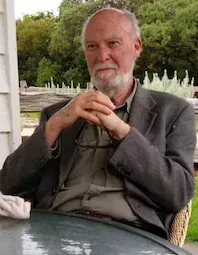
Dr Ian Linden
"I don't need international law", Trump told the world in January; his "own morality", his "own mind" was all that he needed to formulate foreign policy. Trump's mind and morality do not inspire confidence.
No reasonable person in a democracy would willingly agree to tolerate or endorse lawlessness within their own nation-state, so why is lawlessness between States once more acceptable? If law and moral principles underpin a successful economy and a harmonious society, why should we consider them superfluous to the conduct of international relations? Yet, political leaders are balancing speaking clearly in defense of international law with avoiding alienating Trump.
If there were no 'structures of sin', covetousness and the quest for power and dominance, if humanity overcame its failings and all became virtuous citizens, we might do without laws, national and international. But for the time being, our attempts at formulating and enforcing just laws is as good as it gets.
Thomas Aquinas roots 'natural law' in human nature tapping into God's eternal law. Catholic social teaching with its virtues, values and principles of compassion, solidarity and justice is an important expression of it. And the Eucharist mediates a specifically Christian form of globalisation, relativizing national and ethnic identities, giving sense and transcendental meaning to a common humanity seeking the common good.
The Vatican, internationalist in outlook, now led by an American born citizen of Peru continues to promote its conception of international peace and justice which it sees as inseparable. This means rules about the conduct of war must be respected and the promotion of existing conventions about the rights of peoples within nations as well as those crossing borders in flight from persecution and danger. But Papal teaching is essentially that war should be outlawed especially as it is the nature of modern weaponry to cross the boundary between combatant and non combatant and to maximise damage. On the very first day of the attack on Iran, bombing killed over a hundred girls in a primary school.
An extraordinary social video came out of the White House last Thursday: alongside clips from Top Gun, Spiderman, and perhaps a nod at Trump's ancestry, Braveheart actual 'strike footage' from Iran illustrating the promised "death and destruction all day long". Entitled 'Justice the American Way', its moral depravity is striking. Just as Archbishop Blaise Cupich of Chicago wrote in response, it depicted a "real war with real death and real suffering being treated like it's a video game": an 'American Way' which ignores the very existence of international law and the values it attempts to preserve. Pete Hegseth, self-styled US secretary of State for War, a man responsible for command of the largest military force in the world both approved it and appeared in it.
Archbishop Cupich is a refreshingly clear voice of condemnation and focus on the victims of war. But the response of many Church leaders to wars and conflict is to call for reconciliation. It is sometimes as if the Church is hovering between and above the oppressor and the oppressed, the torturer and the tortured. This was the gist of the theological critique directed in 1985 at the height of the struggle against apartheid in part at what they called 'Church theology' distinguishing it from the 'State theology' and their own prophetic voice. The Kairos document, signed by some 180 Christian leaders, began life in the Institute of Contextual Theology led by the late Albert Nolan, a Dominican friar and Frank Chikane from the Apostolic Faith Church, soon to become the General-Secretary of the South African Council of Churches. There is a contemporary Palestinian Kairos document too.
The point is that conflict between two individuals in a family is not like that between ethnic groups, different religious groups and States. Their reconciliation demands repentance expressed in justice restored, some sense of historical antecedents, culpabilities acknowledged and remedied before any genuine resolution. There is not going to be any reconciliation between the barbaric regime in Iran and today's American government. At best there will be some kind of transactional agreement after thousands are killed from the air.
After the Second World War, the Church supported the creation of the UN and its international institutions. These were intended to protect and develop the principles of international law pioneered by the League of Nations Permanent Court of International Justice (PCIJ). The prime purpose of these was to reduce and eliminate causes and justifications for States going to war again.
Catholic statesmen made a significant input into the creation, in 1952, of the European Iron and Steel Community which by 1993 had evolved into the European Union as defined by the Maastricht Treaty. The EU and its predecessors have produced, embodied in its institutions, a unique body of supra-national law, its consequential judicial proceedings respected within the courts of its member States.
But law to be effective must be enforceable. The UN International Court of Justice (ICJ), set up in 1945, suffered, and suffers, from the limitations of needing States' consent to be a party to a dispute in the court, and the lack of enforcement procedures after adjudication. South Africa's filing a complaint, called a 'Memorial', garnering support from other countries for their application under the Convention for the Prevention and Punishment of the Crime of Genocide, against Israel's conduct in Gaza was an almost unique event. In this sense the court's power is to provide more of a moral than a punitive constraint.
Trials, convictions and punishment of individuals for the most serious offences, such as war crimes and genocide, have taken place in the International Criminal Tribunal for the Former Yugoslavia, 1993-2017, and the International Tribunal for Rwanda after the genocide (1994-2015). The International Criminal Court (ICC) set up in 2002 has issued several warrants for arrests. But it has been mainly African offenders who have seen the inside of a prison cell. The USA, Russia and China play no part in this judicial body. Trump's administration positively tries to undermine it with sanctions.
In an important 1999 speech in Chicago, with the somewhat Catholic title "Doctrine of the International Community", Tony Blair reflected on the beginning of three months of bombing of Serbia in response to Milosevic's forces' mass murders of Muslim men and boys in Kosovo. Tony Blair set five conditions for getting involved in other people's conflicts. Does the case for intervention hold water? Have all diplomatic options been exhausted? Can military operations be sensibly and prudently undertaken? Are we prepared for the long haul? Are our national interests involved? The plight of the Kosovan people was in his mind. His own failure to apply these criteria to the Iraq invasion was a tragedy. Keeping close to America, sharing in its military interventions had overridden all other considerations. He should re-read his speech and apply his conditions to Iran. Sir Keir Starmer thankfully seems to have done so. And being verbally attacked by Trump is a kind of assurance you are doing the right thing.
See: www.ianlinden.com/latest-blogs/the-church-the-wars-in-the-middle-east
Professor Ian Linden is Visiting Professor at St Mary's University, Strawberry Hill, London. A past director of the Catholic Institute for International Relations, he was awarded a CMG for his work for human rights in 2000. He has also been an adviser on Europe and Justice and Peace issues to the Department of International Affairs of the Catholic Bishops Conference of England and Wales. Ian chairs a new charity for After-school schooling in Beirut for Syrian refugees and Lebanese kids in danger of dropping out partnering with CARITAS Lebanon and work on board of Las Casas Institute in Oxford with Richard Finn OP. His latest book was Global Catholicism published by Hurst in 2009.
 Facebook
 Twitter
 LinkedIn
 Print
Print Email
Email









 Facebook
 Twitter
 YouTube
 LinkedIn
 Pinterest