


Gospel in Art: Saint Sebastian, Martyr
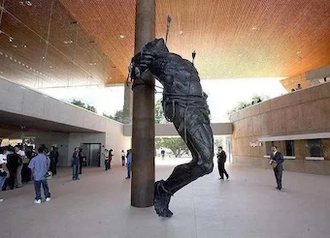
Saint Sebastian by Ricardo Motilla, 2008 © Wikimedia / Art and History Museum of Guanajuato, León, Mexico
Source: Christian Art
Gospel of 20 January 2026
Mark 2:23-28
One Sabbath the Lord was going through the cornfields, and as they made their way, his disciples began to pluck ears of corn. And the Pharisees were saying to him, 'Look, why are they doing what is not lawful on the Sabbath?'
And he said to them, 'Have you never read what David did, when he was in need and was hungry, he and those who were with him: how he entered the house of God, in the time of Abiathar the high priest, and ate the bread of the Presence, which it is not lawful for any but the priests to eat, and also gave it to those who were with him?'
And he said to them, 'The Sabbath was made for man, not man for the Sabbath. So the Son of Man is lord even of the Sabbath.'
Reflection on the large Public Sculpture
Saint Sebastian is one of the great early Christian martyrs, venerated for his courage and unwavering faith. He was a Roman soldier in the late 3rd century, traditionally serving in the elite Praetorian Guard under Emperors Diocletian and Maximian. Secretly, however, he was a committed Christian, offering encouragement to imprisoned believers and inspiring others to remain strong in the face of persecution. When his faith was discovered, he was sentenced to death by being tied to a stake and shot with arrows. This dramatic scene made him one of the most depicted saints in Western art. Left for dead, he was found still alive by a Christian woman named Irene (Saint Irene of Rome, celebrated 3 April), who nursed him back to health. Rather than flee, Sebastian confronted the Emperor again, boldly denouncing the persecution of Christians.
This fearless act led to his second and final martyrdom: he was beaten to death and his body thrown into Rome's sewers, later recovered and lovingly buried in the catacombs along the Appian Way - now the site of the Basilica of St Sebastian. Over the centuries, Sebastian became a symbol of resilience and hope, often invoked for protection against plagues, because arrows were seen as metaphors for sudden, deadly illness.
Ricardo Motilla's Saint Sebastian is a monumental bronze sculpture created in 2008 that greets visitors at the entrance to the Art and History Museum of Guanajuato in the city of León, Mexico. The work, which stands around five metres tall and weighs over a tonne, represents the Roman martyr pierced by arrows, capturing his immense suffering, with his body bending in pain. His steadfast witness, and this contemporary artistic interpretation serve as a powerful public symbol of faith.
LINKS
Gospel in Art: https://christian.art/
Today's Reflection: https://christian.art/daily-gospel-reading/mark-2-23-28-2026/
 Facebook
 Twitter
 LinkedIn
 Print
Print Email
Email









 Facebook
 Twitter
 YouTube
 LinkedIn
 Pinterest