

Ian Linden: A modest proposal for 2026

Rutger Bregman - WIki Image
Rutger Bregman, the Dutch historian and author chosen for this year's Reith lectures, gave them the title Moral Revolution, describing a wicked world, venal elites, and a degraded politics. He aims to make goodness "fashionable again" and has an enviable rhetorical and narrative style to that end. His is a message primarily directed at civil society not to our own - unfashionable -Government, telling a hopeful story with which to end a grim 2025. From the applause, the four talks went down well with the live audience.
Despite having a Protestant pastor for a father, Bregman believes goodness to be found in human nature, and following his philosophical hero, Bertrand Russell, asserts that no external transcendental agency exists to put it there. To collectively shape society, to act ethically, we need "pity for the unbearable suffering of mankind", a "longing for love", and a "search for knowledge" derived from the well-springs of goodness in the human heart, from a scientific naturalism. And these enduring impulsions directing a purposeful life, he claims, are what uniquely make us human.
Bregman spoke of his Christian childhood, loss of faith, then discovery of an affective humanism, a history of small networks of virtuous men and women making the world a better place: the anti-slavery movement, the suffragettes, the campaign for civil rights and, yes, the twelve apostles, historical changes as a "reservoir of hope". His is a timely message for a secular world in deep trouble. A yes-we-can for NGOs, from small beginnings a long march to critical mass and changes in government policy. And finally an agnostic nod beyond an earlier confident atheism, maybe there is more to it all.
The sequence of Bregman's four talks followed a broadly see-judge-and-act pattern, the last exploring the threats posed by AI and the unchecked power of the Silicon Valley barons. But, as you consider these lectures, some of their gloss wears off; a lack of new thinking and depth becomes apparent. The exploration of what the common good might mean and the ethical connection between the personal and the social lack coherence. Nor are the religious sources of Bregman's thinking fully acknowledged.
The requirements for Moral Revolution, compassion, love, search for understanding, would not sound out of place in a papal allocution or parochial Sunday sermon. But the continuing contribution of the Catholic Church to this theme of personal and social moral regeneration is absent: no mention of the body of Catholic social teaching, originating in the 1890s and elaborated by the Church through different historical contexts until today. For Bregman, the early Fabians at the end of the 19th century, not Leo XIII's 1891 Rerum Novarum, committing the Church to workers' rights, are worth discussing. Nor is there a single contemporary Christian example of his central theme, a small networked group tackling one of the 'monsters' of economic change. The growing international network of Religious Sisters, strong in his homeland Netherlands, confronting the dark side of globalization, human trafficking, would have been one outstanding example.
Bregman's moral revolution demands the nurturing of virtue, its application in daily life and practical politics, played out through history. A more glaring omission is his apparent lack of interest, apart from a quick genuflection to Aquinas and Aristotle, in the historical development of ethics. Like a lecture on the 19th century novel with no word of Dickens, neither is there any mention of the great Scottish Catholic philosopher of ethics, Alasdair MacIntyre - who sadly died in May this year, and his 1981 After Virtue which brings Aquinas' virtue ethics to life for our contemporary world.
MacIntyre gave "Catholic Instead of What?" as the title to a lecture at Notre Dame University in Indiana in November 2012. Instead of naturalism based on science, he proposes conformity to natural law for a humanity, fallen and separated from God. His focus and emphases are very different from Bregman's: the nature of our humanity from womb to grave emphasizing the justice which we owe notably to the child. He tells a story about how the common good, the personal and social, and indeed the economic, might be coherently thought about and acted on.
Here is a flavour. "Parents can give their children what they owe to them only if they have economic means that enable them to house, clothe, and feed those children; have the time and energy to play with those children and to tell them stories. Children deprived of such homes find it often difficult and sometimes impossible to learn from their teachers in school, no matter how good those teachers. The children who don't learn are unable to become educated citizens, and a society with a significant portion of badly educated or uneducated citizens is always a defective society, one in which it becomes difficult or even impossible to arrive at rational agreement about common goods and, therefore, about the requirements of justice and how they are to be achieved". A far more coherent and radical story than told by Bregman.
"What", MacIntyre goes on to ask, "would it be like to live in a society where not to meet the needs of children was intolerable". Parents would have a sufficient income, be properly paid in family-friendly jobs, to achieve excellence as parents and teachers. And education would give young people growing up the confidence to find their own voice amidst today's multiplicity of voices. A radical manifesto for a diverse society.
The Labour Government's indecisive tactics, lack of a compelling narrative and a plausible strategy for combatting inequality and the high cost of living, tackling economic stagnation and widespread youth anxiety, will likely receive a hefty punishment in May 2026 local elections. Where will the Labour Party find the coherent big story in which their different, worthy, incremental changes could be fitted? A focus on answering the question "Labour Party Instead of What?" decisively with vision and courage will help.
Rutger Bregman has a simple story to tell: one about what the little platoons of NGOs and their networks can achieve. His approach is deductive: here is the general idea and here are some examples derived from it, anti-slavery, the Fabians, the challenge of AI. It's not that simple. Finding a way forward is complex. Government - and Bregman - need at least to acknowledge the distinctive contribution of Catholic Social Teaching and the radical Christian vision of thinkers such as MacIntyre, and in 2026 tell a better story.
Professor Ian Linden is Visiting Professor at St Mary's University, Strawberry Hill, London. A past director of the Catholic Institute for International Relations, he was awarded a CMG for his work for human rights in 2000. He has also been an adviser on Europe and Justice and Peace issues to the Department of International Affairs of the Catholic Bishops Conference of England and Wales. Ian chairs a new charity for After-school schooling in Beirut for Syrian refugees and Lebanese kids in danger of dropping out partnering with CARITAS Lebanon and work on board of Las Casas Institute in Oxford with Richard Finn OP. His latest book was Global Catholicism published by Hurst in 2009.
LINKS
Read Professor Ian Linden's latest blogs: www.ianlinden.com/latest-blogs/
Rutger Bregman - Reith Lectures - Moral Revolution: www.bbc.co.uk/programmes/m002mmrv
Alasdair MacIntyre - Catholic Instead of What lecture: www.youtube.com/watch?v=XjYLM1lw47Q
 Facebook
 Twitter
 LinkedIn
 Print
Print Email
Email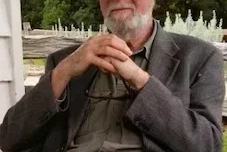















 Facebook
 Twitter
 YouTube
 LinkedIn
 Pinterest