
Ian Linden: Discovering the meaning of words
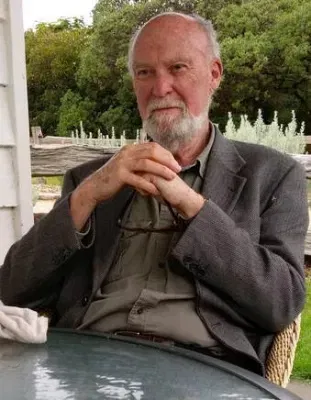
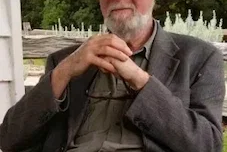
Dr Ian Linden
What does imperialism mean? Lenin's 1917 Imperialism, The Highest Stage of Capitalism is the best known of the early twentieth century analyses. Its eerie echoes denounce "the financial strangulation of the overwhelming majority of the people of the world by a handful of 'advanced' countries". It describes how "this 'booty' is shared between two or three powerful world marauders armed to the teeth"…. "who involve the whole world in their war over the sharing of their booty." In moderate papal language, Catholic social teaching, and notably Pope Paul VI's remarkable Populorum Progressio published in 1967, expressed similar concerns. Though the encyclical can be understood as the Church's response to the threat of Communism in the new post-colonial 'Third World' countries.
'American imperialism' is an emotive phrase. President Trump has given it a new lease of life. His attack on Venezuela seizing Maduro and his wife, the killing of their guards, were a deliberate, graphic illustration of how the US sees its role in a world now dividing into imperial domains. Maduro's toppling has had one positive result: the freeing of some political prisoners.
Trump in a 3rd January speech, just after the attacks, set out the core thinking behind American intervention. "American dominance in the Western Hemisphere will never be questioned again" was the message. "We are reasserting American power, in a very powerful way, in our home region", he said reading from a prepared speech expressing intentions which had already been set out in the November 2025 US National Security Document. The neoliberal coterie around Trump are in competition with China, and Russia, for the Latin America's rare earths, minerals and, longer term, massive heavy crude oil reserves in Venezuela. An important target audience was its dozen sovereign States, some like Mexico, Colombia, Uruguay and Brazil who were increasingly collaborating to challenge unacceptable US demands.
Trump is following in the footsteps of his incomparably more talented predecessor, James Monroe, the fifth and last Founding Father to become President, whose policy in the 1820s sought to remove European colonial powers from the Americas. Monroe bought Louisiana from the French for $15 million. Fast forward two centuries, Trump plans to buy Greenland and to tighten control over Latin America, implementing his 'Donroe doctrine'. In a recent New York Times interview he proclaimed his power was constrained only by "my own morality" …."I don't need international law".
Whatever its regional impact, US promotion of back to the future scenarios hastens the collapse of the post-Second World War international order based on international law: respect for national sovereignty enshrined in the UN Charter but compatible with the later idea of the 'global common good'. This required strict limitations on cross-border wars. Pope Leo described it in a 9 January speech to diplomats as "completely undermined".
In his traditional Sunday blessing he underlined that the "well-being of the beloved Venezuelan people must prevail over all other considerations and lead to overcoming violence and pursuing paths of justice and peace, safeguarding the country's sovereignty". The Latin American bishops prayed for peace, unity and reconciliation for the Venezuelan people expressing closeness to victims of the attacks. Aware of the might of US military and their own comparative weakness, most Western leaders have hesitated to speak out.
The position of the Church from John XXIII's Pacem in Terris 1963, Benedict XVI's Caritas in Veritate, 2009 to Francis' recent Fratelli Tutti, 2020 has been consistent. Popes have called for a world order based on justice and peace and effective international organisations. Matching action to thought, Trump has just withdrawn from 66 international bodies almost half of them UN-linked.
Today's imperialism might be described as "The Final Stage of Neo-liberalism". John Maynard Keynes' impact on economic policy waned after the 1930s, neoliberal thinkers began to take his place, their proclaimed ideas, free market competition the essential dynamo of human development, choice - of material goods - and individual responsibility began entering the West's political bloodstream. Reagan and Thatcher, its 1980s' champions, achieved three major feats. An ideology finessed as common sense. Politics, the handmaid of economics emptied of social vision and purpose. Words and slogans cleverly used to misinform the public where their true interests lay. As Pope Leo told the diplomats on 9th January "language is becoming more and more a weapon with which to deceive", and all done in the name of freedom of expression.
George Monbiot's and Peter Hutchison's powerful bestseller The Invisible Doctrine: The Secret History of Neoliberalism. Penguin, 2024, describes how neoliberalism decries an intrusive state and stultifying bureaucracy squandering taxpayers' money. The deregulated market unimpeded by the State should determines that the "talented and hard-working will prevail, whereas the feckless, weak and incompetent will fail" [Trump's 'losers'].
One feature Monbiot and Hutchison enlarges on, shared by other ideologies, is that neoliberalism doesn't deliver what it says on the tin. "Its anonymity is both a symptom and a cause of its power".
There are a variety of ways to deal with the anger of its losers, their dreams of joining the winners abandoned. Aside from repression of mass protest, diversion, what Monbiot and Hutchison call, 'transfer of blame', focussing resentment on the intrusive State, migrants, Muslims or 'woke' academics. In its attack on them, neoliberalism deploys evocative words and ideas: 'freedom' from 'control by elites' who hold ordinary people in contempt, individual 'choice' and 'responsibility'.
Influencers, think-tanks, newspapers, social media and a whole TV channel, GB News, promote such themes and ideas. To achieve neoliberalism's economic goals 'strong leaders', even authoritarianism, may be seen as desirable. A worrying number of British youth hold this view.
By freedom, not just abroad but at home too, is rarely meant freedom from homelessness, hunger and insecurity. There have been only a handful of - urban - examples around the world of genuine participatory democracy controlling the politics and economics that effect daily lives. Taxing the real elite of transnational oligarchies with their wealth laundered in London, or stashed away in off-shore havens in British dependencies, appears to be beyond the capability of our Government. Meanwhile, every day across the world 25,000 people die of hunger and illnesses caused by malnutrition while indebted governments drastically cut aid budgets.
Recapturing key words and slogans for a transformative politics is long overdue. In Pope Leo's words: "Rediscovering the meaning of words is perhaps one of the primary challenges of our time".
We may actually have arrived at the final stage of imperialism and neoliberalism. The last three years have shown that climate change crisis is already upon us. Yet in 2022, the West's five largest oil and gas companies recorded $134 billion in 'excess profits' ( $134 billion more than a 'normal' rate of return on capital investment). And some of the lords of Silicon Valley are worth more. These are the main beneficiaries of Trump's policies.
Such are today's power elites whether in Riyadh, Moscow, Beijing or Washington. According to OXFAM, the world's richest 1% have a massively disproportionate share of carbon emissions. The lives and livelihoods of people around the world, including our own children and grandchildren, will be destroyed unless we, voters in surviving democracies, have the courage to take back control.
Professor Ian Linden is Visiting Professor at St Mary's University, Strawberry Hill, London. A past director of the Catholic Institute for International Relations, he was awarded a CMG for his work for human rights in 2000. He has also been an adviser on Europe and Justice and Peace issues to the Department of International Affairs of the Catholic Bishops Conference of England and Wales. Ian chairs a new charity for After-school schooling in Beirut for Syrian refugees and Lebanese kids in danger of dropping out partnering with CARITAS Lebanon and work on board of Las Casas Institute in Oxford with Richard Finn OP. His latest book was Global Catholicism published by Hurst in 2009.
LINK
Read Professor Ian Linden's latest blogs: www.ianlinden.com/latest-blogs/
 Facebook
 Twitter
 LinkedIn
 Print
Print Email
Email





 Facebook
 Twitter
 YouTube
 LinkedIn
 Pinterest